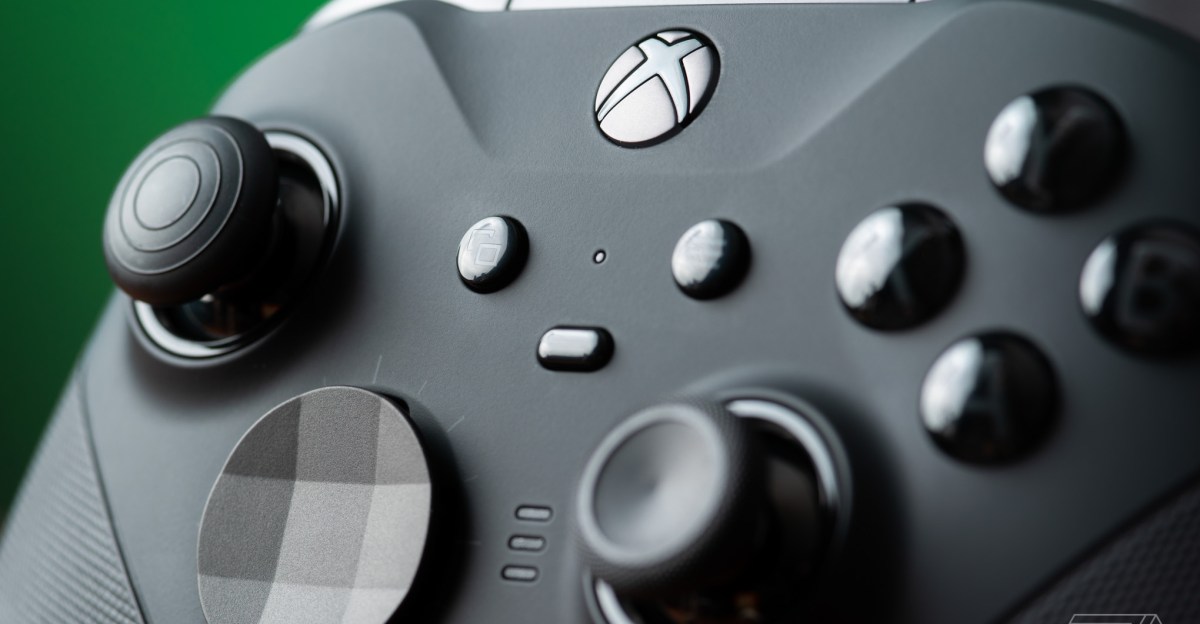
Fortune dropped a bombshell report on the future of gaming this week. According to the publication’s Microsoft insiders, the next Xbox is projected to cost between $1,200 and $1,800 when it arrives in 2028.

Fortune dropped a bombshell report on the future of gaming this week. According to the publication’s Microsoft insiders, the next Xbox is projected to cost between $1,200 and $1,800 when it arrives in 2028.
My first reaction: The next Xbox is dead on arrival. It’s DOA.
My second thought: Microsoft knows people won’t pay that much. It couldn’t possibly charge that much money if it wants next gen to be a success. “I wouldn’t release it at all,” former Microsoft exec Mike Ybarra recently said.
My third thought: Didn’t Microsoft already say out loud that it knows people won’t pay that much?
Did Fortune get it wrong?
I don’t think Fortune’s insiders are the problem here. With today’s incredibly overpriced RAM and storage, it wouldn’t be surprising if it cost over a thousand dollars to build, package, distribute, and sell “the largest technical leap you will have ever seen in a hardware generation,” as former Xbox president Sarah Bond called the next Xbox back in 2024.
But there are at least five ways the report could be correct without making you pay all that money at once. I just don’t think you’re going to like most of them.
The least-likely possibility is the one Fortune suggests itself. Let’s look at the original quote, bolding mine:
[…] the price of the Helix console has internally been projected to cost consumers between $1,200 and $1,800, unless Microsoft decides to subsidize the cost.
Historically, Microsoft has subsidized the Xbox. Microsoft sold boxes at a loss right out of the gate, making its profits when you buy games and Xbox Game Pass subscriptions instead of on the hardware alone. That’s not our speculation — it’s exactly what Microsoft told The Verge in 2021. In 2023, we learned that Microsoft may have spent $1.5 billion to make sure it could sell the Xbox Series X and S at $499 and $299 respectively, instead of what they actually cost.
But Microsoft has suggested that it’s done with hardware subsidies. “Going forward, this cannot continue,” wrote Sharma in her “Xbox reset” memo, referring to the $20 billion in content, platform, and hardware subsidies Microsoft made over the past five years.
Microsoft CEO Satya Nadella echoed that idea on the Hard Fork podcast: “No one can accuse Microsoft of not having invested for the last 25 years, and now we have to turn this into a sustainable business.”
It isn’t just new management that’s hinting at no more subsidies: Bond primed the pump for a $1,000 box when she called Helix “a very premium, very high-end curated experience” late last year, comparing it to gaming PCs like the $1,000 Xbox Ally X handheld.
Perhaps Microsoft has changed its mind since then. “We are working very hard to rethink everything that we can about Helix,” Ball said in June, referring to affordability. “The plan’s the plan until it’s not the plan,” Sharma said in February (though not about affordability specifically).
But subsidies would be a tremendous risk if the Helix still plays PC games in addition to Xbox ones. Valve’s Steam is by far the dominant PC gaming platform — so PC gamers who buy a Helix won’t help Microsoft recoup its money.
There’s another way Microsoft could subsidize a $1,200 Xbox.
Today, AT&T will give you a $1,200 iPhone 18 Pro for $0* — if you lock yourself into 36 months of AT&T phone service that costs $100 or more per month and trade in a recent phone, too.
Microsoft could do the same with a new, pricier tier of its Xbox Game Pass game subscription service, effectively bundling the games with the console and making you slowly pay for both at the same time. Perhaps you’ll have the option to buy an “unlocked” Xbox for full price, but it won’t be the norm.
To make it happen directly, Microsoft would need a pricier new tier of Xbox Game Pass, which wouldn’t necessarily align with the company’s recent moves. Sharma actually cut the price of Game Pass Ultimate to $22.99 a month in April, writing that “Game Pass has become too expensive for players,” while removing Call of Duty games and unlimited access to Xbox Cloud Gaming from the deal.
I don’t know if it would work. People feel naked leaving the house without phone service. They might not feel the same about games. Subscription fatigue is real. But if it worked, Microsoft’s moat would be stronger than ever. You’ll be more likely to play the games you’ve already paid for and are committed to keep paying for.
Many people may find themselves drawn into a lucrative upgrade cycle, similar to how they do with phones, as they can purchase the next Xbox for “$0” as soon as it is released.
Cellphone subsidies have been in existence for almost as long as expensive phones themselves. The 1994 IBM Simon, considered the first smartphone, eventually cost half of its $1,100 price if you signed a contract with BellSouth. My first phone, a Kyocera QCP-6035 with a built-in PalmPilot, was subsidized when it was released in 2001. This model of subsidizing devices is not entirely new, but it would be a new concept for game consoles.
It is conceivable that Microsoft may not intend to sell consoles to the general public anymore, preferring to market an $1,800 Xbox to those who can afford “video game ownership” and attempt to entice everyone else with a Netflix-style model.
With the current “K-shaped economy” and RAMageddon, gaming PCs and existing game consoles have become luxury items. Wealthier individuals appear content to pay inflated prices for the limited number of consoles Sony and Microsoft produce.
While PS5 sales decreased after Sony implemented price increases, this could be due to component shortages rather than a decrease in demand. On the other hand, Xbox sales supposedly increased during a similar period, and Microsoft has justified significant price hikes on its consoles since May 2025.
Xbox’s chief strategy officer, Matthew Ball, stated to The Game Business in June that demand for their console exceeds supply due to RAM shortages. To provide less affluent individuals access to “next-gen” Xbox power, Microsoft can offer a rental service. The company recently introduced pay-as-you-go cloud gaming, starting at $3.99 for 10 hours of gameplay (or 50 hours for $11.99).
Perhaps Microsoft’s recent emphasis on affordability is not about making next-gen consoles accessible to the masses, but rather about offering an affordable way for individuals to play Xbox without owning the games themselves.
After the report by Fortune, some initial reactions suggested that individuals may opt to stick with their current Xbox/PlayStation/Switch rather than invest in a new console if the Xbox is priced at over a thousand dollars. If Microsoft anticipates selling every Xbox it can produce to affluent consumers due to the RAM shortage, there may not be a significant risk in launching the console at a high price on day one.
The Xbox Helix may be regarded as an early adopter console, similar to the iPhone Duo or Steam Frame. These products quickly sell out despite their high prices, leaving many potential buyers empty-handed. While they may be imperfect upon release, early adopters are willing to overlook these flaws.
Microsoft appears to understand that some Xbox buyers are willing to pay for exclusive, high-priced consoles. They released an unfinished $1,000 Xbox Ally X handheld even before the RAM crisis, and the subsequent $1,300 Xbox Ally X20 has already sold out.
If Microsoft divides the Xbox market into “haves” and “have-nots,” the next generation may not truly materialize. Developers may not focus their efforts on creating games for a console that many cannot afford. The next Xbox may not be seen as a necessary upgrade if individuals already own a PS5. In industry terms, the Helix could be seen as a “mid-cycle refresh” rather than a true next-gen console.
Many video game executives may not oppose this approach. They have long argued that the escalating costs of game development due to advancing technology are unsustainable, leading to significant layoffs in development teams after games are released.
Former PlayStation and Xbox executives like Shuhei Yoshida, Shawn Layden, and Mike Ybarra have expressed the view that a next-gen console is not essential. They suggest sticking with the PS5 Pro/Series X until prices stabilize, as the capabilities of these consoles are suitable for the majority of users. They believe the current generation consoles, such as the PS5 and Switch 2, can continue to satisfy users.
Layden has recommended focusing on making consoles cheaper and more user-friendly rather than constantly pushing for more powerful hardware. Microsoft and AMD have taken steps to extend the current generation by implementing AMD’s performance-enhancing FSR 4.1 on Xbox Series S and X, allowing for sharper 4K visuals on TV screens.
Even if Microsoft releases an $1,800 console, they have made it clear that it will not be the only option available for purchase. Sharma has publicly stated that Helix will be a “family of devices,” implying that Microsoft may allow PC industry partners like Asus to sell their own version of the “Xbox.” If this information is accurate, it could mean that Asus might produce a console-shaped box running a Windows-based Xbox OS. These partner devices could potentially offer more budget-friendly and less powerful options compared to Microsoft’s flagship Xbox, possibly with reduced storage and memory capacities. Microsoft may also explore creative storage solutions, similar to how they offered various hard drive sizes for the Xbox 360, or even options without a hard drive at all.
Furthermore, customers could have the flexibility to choose from different Xbox devices within Microsoft’s “family,” including the existing Xbox Series X and Xbox Series S. This strategy is feasible because modern games do not need to be tailored for a specific console anymore. Xbox games designed for one model can generally run on other Xbox consoles due to their shared AMD-powered Windows PC architecture.
It is possible that a particular Xbox device will emerge as the preferred target for game developers to optimize performance and visuals, akin to how the Steam Deck set a standard for PC game development in 2022. This device could potentially redefine expectations for high-quality gaming experiences, much like the Steam Deck and Nintendo Switch have done.
Given these developments, it is conceivable that the current Xbox Series S could become the preferred device for developers. Alternatively, Microsoft may introduce their own handheld Xbox in the future.
Insiders at Fortune are hinting that the highly anticipated holiday season of 2027 will bring something special.
Transform the following:
Original: The cat sat on the mat.
Transformed: On the mat sat the cat. Transform the following sentence into the passive voice:
“The teacher will assign the homework to the students tomorrow.”
Answer: The homework will be assigned to the students by the teacher tomorrow.



EU Takes Action Against Instagram and Facebook for Violating Illegal Content Rules

Warning: Facebook Creators Face Monetization Loss for Stealing and Reposting Videos

Facebook’s New Look: A Blend of Instagram’s Style

Facebook Compliance: ICE-tracking Page Removed After US Government Intervention

Facebook and Instagram to Reduce Personalized Ads for European Users
InstaDub: Meta’s AI Translation Tool for Instagram Videos
Reclaim Your Account: Facebook and Instagram Launch New Hub for Account Recovery

Meta discontinues Messenger apps for Windows and macOS
Subscribe to our weekly newsletter below and never miss the latest News or an exclusive offer.