
Security
Mastering Continuous Attack Surface Monitoring: A Comprehensive Guide


WRITTEN BY: Topher Lyons, Solutions Engineer at Sprocket Security
The Importance of Active Reconnaissance in Cybersecurity
Many organizations rely on passive internet-scan data or subscription-based datasets to understand their external visibility. While these sources provide valuable information, they often fall short in capturing the dynamic nature of today’s infrastructure.
Passive datasets, although useful for trend awareness, quickly become outdated in the face of cloud footprints that shift daily, rapid deployment cycles, and the emergence of shadow IT. This reliance on stale or incomplete information can leave organizations vulnerable to cyber threats.
To combat this, security teams need to adopt a different approach: continuous, automated, active reconnaissance that verifies their external attack surface on a daily basis.
Challenges of Passive Data in Modern Security
1. Stale Findings
Passive scan data can become outdated in a matter of hours, leading security teams to chase non-existent issues while missing real threats.
2. Context Gaps
Passive datasets often lack crucial context such as ownership, attribution, and impact details, making it difficult for teams to prioritize effectively.
3. Missed Ephemeral Assets
Modern infrastructure is filled with short-lived components that may never appear in passive scan datasets, leaving organizations exposed to potential attacks.
4. Duplicate or Irrelevant Artifacts
Passive data can include outdated or irrelevant information, increasing alert fatigue and wasting valuable time for security teams.
The Role of Continuous Reconnaissance in Cyber Defense
1. Automated, Active Daily Checks
Continuous reconnaissance involves recurring, automated checks to detect newly exposed services, track changes in DNS, certificates, and hosting, and validate current exposure and configuration state.
2. Environment-Aware Discovery
Continuous recon adapts to the shifting infrastructure automatically, ensuring that security teams have an up-to-date view of their attack surface without manual intervention.
Benefits of Continuous Visibility Over Passive Data
1. Discover Newly Exposed Services
Continuous reconnaissance can catch exposures that appear suddenly, such as forgotten staging servers or misconfigured cloud resources, before attackers do.
2. Identify Misconfigurations in Real-Time
Rapid deployments often introduce errors that can compromise security. Continuous visibility helps surface these misconfigurations immediately.
3. Uncover Shadow IT and Rogue Assets
External assets that fall outside traditional inventories, such as marketing microsites or unmanaged SaaS instances, are easily missed by passive scans but can be detected through continuous reconnaissance.
4. Enable Real-Time Validation
Continuous recon ensures that findings reflect the current state of the attack surface, reducing wasted effort and improving decision-making for security teams.
Implementing Continuous Reconnaissance with Sprocket Security
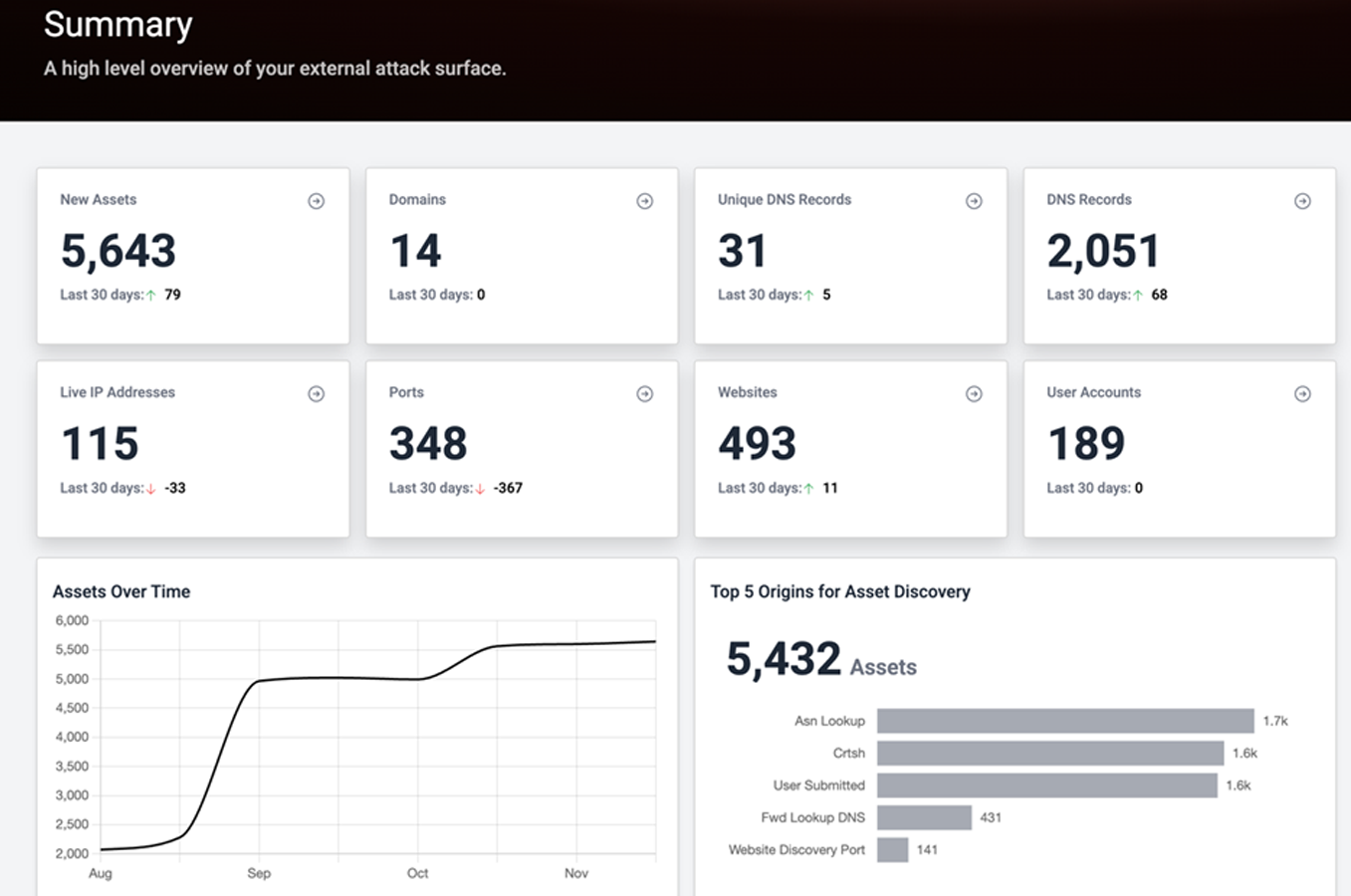
Daily Reconnaissance at Scale
Sprocket Security offers automated, continuous checks across your entire external footprint, ensuring that exposures are discovered and validated in real-time.
Actionable Findings
Through their ASM framework, Sprocket Security classifies, verifies, attributes, and prioritizes each finding, providing clarity, context, and impact without overwhelming volume.
Enhancing Decision Making with Continuous Visibility
By providing validated, contextualized findings, Sprocket Security helps security teams understand the changes in their environment, why they matter, and what actions need to be taken to mitigate risks.
Enhancing Cybersecurity Through Continuous Reconnaissance
As organizations modernize their infrastructure and face evolving cyber threats, continuous, automated reconnaissance becomes essential for maintaining a strong defense posture. By moving away from passive data and embracing continuous visibility, security teams can stay ahead of emerging exposures and reduce the risk of cyber incidents.
For organizations looking to improve their attack surface monitoring, implementing continuous reconnaissance is a crucial step towards enhancing cybersecurity resilience.
This article is sponsored and written by Sprocket Security.












Building the Future: The Evolution of Europe’s First Digital Experimentation Infrastructure

Titan Quest II: Rise of the Gods – Official Launch in January 2027

Ultimate Guide to Googlebook: Everything You Need to Know about Price, Release Date, Key Specs & Features

Apple’s Latest Challenge: A Fitbit Air and Whoop Rival in the Works

The Importance of Understanding Your Business’s Value Before Making a Big Financial Move

Google’s Groundbreaking AI Satellite Launching into Space Next Week

Unlocking AI Potential: Solving the GPU Shortage in Your Infrastructure

The Downfall of OpenAI’s Siri ChatGPT Extension on iPhone

Samsung Galaxy S9 Plus vs iPhone X

EU Takes Action Against Instagram and Facebook for Violating Illegal Content Rules

Warning: Facebook Creators Face Monetization Loss for Stealing and Reposting Videos

Facebook’s New Look: A Blend of Instagram’s Style

Facebook Compliance: ICE-tracking Page Removed After US Government Intervention

Facebook and Instagram to Reduce Personalized Ads for European Users

InstaDub: Meta’s AI Translation Tool for Instagram Videos

Reclaim Your Account: Facebook and Instagram Launch New Hub for Account Recovery

Meta discontinues Messenger apps for Windows and macOS

Breaking Updates: Meta Connect 2025 Unveils Latest Developments
Samsung Galaxy S9 Plus vs iPhone X

The BEST $300 Phone (2018) ft. MKBHD, Technical Guruji, iJustine + More

Samsung Galaxy S9 Plus Gaming Review! (vs OnePlus 5T)

THE BEST PHONE HTC EVER MADE?

The Truth about Google?

Samsung S9/ S9+ vs iPhone X vs Galaxy Note 8 Battery Life DRAIN TEST

Samsung S9 / S9+ vs Mate 10 Pro vs iPhone X Charging SPEED Test

The BEST APPS in 2018 – ft. MKBHD, UrAvgConsumer, iJustine + More

The ULTIMATE Smartphone Unboxing!!
-
 Facebook11 months ago
EU Takes Action Against Instagram and Facebook for Violating Illegal Content Rules
-
 Facebook12 months ago
Warning: Facebook Creators Face Monetization Loss for Stealing and Reposting Videos
-
 Facebook10 months ago
Facebook’s New Look: A Blend of Instagram’s Style
-
 Facebook12 months ago
Facebook Compliance: ICE-tracking Page Removed After US Government Intervention
-
 Facebook10 months ago
Facebook and Instagram to Reduce Personalized Ads for European Users
-
 Facebook12 months ago
InstaDub: Meta’s AI Translation Tool for Instagram Videos
-
 Facebook10 months ago
Reclaim Your Account: Facebook and Instagram Launch New Hub for Account Recovery
-
 Apple11 months ago
Meta discontinues Messenger apps for Windows and macOS
