
Inovation
Driving Innovation: The Impact of EUPEX on Europe’s High-Performance Computing Future

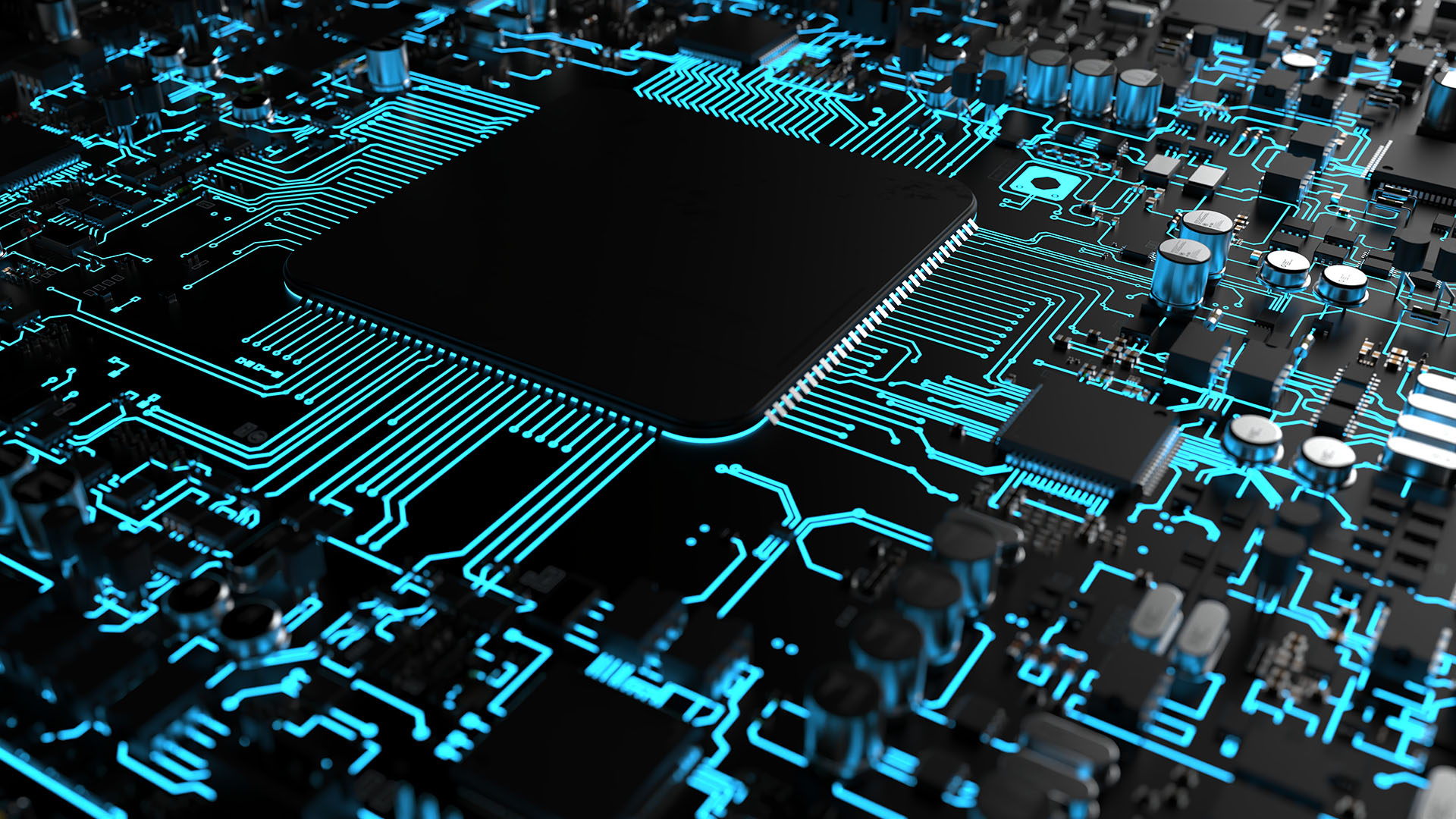
EUPEX, or European Pilot for Exascale, is a project funded by the EuroHPC Joint Undertaking that aims to bring together various European hardware and software components to assess their readiness for future high-performance computing (HPC) systems. The project serves as a bridge between technology development and large-scale deployment, providing a realistic environment for integrating, evaluating, and improving new European solutions.
The consortium behind EUPEX consists of 17 partners from across Europe, including supercomputing centers, research organizations, universities, and technology companies. Coordinated by Bull, the project combines expertise in system architecture, software, application optimization, and HPC operations to demonstrate how European technologies can be assembled into a coherent HPC platform capable of supporting real scientific workloads.
One of the key aspects of EUPEX is its co-design approach, where the project works closely with application teams to prepare scientific codes, evaluate software components, and study the behavior of HPC workloads on emerging European technologies. This collaboration allows both users and technology providers to gain valuable feedback before these technologies are deployed in future production systems.
EUPEX builds on the results of earlier European initiatives, such as the European Processor Initiative (EPI), which laid the foundations for a European HPC processor architecture. The project aims to integrate the Rhea processor developed by SiPearl into a pilot platform representative of future European HPC systems. By doing so, EUPEX bridges the gap between processor development and large-scale deployment, showcasing how European technologies can be integrated across the full HPC value chain.
Recently, EUPEX achieved a significant milestone with the arrival of the first SiPearl Rhea1 processor samples, marking a major advancement for the European HPC ecosystem. The Rhea1 processor, designed from the architecture defined within EPI and industrialized by SiPearl, represents the most complex server-class CPU ever designed in Europe. It targets both high-performance computing and AI workloads, integrating advanced technologies like High-Bandwidth Memory (HBM).
The project utilizes these early processor samples to validate the hardware platform and support the development and integration of system boards and compute blades for the EUPEX pilot platform. This effort serves as a critical bridge between processor design and deployment at a system scale, paving the way for a European processor to be deployed in a production-class supercomputing environment.
In addition to technical achievements, the deployment of a European processor like Rhea1 holds significant importance for Europe. The integrated technologies are expected to be utilized in JUPITER, Europe’s first Exascale supercomputer, demonstrating the transformation of European processor innovation into operational HPC infrastructure and enhancing Europe’s computing ecosystem.
The EUPEX project also focuses on preparing scientific applications for future European technologies like Rhea1. It involves aligning application developers, hardware designers, and software-tool developers to ensure that scientific codes can effectively exploit the capabilities of new platforms without compromising reliability or results.
The project coordinators have worked with various applications across different scientific fields, optimizing code sections, improving workflows, and adapting each task to the most suitable computing resource. For instance, applications like ESPRESO-FEM and CybeleTech’s AgriTech workflow have seen notable performance improvements, enabling more detailed models, better analysis of climate conditions, and automatic code adaptation.
Adapting applications to Arm-based processors like A64FX, NVIDIA Grace, and SiPearl Rhea1 has presented challenges and opportunities. While the Arm architecture offers efficiency and flexibility, optimization techniques vary for different processors. Understanding where an application spends its time and resources is crucial for achieving efficiency and performance improvements.
The project emphasizes the importance of measuring application behavior on new HPC architectures to fully exploit their capabilities. Monitoring and performance-analysis tools play a vital role in analyzing energy consumption, processor utilization, communication efficiency, and data movement, guiding technical decisions and priorities for effective utilization of European technologies.
EUPEX has developed a comprehensive software stack that encompasses system management, execution environment, efficiency tools, and I/O focus to support system operations and execute demanding scientific and AI applications on future European supercomputers. This software ecosystem aims to maximize performance and resource usage, contributing to the overall success of European exascale systems.
As EUPEX nears its final phase, dissemination and community engagement become central, with a focus on sharing results, tools, and experiences with the European HPC community. The project aims to prepare the community for future European systems through workshops, tutorials, and conferences, providing insights into software developments, ARM porting, and co-design activities.
In conclusion, EUPEX represents a significant step towards enhancing Europe’s technological sovereignty in the HPC domain by integrating European hardware and software components, preparing scientific applications for future technologies, and bridging the gap between processor development and large-scale deployment. The project’s achievements in deploying European processors like Rhea1 and developing a comprehensive software stack contribute to strengthening Europe’s computing ecosystem and advancing scientific, industrial, and societal priorities.











10 Android Apps you NEED to try in 2018

BMW i3 Reigns Supreme While Audi A4 e-tron Faces Delay Until 2029

Legal Battle: Denuvo Takes on Anonymous Cracker for Breaching DRM on 26 Video Games

The Future of Innovation: A Physical AI Startup Raises $100M to Build the Next Generation of Startups

Boost Your iPhone Speed with These 30+ iOS 27 Tips and Tricks

Kiwi Country: New Zealand Set to Host Race of Champions in 2027

Insomniac Enhances Wolverine

Big Picture Bio: Revolutionizing Cancer Treatment with AI-Designed Drug Combinations

The Battle for AI Control: The Smackdown Continues

EU Takes Action Against Instagram and Facebook for Violating Illegal Content Rules

Warning: Facebook Creators Face Monetization Loss for Stealing and Reposting Videos

Facebook’s New Look: A Blend of Instagram’s Style

Facebook Compliance: ICE-tracking Page Removed After US Government Intervention

Facebook and Instagram to Reduce Personalized Ads for European Users

InstaDub: Meta’s AI Translation Tool for Instagram Videos

Reclaim Your Account: Facebook and Instagram Launch New Hub for Account Recovery

Meta discontinues Messenger apps for Windows and macOS

Breaking Updates: Meta Connect 2025 Unveils Latest Developments
10 Android Apps you NEED to try in 2018

They could not believe how cheap this Phone is

A $50,000 Smartphone for $400?

Huawei P20 Pro Unboxing!

Huawei P20 Pro vs Samsung S9 Plus!

Huawei P20 vs P20 Pro vs iPhone 8 Plus vs S9 Battery Drain Test!

10 Android Mods that Change Everything

I used the first Android Phone in the World.

DOOGEE MIX 4 UNBOXING (PROTOTYPE)!
-
 Facebook11 months ago
EU Takes Action Against Instagram and Facebook for Violating Illegal Content Rules
-
 Facebook11 months ago
Warning: Facebook Creators Face Monetization Loss for Stealing and Reposting Videos
-
 Facebook9 months ago
Facebook’s New Look: A Blend of Instagram’s Style
-
 Facebook11 months ago
Facebook Compliance: ICE-tracking Page Removed After US Government Intervention
-
 Facebook10 months ago
Facebook and Instagram to Reduce Personalized Ads for European Users
-
 Facebook11 months ago
InstaDub: Meta’s AI Translation Tool for Instagram Videos
-
 Facebook10 months ago
Reclaim Your Account: Facebook and Instagram Launch New Hub for Account Recovery
-
 Apple11 months ago
Meta discontinues Messenger apps for Windows and macOS
