
Security
Enhanced Security Measures: Google Chrome’s Latest Update for Gemini AI Agentic Browsing

Google Chrome Introduces New Security Layer for Gemini AI Agentic Browsing
Google is rolling out a new security feature in its Chrome browser known as the ‘User Alignment Critic’ to enhance protection for upcoming agentic AI browsing capabilities powered by Gemini.
Agentic browsing represents a cutting-edge approach where an AI agent is programmed to autonomously execute complex tasks on the internet on behalf of the user. These tasks may include website navigation, content reading, button clicks, form filling, and a series of actions.
The ‘User Alignment Critic’ serves as a distinct LLM model, shielded from untrusted content, functioning as a trusted system component. Its primary function is to scrutinize each action proposed by the primary AI agent, assessing its safety by analyzing metadata and independently evaluating its relevance to the user’s intended goal. If an action is deemed risky or irrelevant, the User Alignment Critic either prompts a retry or returns control to the user.
Furthermore, Google’s Gemini AI assistant, utilized on Android and various Google services, has been integrated into Chrome since September. Google initially announced its plans to embed agentic browsing capabilities via Gemini into Chrome, prompting the introduction of the new security architecture.
The enhanced security system, as detailed by Google engineer Nathan Parker, aims to mitigate the risk of indirect prompt injection. This scenario involves malicious page elements manipulating AI agents to perform hazardous actions that could compromise user data or facilitate fraudulent transactions.
The key elements of the new security architecture include:
- User Alignment Critic – A separate Gemini model isolated from potential tampering, responsible for evaluating the safety of AI actions.
Source: Google
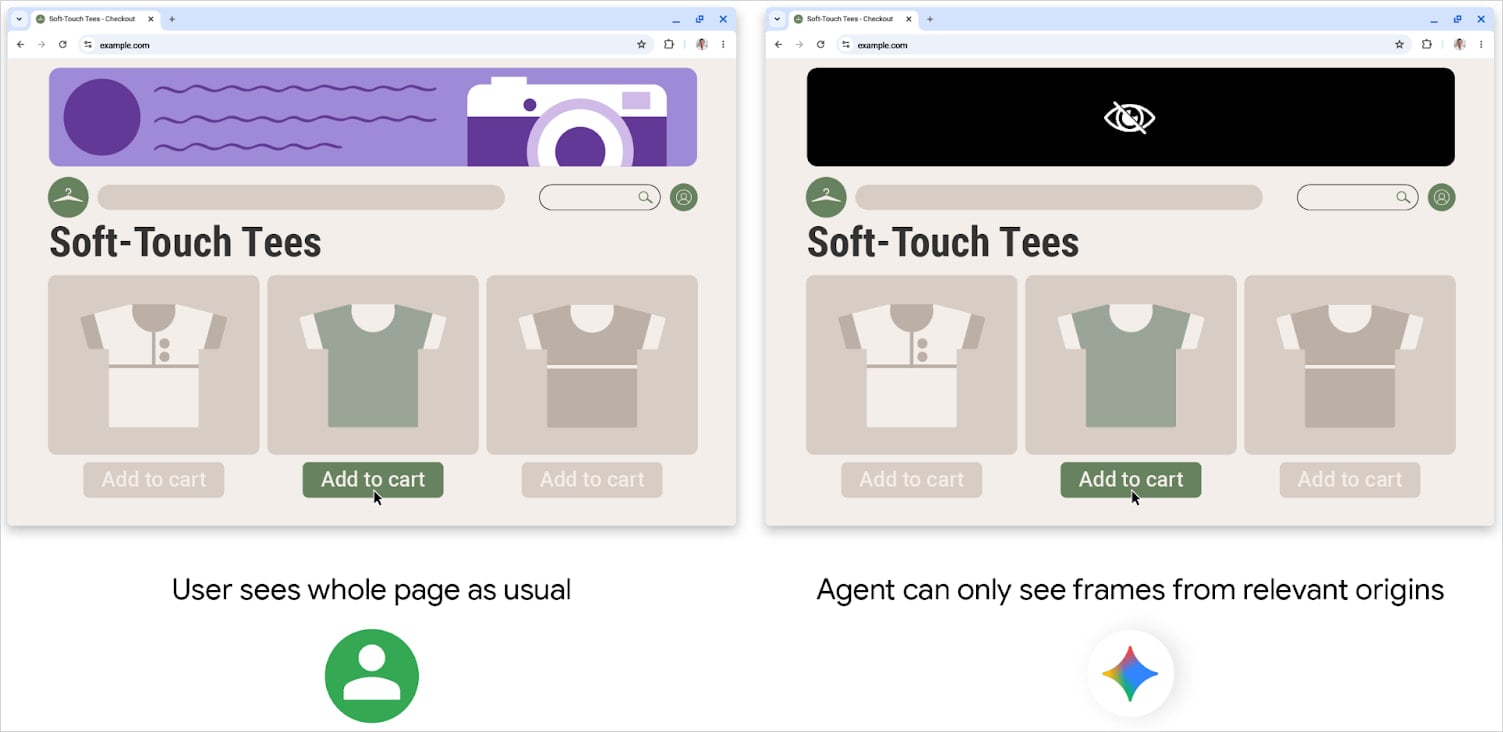
- Origin Sets – Limits agent access to specific web elements, preventing cross-site data leakage and restricting compromised agent impact.
Source: Google
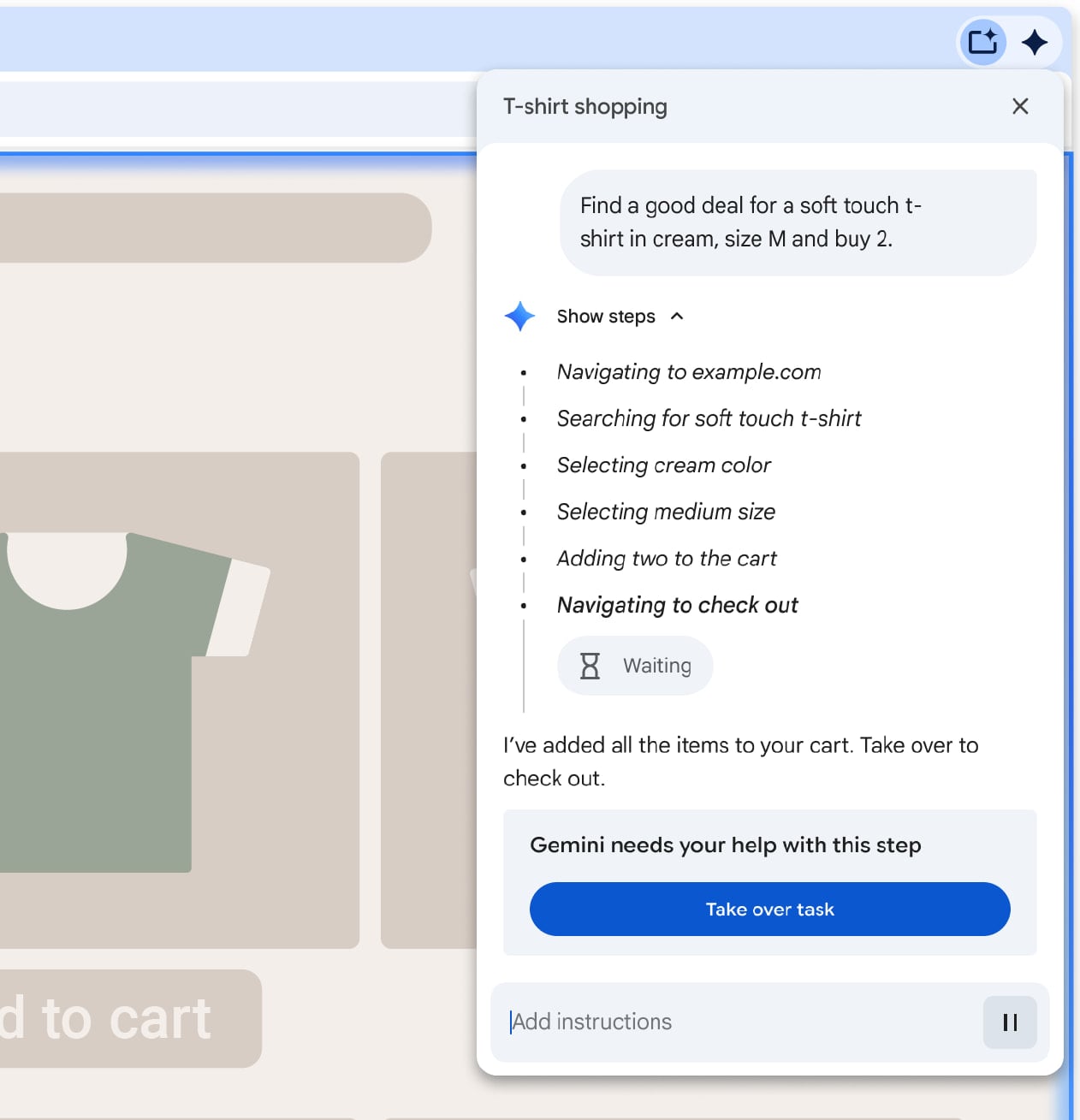
- User oversight – Involves pausing sensitive actions for user confirmation, enhancing user control over critical processes.
Source: Google
- Prompt injection detection – Incorporates a classifier to identify and block malicious prompt injection attempts on web pages.
Google’s robust defense strategy for agentic browsing underscores its commitment to safeguarding user interactions. By implementing a multi-layered security approach, Google aims to prevent phishing attacks, prompt injection vulnerabilities, and unauthorized transactions.
Google has also developed automated red-teaming systems to continuously test defense mechanisms and address emerging threats promptly through Chrome’s auto-update feature.
As part of its commitment to fostering security research, Google has announced generous bounty rewards of up to $20,000 for individuals who can identify vulnerabilities in the new system. This initiative aims to build a resilient agentic browsing framework within Chrome and invites community participation in strengthening online security.

Enhance your business security with our comprehensive guide on modern IAM practices.
Discover why traditional IAM approaches fall short in today’s digital landscape, explore best practices, and access a practical checklist for building a scalable security strategy.










Revolutionizing Home Entertainment: The Fire TV Stick 4K’s Power-Saving Feature

Arkansas Semiconductor Institute: Pioneering Innovation in Technology

The Isle of Beautiful Monsters: A First-person RPG Adventure

The Genius Unhackable Samsung Phone: Unveiling Two Major Weaknesses

Google Pixel Watch 5: Pour Another Round

Navigating the Real Estate Market: Essential Guidelines for Buyers and Sellers

Google Unveils Powerful Gemini 4, Reserved for Trusted Cyber Defenders

Beware: DarkSword Malware Hidden in Fake $500 iPhone Duo Page

Unboxing the First Ever Samsung Galaxy S!!

EU Takes Action Against Instagram and Facebook for Violating Illegal Content Rules

Warning: Facebook Creators Face Monetization Loss for Stealing and Reposting Videos

Facebook’s New Look: A Blend of Instagram’s Style

Facebook Compliance: ICE-tracking Page Removed After US Government Intervention

Facebook and Instagram to Reduce Personalized Ads for European Users

InstaDub: Meta’s AI Translation Tool for Instagram Videos

Reclaim Your Account: Facebook and Instagram Launch New Hub for Account Recovery

Meta discontinues Messenger apps for Windows and macOS

Breaking Updates: Meta Connect 2025 Unveils Latest Developments
Unboxing the First Ever Samsung Galaxy S!!

Huawei P Smart – Huawei’s new Killer Budget Smartphone!

MYSTERY Package from Xiaomi – HUGE UNBOXING!

5 ways you’re using your Smartphone wrong.

THE INSANE DUAL BATTERY SMARTPHONE!

ELEPHONE U PRO UNBOXING AND REVIEW!

Mrwhosetheboss – 1 Million Subscribers

The Surprising TRUTH about Samsung – 15 things you did not know.

10 Incredible Android DIY Hacks!
-
 Facebook11 months ago
EU Takes Action Against Instagram and Facebook for Violating Illegal Content Rules
-
 Facebook12 months ago
Warning: Facebook Creators Face Monetization Loss for Stealing and Reposting Videos
-
 Facebook10 months ago
Facebook’s New Look: A Blend of Instagram’s Style
-
 Facebook12 months ago
Facebook Compliance: ICE-tracking Page Removed After US Government Intervention
-
 Facebook10 months ago
Facebook and Instagram to Reduce Personalized Ads for European Users
-
 Facebook12 months ago
InstaDub: Meta’s AI Translation Tool for Instagram Videos
-
 Facebook10 months ago
Reclaim Your Account: Facebook and Instagram Launch New Hub for Account Recovery
-
 Apple12 months ago
Meta discontinues Messenger apps for Windows and macOS
