
Startups
The Power of Niche Expertise: Customizing Digital Marketing for Optimal Results

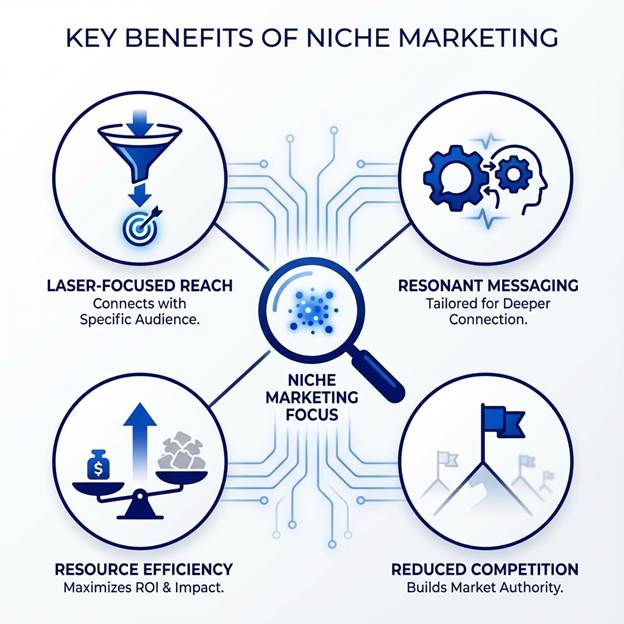
Identifying and Validating Your Profitable Niche
In today’s expansive digital environment, attempting to appeal to everyone often results in reaching no one. The sheer volume of noise is overwhelming. Businesses squander valuable resources on broad campaigns that yield minimal returns.
This is where Niche Digital Marketing becomes indispensable. It involves refining your focus to a specific, underserved audience. This allows for the creation of messages that truly resonate. It ensures that marketing efforts are not just seen, but felt. The objective is to achieve greater impact and efficiency, leading to more predictable niche marketing outcomes.
This comprehensive guide will walk you through the process of identifying your ideal niche. It will also demonstrate how to implement custom digital strategies. Lastly, it will explain how to measure your success and establish lasting authority in your chosen market.
Transitioning from a broad concept to a validated, profitable market segment necessitates systematic research and analysis. It is not about making assumptions; it is about uncovering where your unique value proposition can genuinely shine and resonate with a specific audience. This foundational step is crucial, as a well-selected niche forms the foundation of all subsequent marketing success.

When discussing identifying a profitable niche, the objective is to find a sweet spot where market demand intersects with manageable competition, and where your business can provide a specialized solution. This involves thorough market research, deep audience analysis, and a comprehensive understanding of the competitive landscape. The goal is to identify indicators of profitability, such as a clear need for your product or service, a willingness among the target audience to pay for solutions, and sufficient growth potential to ensure long-term viability. Without this careful validation, even the most brilliant marketing strategies can fall flat.
How to Define Your Target Niche Market
Defining your target niche market commences with introspection and extends into rigorous external analysis. It begins by brainstorming areas where your passions intersect with existing problems or underserved needs. What unique skills or insights do you possess? What frustrations do potential customers express that aren’t being adequately addressed by current solutions?
Once you have a few potential areas, delve into keyword research. Tools like Google Keyword Planner, Semrush, or Ahrefs can unveil search volumes for specific terms, indicating what people are actively seeking. Pay close attention to long-tail keywords, which often signify higher intent and more specific needs. For instance, instead of “marketing,” focus on “digital marketing for local bakeries” or “SEO for sustainable fashion brands.”
Next, construct detailed audience personas. This involves gathering demographic data (age, location, income, education) and psychographic information (values, interests, lifestyle, attitudes). Understanding their pain points – the specific challenges they face – is paramount. What keeps them up at night? What solutions are they currently trying, and where are those solutions falling short? Crucially, assess their purchasing power and willingness to invest in a solution. A niche audience might be passionate, but if they lack the means or inclination to pay, it may not be profitable.
Key Indicators of a Profitable Niche
Identifying a profitable niche goes beyond just finding an underserved group; it involves evaluating several key indicators that signal long-term viability and revenue potential.
First, market size and growth potential are critical. While a niche is by definition smaller than a mass market, it still needs to be large enough to sustain a business and ideally, show signs of growth. For example, the carbon offset industry alone is ready to be worth $100 billion by 2030, indicating a massive growth opportunity for agencies specializing in eco-friendly branding and sustainability campaigns. Similarly, the global Healthcare Digital Marketing Outsourcing Market size was estimated at $9.8 billion as of 2022 and is anticipated to increase nearly 10% year over year, highlighting a robust and expanding sector.
Second, we look at audience engagement and willingness to spend. A passionate audience that actively seeks solutions and is prepared to invest in quality products or services is a strong indicator. This often translates into higher Cost-Per-Click (CPC) values in advertising, as competitors are willing to pay more for these valuable leads. We also consider the potential for affiliate marketing, which suggests a healthy ecosystem of complementary products and services.
Third, search trends and consistent demand are vital. Are people actively searching for solutions within this niche? Are these searches consistent over time, or are they fleeting fads? Tools that analyze search trends can help us gauge this. For instance, the education sector is a prime example of where Niche Higher Ed Marketing strategies can yield significant results by targeting specific student demographics. With Niche being the #1 college search platform, boasting over 66 million visits to College Profiles in 2022, and inquiries 15x more likely to apply and 24x more likely to enroll than traditional sources, it clearly demonstrates a highly engaged and profitable niche.
Finally, manageable competition is paramount. A profitable niche isn’t necessarily one with no competition, but rather one where you can realistically differentiate yourself and carve out a significant market share. If a niche is dominated by a few giants with impossible resources, it might be too challenging. However, if there are many small, undifferentiated players, or clear gaps in service, that’s an opportunity. The real estate market, for example, saw agents and managers spend over $655 million on advertising in 2023. This indicates a highly competitive but also highly lucrative market where specialized digital marketing services (like virtual tours or targeted local ads) can thrive by offering unique value. Healthcare SEO alone, with projects ranging from $5,000 to $30,000, illustrates the high value placed on specialized digital marketing within a specific niche.
The Role of Competitor Analysis
Competitor analysis is not about imitation; it’s about intelligent differentiation. Once potential niches are identified, delve deep into understanding who else is operating in that space, what they’re excelling at, and more importantly, where they’re falling short.
Our analysis begins by identifying direct and indirect competitors. We examine their websites, content strategies, and social media presence. What keywords are they ranking for? What kind of content resonates with their audience? Are there specific topics they’re neglecting or areas where their content is superficial? Performing a content gap analysis helps us uncover overlooked topics or angles that we can leverage to provide more in-depth or unique value.
We also scrutinize their SEO metrics and backlink profiles. Tools like Semrush or Moz can reveal their domain authority, estimated organic traffic, and the quality of their backlinks. This helps us gauge the difficulty of competing for specific keywords and identify potential link-building opportunities. Understanding their social media engagement strategies and the communities they participate in gives us insights into how to connect with our shared target audience.
The ultimate goal of competitor analysis is to identify market gaps and underserved segments. Perhaps competitors offer broad services but lack specialization in a particular sub-niche. Or maybe their customer service is lacking, or their brand voice doesn’t truly connect with a passionate segment of the audience. By pinpointing these weaknesses, we can tailor our value proposition to highlight our unique strengths and position ourselves as the superior choice. This strategic approach helps us avoid market saturation and ensures our entry into the niche is met with a receptive audience eager for a better solution.
Executing Your Niche Digital Marketing Strategy
Once a niche is identified and validated, success hinges on executing custom strategies that resonate deeply with the specific audience. This requires a multi-channel approach focused on value and precision. Generic marketing blasts are ineffective; instead, we craft custom messages delivered through the channels most frequented by our niche, ensuring every effort is optimized for maximum impact.

Our approach involves meticulous customer journey mapping, understanding every touchpoint from initial awareness to conversion and retention. Personalization is key, as we aim to make every interaction feel bespoke and relevant to the individual’s needs and preferences. Every decision is data-driven, allowing us to continuously refine and optimize our campaigns for superior performance.
The Role of Content in Niche Digital Marketing
Content marketing is the cornerstone of building authority within any niche. It’s not just about creating content; it’s about crafting valuable, relevant, and consistent material that directly addresses the specific needs, questions, and pain points of your clearly defined audience. When executed effectively, content builds trust, establishes your business as an undeniable expert, and nurtures prospects through their buyer’s journey.
For a niche audience, content must be hyper-focused. The goal is to create a library of resources that makes your brand the go-to authority. By consistently delivering high-quality, niche-specific content, we not only attract organic traffic but also build a loyal community around our expertise. A well-structured content calendar ensures a steady stream of valuable information, keeping the audience engaged and informed.
Leveraging Social Media and SEO for Precision Targeting
Reaching a niche audience effectively requires a precise approach to both social media and Search Engine Optimization (SEO). It’s about being in the right place at the right time with the right message.
For social media, a one-size-fits-all strategy simply won’t work. Identify the specific platforms where your niche audience congregates. For B2B niches, LinkedIn is often paramount, allowing for professional networking, thought leadership, and direct engagement with decision-makers. For visual-driven niches, Instagram or Pinterest might be more effective. The strategy involves not just posting, but actively engaging in niche communities, participating in relevant discussions, and even collaborating with micro-influencers who have a genuine connection with the target audience. These smaller, more authentic influencers often yield better engagement and ROI than mega-influencers.
SEO for niche markets demands a focus on long-tail keywords. These are more specific, often phrase-based queries that indicate higher intent. Given that 86% of consumers listed search engines as the best way to get information, and Google holds an impressive 81.95% market share, optimizing for these specific queries is non-negotiable.
Beyond keyword optimization, local SEO is crucial for businesses serving a geographic niche. Optimizing Google Business Profiles, ensuring consistent NAP (Name, Address, Phone) information across directories, and generating local reviews can significantly boost visibility. We also consider voice search optimization, which is growing in popularity, especially for local queries. This requires optimizing content for conversational language and direct answers. Technical SEO, including site speed and mobile-friendliness, and a robust link-building strategy, where high-authority sites link back to your niche content, further solidify your search engine rankings. A focus on analytics is crucial for effective data-driven niche marketing, allowing us to understand which strategies are yielding the best results and where adjustments are needed.
Using Data and Analytics for Continuous Improvement
In niche digital marketing, data and analytics are not just reporting tools; they are the compass guiding our strategy. Every campaign, every piece of content, and every interaction generates valuable data that, when properly analyzed, provides insights for continuous improvement. This iterative process of tracking, analyzing, and optimizing is what truly drives success.
We leverage tools like Google Analytics to monitor website traffic, user behavior, and conversion paths. This helps us understand where visitors come from, what they do on our site, and where they might be dropping off. Conversion tracking is carefully set up to measure key actions, whether it’s a purchase, a lead form submission, or a download. This allows us to attribute success directly to specific marketing efforts.
A/B testing is a powerful technique we employ to optimize various elements of our campaigns, from ad copy and landing page designs to email subject lines and calls to action. By testing different versions against each other, we can scientifically determine what resonates most effectively with our niche audience, leading to improved performance over time.
Beyond quantitative data, customer feedback is invaluable. Surveys, polls, and direct interactions on social media provide qualitative insights into audience sentiment, unmet needs, and areas for improvement. This feedback loop is essential for refining our offerings and ensuring our marketing messages remain relevant.
Social media analytics provide insights into engagement rates, audience demographics, and the performance of specific posts or campaigns. This helps us tailor our social strategy to maximize reach and interaction within our niche communities.
The goal is to create a system for achieving consistent niche marketing results by understanding what works and scaling it effectively. By integrating these analytical practices, we move beyond guesswork, making informed decisions that lead to tangible growth and a stronger presence within our chosen niche.
Building Authority and Measuring Long-Term Success
Dominating a niche isn’t a one-time effort; it’s a continuous journey of consistently demonstrating expertise, measuring what truly matters, and adapting to new trends. The objective is to not just participate in the niche, but to become the undisputed leader and trusted resource. This involves a strategic approach to brand authority, thought leadership, and rigorous performance measurement.
When discussing building authority, we’re establishing credibility and trust within a highly specialized community. This translates into increased brand recognition, stronger customer loyalty, and ultimately, a more defensible market position. Measuring long-term success goes beyond vanity metrics; it focuses on Key Performance Indicators (KPIs) that directly impact the bottom line and demonstrate real business growth. We calculate Return on Investment (ROI) carefully, ensuring that every marketing dollar spent contributes to our strategic objectives.
| Vanity Metrics | Actionable Metrics |
|---|---|
| Website Page Views | Conversion Rate |
| Social Media Likes/Follows | Lead-to-Customer Rate |
| Email Open Rates | Customer Lifetime Value (CLV) |
| Impressions/Reach | Cost Per Acquisition (CPA) |
| Bounce Rate | Return on Ad Spend (ROAS) |
| Time on Site | Qualified Leads |
| General Website Traffic | Organic Search Rankings for Niche Keywords |
How to Establish Yourself as a Niche Expert
- Publish Authoritative Content: This is where your content marketing strategy truly pays off. Regularly publish in-depth blog posts, whitepapers, research reports, and case studies that address complex issues within your niche.
- Speak at Industry Events and Host Webinars: Presenting at niche-specific conferences, trade shows, or hosting your own educational webinars positions you as a leader.
- Build a Strong Online Presence: Your website must be a hub of information, carefully optimized for your niche. Active participation in relevant online forums, LinkedIn groups, and social media communities demonstrates engagement and accessibility.
- Earn Testimonials and Showcase Case Studies: Social proof is incredibly powerful. Actively seek testimonials from satisfied clients and document your successes in detailed case studies. These real-world examples validate your expertise and build trust with potential clients.
- Network Within the Niche: Building relationships with other experts, influencers, and complementary businesses within the niche can lead to collaborations, referrals, and further opportunities to solidify your expert status.
By consistently executing these strategies, you create a powerful feedback loop: your expertise attracts more clients, their success generates more social proof, and this further cements your position as the leading authority in your chosen niche.
Measuring the Success of Your Niche Strategies
Measuring the success of your niche digital marketing strategies is paramount to ensuring your efforts are effective and your resources are well-spent. Move beyond superficial metrics to focus on Key Performance Indicators (KPIs) that directly reflect your business objectives.
- Website Traffic (Quality over Quantity): While overall traffic numbers are a start, prioritize traffic quality. Are visitors from your target niche? Are they spending time on relevant pages? Google Analytics helps you segment traffic and identify engagement patterns.
- Lead Quality and Conversion Rates: For lead generation, the number of leads is less important than their quality. Are these leads converting into qualified prospects and ultimately, customers? Track conversion rates at every stage of the funnel, from initial inquiry to sale completion.
- Customer Lifetime Value (CLV): In niche markets, retaining customers and fostering loyalty is often more profitable than constant acquisition. CLV helps you understand the long-term value of a customer and informs your retention strategies.
- Cost Per Acquisition (CPA) and Return on Ad Spend (ROAS): For paid campaigns, these metrics are critical. CPA tells you how much it costs to acquire a new customer, while ROAS measures the revenue generated for every dollar spent on advertising. Aim for low CPA and high ROAS, indicating efficient and profitable campaigns.
- Brand Mentions and Sentiment: Beyond direct conversions, monitor how your brand is perceived within the niche. Tools for social listening and sentiment analysis help you track brand mentions, reviews, and overall community sentiment, which are crucial for reputation management.
Setting clear, measurable goals from the outset is vital. Use analytics tools to track progress against these goals, generate regular reports, and conduct performance reviews. This data-driven approach allows you to identify what’s working, what’s not, and make informed adjustments to your strategies, ensuring your niche marketing efforts deliver consistent and measurable results.
Common Mistakes in Niche Digital Marketing
Even with the best intentions, businesses can stumble when navigating the complexities of niche digital marketing. Recognizing and avoiding these common pitfalls is crucial for success.
- Choosing a Niche That’s Too Small or Unsustainable: While niching down is key, a market can be too small to generate sufficient revenue, or it might lack long-term growth potential. Thorough market research, including growth trends and audience size, is essential to avoid investing in a dead end.
- Ignoring Market Research and Audience Understanding: Assuming you know your niche without deep data is a recipe for disaster. Failing to truly understand their pain












Twitch CEO Teases GTA 6 Online Multiplayer Launch for Next Year, PC Port Release Date Uncertain

Race Against Time: Achieving Success at Disrupt 2026

The AirTag Crime Wave: Stalking, Robbery, and a Multi-Million Dollar Scam

Revving Up: The Design Evolution of V8 Power with a Release Date

The Rise of Ballbylon: A New Chapter in Ball x Pit’s Adventure

Arcos Secures €5.5 Million Funding to Expand Civil Safety Infrastructure Operations in Europe

Beware: iOS 27 Gesture Prank Can Freeze Your iPhone – Here’s What You Need to Know

HOW GOOD can a $250 Smartphone Camera be!?

Putting Continental’s CrossContact A/T2 Tyre to the Test: An All-Terrain Adventure

EU Takes Action Against Instagram and Facebook for Violating Illegal Content Rules

Warning: Facebook Creators Face Monetization Loss for Stealing and Reposting Videos

Facebook’s New Look: A Blend of Instagram’s Style

Facebook Compliance: ICE-tracking Page Removed After US Government Intervention

Facebook and Instagram to Reduce Personalized Ads for European Users

InstaDub: Meta’s AI Translation Tool for Instagram Videos

Reclaim Your Account: Facebook and Instagram Launch New Hub for Account Recovery

Meta discontinues Messenger apps for Windows and macOS

Breaking Updates: Meta Connect 2025 Unveils Latest Developments
HOW GOOD can a $250 Smartphone Camera be!?

10 Android Apps you NEED to try in 2018

They could not believe how cheap this Phone is

A $50,000 Smartphone for $400?

Huawei P20 Pro Unboxing!

Huawei P20 Pro vs Samsung S9 Plus!

Huawei P20 vs P20 Pro vs iPhone 8 Plus vs S9 Battery Drain Test!

10 Android Mods that Change Everything

I used the first Android Phone in the World.
-
 Facebook11 months ago
EU Takes Action Against Instagram and Facebook for Violating Illegal Content Rules
-
 Facebook11 months ago
Warning: Facebook Creators Face Monetization Loss for Stealing and Reposting Videos
-
 Facebook10 months ago
Facebook’s New Look: A Blend of Instagram’s Style
-
 Facebook11 months ago
Facebook Compliance: ICE-tracking Page Removed After US Government Intervention
-
 Facebook10 months ago
Facebook and Instagram to Reduce Personalized Ads for European Users
-
 Facebook11 months ago
InstaDub: Meta’s AI Translation Tool for Instagram Videos
-
 Facebook10 months ago
Reclaim Your Account: Facebook and Instagram Launch New Hub for Account Recovery
-
 Apple11 months ago
Meta discontinues Messenger apps for Windows and macOS
