
The Impact of Apple and Google’s Gemini Partnership on Tech Industry Dynamics

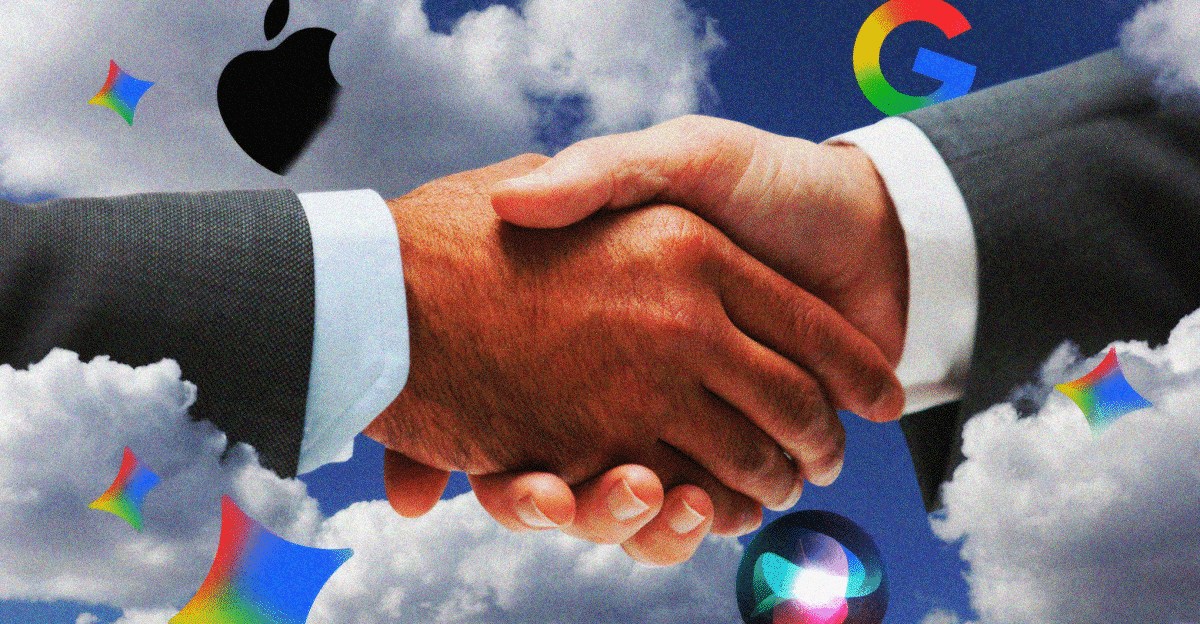
For years, Apple and Google have had a will-they-won’t-they type of relationship, as far as which AI company Apple would pick to underpin its Siri virtual assistant and give it new AI-fueled personalization and agentic capabilities. Apple has spent the last year or two playing the field, reportedly considering working with OpenAI or Anthropic to support the new Siri. But in a multiyear partnership announcement worthy of a The Bachelor-style finale, Apple announced that it would live happily ever after with Google — that the company’s Gemini AI models will underpin a more personalized version of Apple’s Siri, coming sometime in 2026.
“After careful evaluation, Apple determined that Google’s Al technology provides the most capable foundation for Apple Foundation Models and is excited about the innovative new experiences it will unlock for Apple users,” Google and Apple wrote in a joint statement.
The deal allows Apple to use both Gemini AI and Google’s cloud technology to power its future frontier models and Apple Intelligence features, the companies said, adding that Apple Intelligence “will continue to run on Apple devices and Private Cloud Compute, while maintaining Apple’s industry-leading privacy standards.”
The latter point was highlighted by analysts at Morningstar, who wrote in a note on Monday that the agreement will help Apple’s reputation for security and privacy “remain intact, as it will use Gemini instances on its own servers in its own data centers via its Private Cloud Compute offering for AI processing.” The analysts added that they “expect users will be able to opt in to sharing prompts with Gemini directly, as well.”
But what does this deal actually mean for both companies? It’s not clear yet exactly how the exchange of technology will work. Is Google providing its AI models for Apple to white-label and build upon via Apple’s own AI team, or is Google going to work hand in hand with Apple to ensure a successful end product in the new Siri? We’ll see. But the fact that the company’s joint statement emphasized the “private cloud compute” of it all means that at the very least, Apple’s new deal with Google will be similar from a privacy standpoint to its deal with OpenAI in Siri. Apple will likely prompt a user for their permission before sharing anything directly with Google, William Kerwin, senior equity analyst at Morningstar, told The Verge.
On the surface, Apple and Google might appear to be rival tech giants, but the two companies have had a close, complex relationship for more than a decade. In particular, the two are connected by a mysterious longtime deal that involved Apple products featuring Google as the default search engine on its devices, which at one point was responsible for almost half of Google’s search traffic. Bruce Sewell, Apple’s former general counsel, described the idea of “co-opetition” to The New York Times, saying, “You have brutal competition, but at the same time, you have necessary cooperation.”
Google paid Apple up to $20 billion per year to maintain its position as the default search engine on Apple devices, via Apple’s Safari browser. After a drawn-out antitrust lawsuit, a federal district court judge ruled last fall that Google could continue making such payments. That remedy ruling paved the way for Monday’s announcement — and the “co-opetition” involved means both companies stand to benefit significantly, even though the rumored $1 billion-per-year payment from Apple to Google is in many ways negligible in such a high-value industry.
The comparatively low annual payment helps illustrate how mutually beneficial the partnership is: a win-win for two FAANG companies helping each other bolster the ramparts against the high-flying AI startups that could upset their longtime advantage.
“From Apple’s perspective, it’s certainly a win if you think about the pain that they’ve had in their AI strategy up to this point,” Morningstar’s Kerwin said. “The long and short of it is that they over-promised back in the summer of 2024, and they under-delivered, still, now, what they promised.” He added that the multiyear agreement means that Apple can stop investing in building up a reputation as a frontier model company and focus instead on user experience with a different company’s AI foundation, as well as finally, potentially, becoming a key player in the AI agent providers’ battle for consumer attention — which requires AI agents that are, in theory, so useful that they break into the consumer market in a new and unprecedented way.
On Google’s side of things, Kerwin said, “the win is similar to what they get with their Search in that they become, in the mind of the consumer, a de facto option as an AI model … This will give them a ton more users from the iPhone user base and also really cement that brand image as a go-to AI model that supports all these features.”
Even so, experts say, the deal may end up causing the same scrutiny that Google just finished dealing with.
“I think that it was possible from the Google antitrust trial that Google could have been blocked in advance from making deals like this — [it’s] certainly a possible remedy that could’ve been on the table and was not adopted by the judge,” James Grimmelmann, a professor of digital and information law at Cornell Tech and Cornell Law School, told The Verge.
The government’s case in the Search trial aimed to prevent Google from entering into similar sweetheart AI deals, although Google largely succeeded in doing so. However, legal experts suggest that the deal between Apple and Google could potentially raise antitrust concerns in the future. The details of the arrangement between the two tech giants are still unclear, which could impact the antitrust and AI business landscape. Apple’s decision to use Google’s technology as a white-labeled technology stack may mitigate some antitrust concerns.
Apple’s recent partnership with Google comes after facing challenges in upgrading Siri’s AI capabilities. The company’s AI strategy has been under scrutiny, with issues such as inaccurate message summaries and delayed updates to Siri features. Despite these setbacks, Apple is now focused on revitalizing its AI strategy through partnerships and integrations with other startups.
Experts suggest that Apple is concerned about the impact of AI on its relationship with users, as the rise of AI technology could potentially undermine Apple’s unique relationship with users based on its hardware-software integration. The company’s partnership with Google and upcoming AI integrations aim to address these challenges and enhance its AI capabilities. Apple has made a strategic decision to first develop its own AI models before partnering with Google, demonstrating its commitment to maintaining a strong relationship and staying relevant in the industry. This move showcases Apple’s willingness to adapt and collaborate with key players in the AI space to enhance its own capabilities and offerings.
By choosing to leverage its own AI models and then collaborating with Google, Apple is positioning itself as a leading player in the AI landscape. This strategic approach allows Apple to harness the expertise and resources of both internal and external partners, ensuring that it remains at the forefront of AI innovation.
This decision reflects Apple’s recognition of the importance of AI in today’s tech landscape and its dedication to continuously improving and evolving its products and services. By investing in AI development and forging partnerships with industry leaders like Google, Apple is demonstrating its commitment to delivering cutting-edge technology to its customers.
Overall, Apple’s decision to prioritize the development of its AI models and then partner with Google underscores its proactive approach to innovation and collaboration in the ever-evolving tech industry. This strategic move positions Apple as a key player in the AI space and highlights its commitment to staying relevant and competitive in the market. Transform the following:
Original: The cat is sleeping on the couch.
Transformed: On the couch is where the cat is sleeping. Transform the following sentence into the passive voice:
“The students will present their projects to the class tomorrow.”
Passive voice:
“The projects will be presented to the class by the students tomorrow.”









Ram Trucks Australia Braces for Price Increases Due to Emissions Regulations

Revving Up: Tractor Battle Adventure RPG Expands with Mod Support on Steam Workshop

Troubleshooting Guide: Unable to Access 192.168.0.1

Choosing the Right AI: Ensuring Trust in Multi-Model Translation Systems

Friday Night Baseball Madness: iPhone 18 Pro Edition

Partnership Potential: JAC & Huawei in Talks to Produce Electric Maserati Vehicles

Grand Theft Auto VI: The Soundtrack – Limited Edition Physical Release

The Never-Ending Battle of the Galaxy S27 Ultra Camera: A Tech Advisor’s Perspective

Motorola Signature 27: Unveiled Specs and Vibrant Colour Options – Tech Advisor

EU Takes Action Against Instagram and Facebook for Violating Illegal Content Rules

Warning: Facebook Creators Face Monetization Loss for Stealing and Reposting Videos

Facebook’s New Look: A Blend of Instagram’s Style

Facebook Compliance: ICE-tracking Page Removed After US Government Intervention

Facebook and Instagram to Reduce Personalized Ads for European Users

InstaDub: Meta’s AI Translation Tool for Instagram Videos

Reclaim Your Account: Facebook and Instagram Launch New Hub for Account Recovery

Meta discontinues Messenger apps for Windows and macOS

Breaking Updates: Meta Connect 2025 Unveils Latest Developments

Huawei P20 Pro Unboxing!

Huawei P20 Pro vs Samsung S9 Plus!

Huawei P20 vs P20 Pro vs iPhone 8 Plus vs S9 Battery Drain Test!

10 Android Mods that Change Everything

I used the first Android Phone in the World.

DOOGEE MIX 4 UNBOXING (PROTOTYPE)!

MYSTERY UNBOXING FROM SAMSUNG!

The Truth about Huawei P20 Pro – REAL Review

How to Love your Android Phone again.
-
 Facebook11 months ago
EU Takes Action Against Instagram and Facebook for Violating Illegal Content Rules
-
 Facebook11 months ago
Warning: Facebook Creators Face Monetization Loss for Stealing and Reposting Videos
-
 Facebook9 months ago
Facebook’s New Look: A Blend of Instagram’s Style
-
 Facebook11 months ago
Facebook Compliance: ICE-tracking Page Removed After US Government Intervention
-
 Facebook9 months ago
Facebook and Instagram to Reduce Personalized Ads for European Users
-
 Facebook11 months ago
InstaDub: Meta’s AI Translation Tool for Instagram Videos
-
 Facebook10 months ago
Reclaim Your Account: Facebook and Instagram Launch New Hub for Account Recovery
-
 Apple11 months ago
Meta discontinues Messenger apps for Windows and macOS
