
Cars
BYD Ignites Price Battle in Australia Despite Chinese Government Caution

Price wars among Chinese car brands seem under no threat of abating despite new ‘guidelines’ from the Chinese government calling for an end to hyper-competitive price wars, and as profit margins are slim-to-nothing in the domestic market.
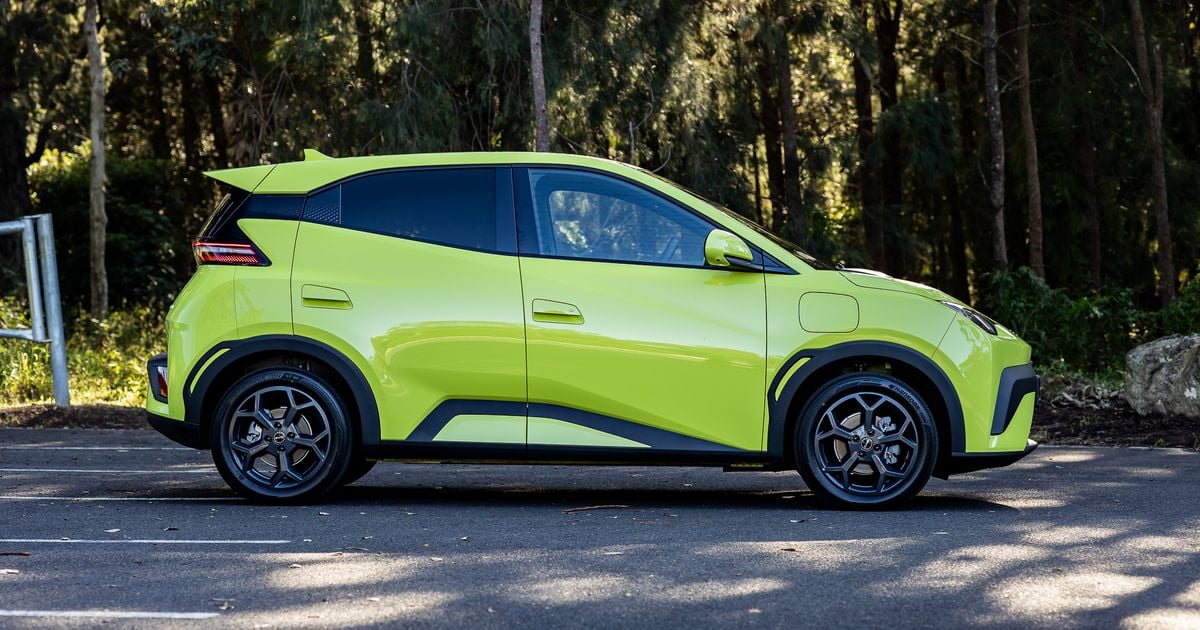
Last week, BYD dropped the price of its Atto 1 electric hatch to $19,990 drive-away. Already the cheapest electric vehicle (EV) in Australian new-car showrooms, the price cut means the Atto 1 ties with another Chinese hatch, the petrol-powered MG 3, as the cheapest vehicle on sale.
This week, BYD announced the Atto 2 plug-in hybrid (PHEV) from $24,990 before on-road costs, replacing the BYD Sealion 5, which is $33,990 before on-road costs, as Australia’s cheapest PHEV.
“We run finance campaigns like everybody does and that’s the nature of the market. This has nothing to do with price wars or anything,” BYD Australia chief operating officer Stephen Collins told the Australian Financial Review.
“This is about delivering value and making the latest tech available to everyone.”
BYD isn’t the price leader in every segment. Chery Australia currently offers the cheapest SUV, the Chery Tiggo 4, priced at $22,490 drive-away for 2025-plated models until September 30, with the Indian-made Mahindra XUV 3XO offered at the same promotional starting price.
Similarly, the Chinese-made GWM Cannon Hi4-T PHEV was revealed last week, with a $47,990 drive-away promotional price for Australian Business Number (ABN) holders.
This makes it the cheapest PHEV ute in showrooms, taking that title off another ute from China, the JAC Hunter PHEV, which in turn undercut another, the BYD Shark 6.
Across most new-vehicle segments in Australia, Chinese-made cars are the cheapest, from passenger cars and SUVs to commercial vehicles.
While this isn’t a shock, the latest round of price cuts follows Chinese government guidelines announced in September for the behaviour of its auto brands, many of them state-owned, in overseas markets like Australia.
Chinese automakers operating overseas “must not disrupt the order of market competition to obtain an improper competitive advantage”, the government guidelines said.
The guidelines were introduced as new-vehicle sales growth in China has slowed, with manufacturers looking to exports for sales growth.
“I don’t think it’s healthy to engage in any price wars,” Roy Muñoz, chief commercial officer (CCO) for Chery Australia and New Zealand, told CarExpert.
“Our focus is to grow our market share sustainably. I think sustainability is key, meaning there’s margin left in there for us, there’s margin left in there for the dealers, and the customer experience itself isn’t ruined,” Mr Muñoz said.
“I have no interest in engaging in any price wars.” In the realm of the automotive industry, a battle is brewing over prices. The Chief Commercial Officer of Chery acknowledges the importance of short-term price discounts but emphasizes the need to consider the long-term impact on business sustainability and customer satisfaction. It’s crucial to weigh the consequences of excessive discounting on residual values and the dealer network established over the years.
Steven Bragg, a partner at Pitcher Partners, echoes these sentiments, highlighting the detrimental effects of unsustainable discounting on the industry. The risk of devaluing resale prices and jeopardizing essential services like maintenance and warranty support looms large in this price war scenario.
Despite the allure of lower prices, a recent Canstar report revealed a surprising trend – Australians are spending more on new vehicles, with the average purchase price increasing significantly. This shift comes amidst rising petrol and diesel prices, driven by soaring oil costs that impact transport expenses and consumer goods prices across various sectors.
However, the automotive market continues to thrive, with record-breaking sales figures in recent months. Electric vehicles are gaining traction, surpassing traditional petrol and diesel models in market share for the first time. This shift towards sustainable transportation reflects changing consumer preferences and industry trends.
As the automotive landscape evolves, it’s clear that price competitiveness is just one aspect of the industry’s dynamics. Balancing short-term gains with long-term sustainability remains a crucial consideration for stakeholders across the board. In the face of changing market conditions and consumer preferences, adaptability and strategic decision-making will be key to navigating the challenges and opportunities that lie ahead. Transform the following:
Original: The house was painted by the workers yesterday.
Transformed: The workers painted the house yesterday.













BYD Ignites Price Battle in Australia Despite Chinese Government Caution

Chaos Unleashed: The Xbox Reset Disaster

AI Security Threats: Search Poisoning, Coding Tool Leaks, and Code Execution Risks

LOVE alt delete: A Y2K Nightmare of Virtual Romance

Motorola Signature 27: Revolutionizing the Smartphone Industry in 2026

Nexterity Revolutionizes Pipefitting with Automated Solutions

Seamless Tab Sharing: Google Chrome’s Latest Feature for Continuity Across Devices

Enter to Win a Cutting-Edge Apple MacBook Neo in Our Giveaway!

Breaking Barriers: Audi A6 E-Tron Shatters World Record with 831-Mile Range on a Single Charge

EU Takes Action Against Instagram and Facebook for Violating Illegal Content Rules

Warning: Facebook Creators Face Monetization Loss for Stealing and Reposting Videos

Facebook’s New Look: A Blend of Instagram’s Style

Facebook Compliance: ICE-tracking Page Removed After US Government Intervention

Facebook and Instagram to Reduce Personalized Ads for European Users

InstaDub: Meta’s AI Translation Tool for Instagram Videos

Reclaim Your Account: Facebook and Instagram Launch New Hub for Account Recovery

Meta discontinues Messenger apps for Windows and macOS

Breaking Updates: Meta Connect 2025 Unveils Latest Developments

The BEST $300 Phone (2018) ft. MKBHD, Technical Guruji, iJustine + More

Samsung Galaxy S9 Plus Gaming Review! (vs OnePlus 5T)

THE BEST PHONE HTC EVER MADE?

The Truth about Google?

Samsung S9/ S9+ vs iPhone X vs Galaxy Note 8 Battery Life DRAIN TEST

Samsung S9 / S9+ vs Mate 10 Pro vs iPhone X Charging SPEED Test

The BEST APPS in 2018 – ft. MKBHD, UrAvgConsumer, iJustine + More

The ULTIMATE Smartphone Unboxing!!

HOW GOOD can a $250 Smartphone Camera be!?
-
 Facebook11 months ago
EU Takes Action Against Instagram and Facebook for Violating Illegal Content Rules
-
 Facebook11 months ago
Warning: Facebook Creators Face Monetization Loss for Stealing and Reposting Videos
-
 Facebook10 months ago
Facebook’s New Look: A Blend of Instagram’s Style
-
 Facebook12 months ago
Facebook Compliance: ICE-tracking Page Removed After US Government Intervention
-
 Facebook10 months ago
Facebook and Instagram to Reduce Personalized Ads for European Users
-
 Facebook12 months ago
InstaDub: Meta’s AI Translation Tool for Instagram Videos
-
 Facebook10 months ago
Reclaim Your Account: Facebook and Instagram Launch New Hub for Account Recovery
-
 Apple11 months ago
Meta discontinues Messenger apps for Windows and macOS
