
Security
UK Implements Mandatory ID Verification for Social Media Account Creation

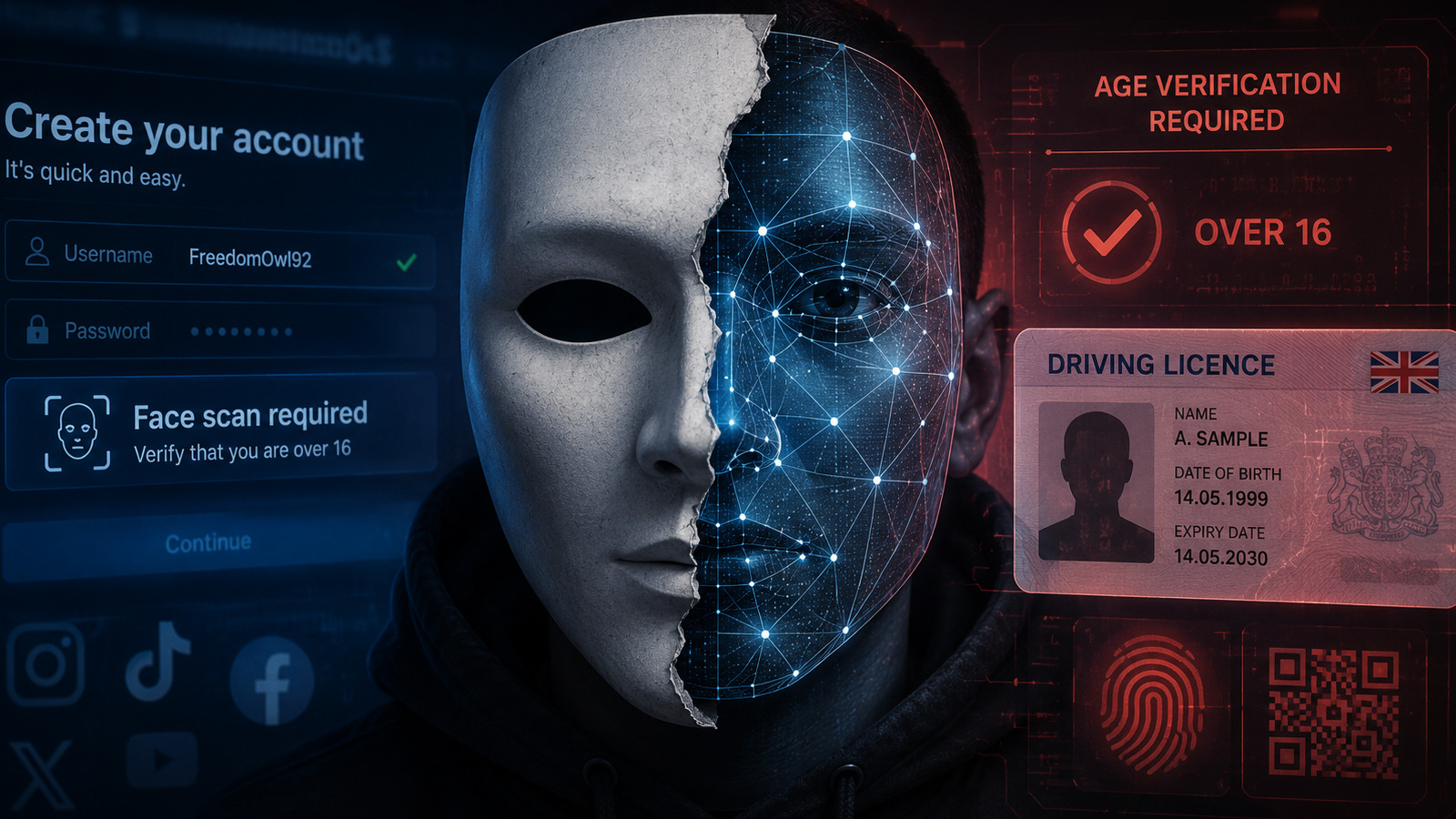
In a groundbreaking move, the UK government is set to implement regulations that will prohibit individuals under the age of 16 from accessing social media platforms. These regulations are expected to be finalized before Christmas and enforced by spring 2027.
Under these new rules, social media platforms will be required to verify the age of their users. This means that individuals creating new accounts will likely have to provide proof of being over 16 by submitting identification documents or undergoing facial age verification.
While existing accounts will mostly be exempt from these checks, new users will be subject to verification, effectively putting an end to anonymous account creation in the UK.

However, security and privacy experts have raised concerns about the ease with which these checks can be bypassed, putting the ID and biometric data of individuals at risk of breaches. Additionally, critics argue that these regulations were rushed through without adequate political scrutiny.
The Origin of the Regulation
Prime Minister Keir Starmer unveiled the plan on June 15, following a comprehensive national consultation that garnered over 116,000 responses from parents, children, and experts.
According to the government, nine out of ten parents supported the under-16 ban, and two-thirds of young people agreed that certain platforms should prohibit individuals under 16 from accessing them.
Prime Minister Starmer emphasized that the UK is taking unprecedented steps by implementing a ban on social media for under-16s to provide children with a safer online environment and protect their innocence. He stated, “This is a line in the sand. Tech giants had their chance and failed.”
Technology Secretary Liz Kendall framed the regulation as a necessary measure to hold tech companies accountable for failing to prioritize children’s safety. She asserted, “That is why we are taking power away from the tech giants and putting it back in parents’ hands.”
Scope of the Regulation
The UK’s ban on under-16s accessing social media is modeled after Australia’s similar regulation, which came into effect in December 2025, making it the first of its kind.
The ban will apply to user-to-user platforms that facilitate social interaction and utilize algorithmic feeds. Specific platforms mentioned include Instagram, YouTube, TikTok, Snapchat, Facebook, and X. Messaging services like WhatsApp and Signal are explicitly excluded, as well as YouTube Kids.
Furthermore, the UK aims to expand on Australia’s regulation by implementing stricter rules for high-risk features such as livestreaming and unsolicited contact with minors on a broader range of services, including gaming platforms like Roblox.
In addition, the UK government is considering measures such as overnight curfews and limitations on infinite scrolling for individuals under 18, with detailed guidelines expected to be released in July.
Implications for Adults
While the regulations are primarily focused on protecting minors, there are implications for adults as well. Most adults with existing accounts will not be subjected to additional age verification checks.
According to a fact sheet, accounts that have been active for more than 16 years, are linked to a credit card, or have already undergone age verification through another platform will be considered low-risk and exempt from further checks.
However, for new users creating accounts after the regulations are implemented, stringent age verification measures such as facial recognition checks or ID uploads will be mandatory. This effectively means that no adult can open a new social media account in the UK without verifying their age.
It’s worth noting that the current regulations are less stringent compared to those governing adult-content platforms, which require age verification for every user since July 25, 2025.
Enforcement of these regulations has been robust, with regulatory bodies like Ofcom investigating multiple platforms and issuing fines for non-compliance. The social media age-gate introduces a similar verification process, with Ofcom tasked to explore effective methods for verifying users’ age.
Addressing the VPN Concern
One significant loophole in the age verification process is the use of VPNs, which can circumvent the checks by masking the user’s location. While the UK government has ruled out a blanket ban on VPNs for the general population, there are discussions around restricting VPN usage for children.
In February 2026, the government considered options to limit children’s access to VPNs, with the House of Lords even proposing measures to prohibit VPN providers from serving UK children. However, these proposals have faced opposition and are still under review.
Despite efforts to close this loophole, determined individuals, including teenagers, can still find ways to bypass age verification checks using VPNs.
Concerns Raised by Security Experts
Security and privacy researchers have highlighted several concerns regarding the enforcement of age verification regulations. While the intention behind the regulations is to enhance online safety, the methods used to verify age pose new risks.
Dr. Siamak Shahandashti, a cyber security expert, emphasized the need for robust age verification standards to prevent minors from bypassing the checks easily. He cited research showing that current age verification methods lack the necessary robustness to deter motivated minors.
Another researcher, Dr. Richard Gomer, warned about the risks associated with sharing sensitive identification documents with online platforms. He expressed concerns about potential identity theft and blackmail if these records are compromised, as seen with previous data breaches under the Online Safety Act.
The Open Rights Group (ORG) cautioned that individuals over 16 may have to disclose personal information to unregulated age-verification companies, increasing the risk of data breaches. The group emphasized the need to address the root cause of harmful online content rather than focusing solely on age verification measures.
Major tech companies like Meta and YouTube have also raised objections to the regulations, arguing that age bans could drive teenagers to less regulated platforms, ultimately compromising their safety. They advocate for age verification measures to be implemented at the device level to enhance user privacy.
Future Outlook
As the UK government moves towards stricter age verification measures, including the ban on under-16s accessing social media, the online landscape is evolving to prioritize user safety and privacy. These regulations align with the government’s broader initiatives to introduce digital wallets and digital driving licenses for secure online verification.
While the regulations aim to protect minors and enhance online safety, the ongoing debate surrounding VPN usage and the efficacy of age verification methods underscores the complexity of balancing security and privacy in the digital age.












High-Speed Havoc: Navigating the Chaos in Zero Parade’s Director’s Cut

Cutting-Edge Innovations: The Latest from Samsung, Google, Xiaomi, and More

Beware: The Top 6 Emerging Scams Targeting Startups in 2027

Adecco Group Introduces Agentforce Coworker Program to Enhance Collaboration Among 27,000 Employees

The Battle of Technology: iPhone 18 Pro vs AI

Revolutionizing Luxury: The 2027 Porsche Cayenne Electric with Automatic Doors and Wireless Charging

Capcom Takes a Stand Against Microtransactions in Monster Hunter Wilds: Ascendance

Uncovering the Hidden Quirks of iPhone Duo Design: A Tech Advisor’s Perspective

Xiaomi Redmi Note 17 5G Slashes Prices on Amazon – Tech Bargain Alert!

EU Takes Action Against Instagram and Facebook for Violating Illegal Content Rules

Warning: Facebook Creators Face Monetization Loss for Stealing and Reposting Videos

Facebook Compliance: ICE-tracking Page Removed After US Government Intervention

Facebook’s New Look: A Blend of Instagram’s Style

Facebook and Instagram to Reduce Personalized Ads for European Users

InstaDub: Meta’s AI Translation Tool for Instagram Videos

Reclaim Your Account: Facebook and Instagram Launch New Hub for Account Recovery

Meta discontinues Messenger apps for Windows and macOS

Breaking Updates: Meta Connect 2025 Unveils Latest Developments

10 Android Mods that Change Everything

I used the first Android Phone in the World.

DOOGEE MIX 4 UNBOXING (PROTOTYPE)!

MYSTERY UNBOXING FROM SAMSUNG!

The Truth about Huawei P20 Pro – REAL Review

How to Love your Android Phone again.

The LG G7 has a Big Problem.

The most Beautiful Android Games you’ve never played.

Charge your Smartphone in 5 Minutes – How Batteries are about to Change!
-
 Facebook11 months ago
EU Takes Action Against Instagram and Facebook for Violating Illegal Content Rules
-
 Facebook11 months ago
Warning: Facebook Creators Face Monetization Loss for Stealing and Reposting Videos
-
 Facebook11 months ago
Facebook Compliance: ICE-tracking Page Removed After US Government Intervention
-
 Facebook9 months ago
Facebook’s New Look: A Blend of Instagram’s Style
-
 Facebook9 months ago
Facebook and Instagram to Reduce Personalized Ads for European Users
-
 Facebook11 months ago
InstaDub: Meta’s AI Translation Tool for Instagram Videos
-
 Facebook10 months ago
Reclaim Your Account: Facebook and Instagram Launch New Hub for Account Recovery
-
 Apple11 months ago
Meta discontinues Messenger apps for Windows and macOS
