
Inovation
EuroHPC Unveils Cutting-Edge SOL Quantum Computer and LISA AI Upgrade in Italy

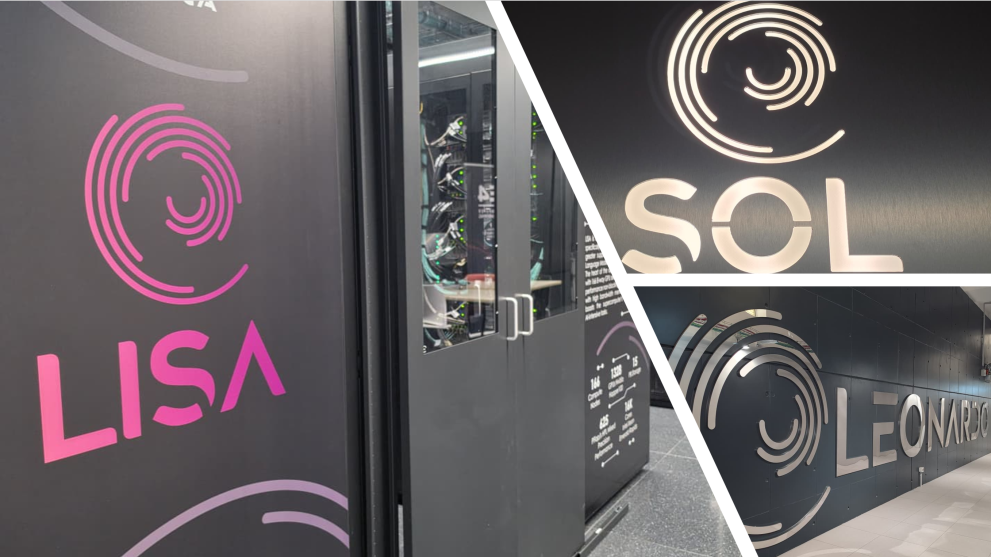
Europe Invests in Next-Generation Computing Infrastructure with Inauguration of SOL Quantum Computer and LISA AI Partition in Bologna
The EuroHPC Joint Undertaking (EuroHPC JU) recently celebrated the official inauguration of the SOL quantum computer and the new LISA artificial intelligence computing partition in Bologna, Italy. The unveiling took place at the DAMA Technopole in Emilia-Romagna, with CINECA and the Italian Research Centre on High-Performance Computing, Big Data, and Quantum Computing (ICSC) hosting the ceremony.
This significant investment in Europe’s computing infrastructure integrates both systems with Leonardo, one of the continent’s leading pre-exascale supercomputers. The SOL quantum computer and LISA AI partition are designed to drive advancements in quantum computing, artificial intelligence, scientific research, and industrial innovation.
By enhancing Europe’s computing capacity, the launch aims to bolster technological sovereignty, facilitate cutting-edge research, and improve access to digital resources for scientists, businesses, and public institutions across the continent.
Anders Jensen, Executive Director of EuroHPC JU, expressed confidence in the transformative impact of the two systems on Europe’s supercomputing capabilities. He emphasized the importance of strengthening the continent’s sovereign supercomputing ecosystem to foster innovation in AI, HPC, and quantum technologies.
The high-profile inauguration event in Bologna brought together senior European and Italian officials, including Italian Minister of University and Research Anna Maria Bernini, European Commission Director-General Roberto Viola, and EuroHPC JU representative Daniel Opalka. Jointly funded by the European Union and Italy’s Ministry of University and Research through ICSC, the projects signify a strategic step towards establishing a competitive European computing ecosystem.
Introducing SOL Quantum Computer
The SOL quantum computer, hosted and operated by CINECA and supplied by Pasqal, leverages neutral-atom technology to control arrays of optically trapped atoms through programmable laser interactions. The system’s name reflects its laser-based architecture and Italy’s cultural heritage, symbolizing precision and the sun.
The first-generation processor of SOL features at least 140 qubits operating in analogue mode, with a planned 2027 upgrade to introduce hybrid analogue-digital capabilities for more advanced computing applications. By integrating quantum resources with the Leonardo supercomputer, SOL is poised to support hybrid quantum-classical workflows.
Researchers will have the opportunity to explore complex optimization challenges, quantum physics simulations, and emerging machine learning applications that conventional computing methods may struggle to address. The SOL quantum computer is scheduled to be available to European users in autumn 2026.
Expanding Europe’s Quantum Network
Europe’s investment in quantum computing is evident with the addition of the SOL quantum computer to the EuroHPC program. As the sixth quantum system under the initiative, SOL contributes to the continent’s growing quantum infrastructure network. Quantum systems, utilizing qubits to represent multiple states simultaneously, have the potential to accelerate calculations in various fields such as materials science, pharmaceuticals, logistics, energy systems, and AI research.
Offering European researchers and industry users access to domestic quantum resources within a powerful supercomputing environment, SOL enhances Europe’s quantum capabilities.
Introducing LISA AI Partition
LISA, the Leonardo Improved Supercomputing Architecture partition, launched alongside SOL, is tailored for AI workloads within the Leonardo ecosystem. The dedicated AI infrastructure is designed to meet the computational demands of large language models, generative AI, and multimodal AI applications.
Comprising 166 advanced GPU servers with 1,328 interconnected graphics processors, LISA significantly boosts Leonardo’s capacity for training and running complex AI models. It is the first EuroHPC computing partition specifically developed for AI applications, aligning with Europe’s digital strategy emphasizing the importance of AI.
LISA is expected to be operational for users by summer 2026 and will support IT4LIA, Italy’s EuroHPC AI Factory initiative, aimed at enhancing AI research, innovation, and industrial adoption in Europe.
Significant Investment in Future Computing
The procurement contract for the SOL quantum computer, signed with Pasqal in March 2025, represents a €13m investment split equally between EuroHPC JU and Italy’s Ministry of University and Research through ICSC. The larger investment of approximately €50m for the LISA deployment covers infrastructure acquisition, installation, operation, and support.
With six quantum computers deployed across Europe, EuroHPC continues to build a pan-European quantum computing network, providing researchers and businesses access to advanced computational resources. The launch of SOL and LISA underscores Europe’s commitment to advancing quantum computing and AI technologies.








Ram Trucks Australia Braces for Price Increases Due to Emissions Regulations

Revving Up: Tractor Battle Adventure RPG Expands with Mod Support on Steam Workshop

Troubleshooting Guide: Unable to Access 192.168.0.1

Choosing the Right AI: Ensuring Trust in Multi-Model Translation Systems

Friday Night Baseball Madness: iPhone 18 Pro Edition

Partnership Potential: JAC & Huawei in Talks to Produce Electric Maserati Vehicles

Grand Theft Auto VI: The Soundtrack – Limited Edition Physical Release

The Never-Ending Battle of the Galaxy S27 Ultra Camera: A Tech Advisor’s Perspective

Motorola Signature 27: Unveiled Specs and Vibrant Colour Options – Tech Advisor

EU Takes Action Against Instagram and Facebook for Violating Illegal Content Rules

Warning: Facebook Creators Face Monetization Loss for Stealing and Reposting Videos

Facebook’s New Look: A Blend of Instagram’s Style

Facebook Compliance: ICE-tracking Page Removed After US Government Intervention

Facebook and Instagram to Reduce Personalized Ads for European Users

InstaDub: Meta’s AI Translation Tool for Instagram Videos

Reclaim Your Account: Facebook and Instagram Launch New Hub for Account Recovery

Meta discontinues Messenger apps for Windows and macOS

Breaking Updates: Meta Connect 2025 Unveils Latest Developments

Huawei P20 Pro Unboxing!

Huawei P20 Pro vs Samsung S9 Plus!

Huawei P20 vs P20 Pro vs iPhone 8 Plus vs S9 Battery Drain Test!

10 Android Mods that Change Everything

I used the first Android Phone in the World.

DOOGEE MIX 4 UNBOXING (PROTOTYPE)!

MYSTERY UNBOXING FROM SAMSUNG!

The Truth about Huawei P20 Pro – REAL Review

How to Love your Android Phone again.
-
 Facebook11 months ago
EU Takes Action Against Instagram and Facebook for Violating Illegal Content Rules
-
 Facebook11 months ago
Warning: Facebook Creators Face Monetization Loss for Stealing and Reposting Videos
-
 Facebook9 months ago
Facebook’s New Look: A Blend of Instagram’s Style
-
 Facebook11 months ago
Facebook Compliance: ICE-tracking Page Removed After US Government Intervention
-
 Facebook9 months ago
Facebook and Instagram to Reduce Personalized Ads for European Users
-
 Facebook11 months ago
InstaDub: Meta’s AI Translation Tool for Instagram Videos
-
 Facebook10 months ago
Reclaim Your Account: Facebook and Instagram Launch New Hub for Account Recovery
-
 Apple11 months ago
Meta discontinues Messenger apps for Windows and macOS
