
Mobile Tech
25 Years of Innovation: The Evolution of the Apple Store

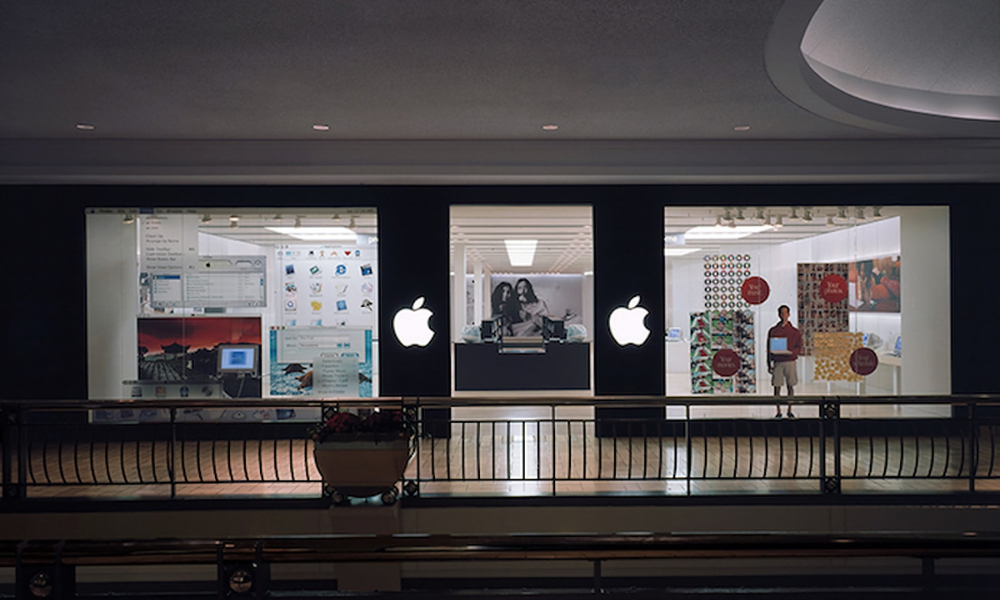
It was 25 years ago this week that Apple opened its first Apple retail stores. This move not only offered a more convenient way to buy Apple products and get their Apple devices serviced, it also changed the way we all look at the in-store retail experience.
Steve Jobs starred in a promotional video for Apple’s upcoming new retail stores, saying simply, “this is our store.” The video was released in May 2001, and the first-ever Apple Stores opened the following Saturday, May 19, 2001.
Apple opened its first two stores in Glendale, California, and Tysons Corner, Virginia. From those humble beginnings, the Apple Store chain has grown to more than 500 stores in over 20 countries around the globe, continuing to grow even in troubled times for the retail sector, from the 9/11 terrorist attacks to the COVID-19 pandemic and the increasing number of shuttered shopping malls in recent years.
As you might imagine, Apple’s success in the retail space was noticed by its rivals, with Microsoft launching retail stores that were confusingly similar to Apple’s retail spaces, often locating their copycat stores near Apple Store locations. Over the 25 years since the opening of the first Apple Retail Store, we’ve also seen Sony attempt to establish a foothold in the retail store space, while several imitation Apple Stores have been opened in China.
Before Apple opened its first retail stores in 2001, Macs were sold only through chain stores and a network of authorized retailers, resulting in less-than-satisfactory device and software support.
In 1997, Steve Jobs — who had recently returned to Apple, thanks to the company’s purchase of his company, NeXT — tested a “store-within-a-store” concept in CompUSA stores. During that period, Apple also pulled its products from other large retailers.
Apple also noticed the success of Dell in selling its computers and accessories via online sales on its website. Apple soon launched its own online retail store, using technology it acquired when it bought NeXT. The new web store came online just as Apple was launching the original iMac.
With Apple’s online retail experience firmly established, Jobs turned his attention to the brick-and-mortar retail space, hiring former Target executive Ron Johnson to create, open, and run physical Apple Retail Stores. Johnson had great success at Target, re-establishing the department store chain as a popular retail destination for consumers.
Together, Jobs and Johnson developed and refined the Apple Store retail concept in a secret warehouse, where they built a full-sized prototype, working to refine every detail of the upcoming stores. Gap CEO Mickey Drexler, who had joined Apple’s board in 1999, also played a key role in shaping Apple’s retail store vision.
Then came the announcement on May 15, 2001, that Apple would be opening 25 retail stores during that year, with the first two opening that same week on Saturday, May 19, 2001.
The announcement was accompanied by a video where Jobs showed off the layout of the new stores, which featured products like iMacs, PowerBooks, Power Macs, and iBooks at the front of the store. This layout would change over the years, as Apple refined its retail stores with the debut of iPods, iPhones, iPads, and other products.
The store also offered music, movies, photos, and a section designed for kids, where they could be occupied using iMacs while their parents shopped for Apple products. At that time, non-Apple products, like camcorders and digital cameras were also offered alongside the Apple products. Boxed software also occupied a large area of the new stores, although that section shrank and eventually disappeared, thanks to software being offered for download (and subscription) over the internet.
The Genius Bar also made its debut with the opening of the new stores, with in-store “Geniuses” being available to answer customers’ questions and offer solutions to issues they were having with Apple devices.
500+ Apple fans were lined up outside the Tysons Corner retail store, several hours before it was scheduled to open its doors for the first time. The first two stores, at Tysons Corner and in Glendale, California, hosted more than 7,500 visitors, selling a combined $599,000 in Apple products in their first two days.
While the original Tysons Corner location was moved to a larger home in 2023, a virtual tour of the original store, as well as three other early Apple Retail locations, is available via a Mac app by artist, developer, and Apple Store historian Michael Steeber.
The four stores that are recreated in the app are:
- Tysons Corner as it was on May 19, 2001
- Stanford Shopping Center as it was on October 16, 2004
- Fifth Avenue as it was on May 19, 2006
- Apple Infinite Loop as it was on September 19, 2015
While Apple has experienced great success with its retail stores over the last quarter century, it has faced many of the same problems as most other brick-and-mortar retailers.
2020 saw the rise of the coronavirus, leading to the shutdown of huge numbers of physical retail stores, and Apple was no exception. For months, hundreds of Apple stores around the globe remained shuttered, before slowly once again re-opening their doors to the public, although several were temporarily shuttered once more, due to COVID flare ups in their areas.
During the pandemic, Apple refined its online store, allowing customers to order Apple products from the safety of their home, with contact-free delivery bringing their purchases to their doorsteps.
While Apple admirably continued to pay the employees of all of its shuttered retail locations during the pandemic, it has received less-than-glowing reviews of how it relates to its employees in recent years.
While several employees complain about how Apple treats them, the company argues that its relationship with employees has never been better.
That said, multiple Apple Stores have seen employees attempt to organize labor unions, and Apple has pushed back.
“I worry about what it would mean to put another organization in the middle of our relationship,” Apple’s head of retail, Deirdre O’Brien said in May 2022.
Apple is dedicated to enhancing the working conditions and pay for its retail staff, although critics claim this only occurred as a response to the rising possibility of employee unionization. Allegations have been made that Apple has taken illegal actions to thwart union organizing endeavors, including the dismissal of union activists.
In April 2026, the International Association of Machinists and Aerospace Workers (IAM) Union lodged an Unfair Labor Practice (ULP) charge against Apple concerning the retail employees at the soon-to-be-shuttered store in Towson, Maryland. This stems from Apple’s failure to automatically offer positions at other retail outlets to the Towson store employees, a practice it typically follows for other closed locations. Notably, the Towson store became the first Apple US retail location to unionize back in 2022.







How Smart is the AI-Powered Huawei Mate 10 – with EMUI 8.0?

Reviving the Legacy: Porsche Mission S Unveils Carrera GT-Inspired Gauge Cluster

Navigating the New Normal: Satya Nadella’s Journey in the Post-COVID World of Microsoft

Persona 4 Reborn: Unveiling Naoto Shirogane’s Return in New Trailer

Unveiling the Powerhouse: Xiaomi 18 Pro Max Global Leak Exposes Impressive Performance Features

Breaking News: Android U-Turn Officially Confirmed by Tech Advisor

Strategies for Building a Successful Home Services Franchise System: Driving Growth and Scalability

Apple and LG Unveil Game-Changing ‘Tap to Control’ HomeKit Features

The Surprising Decision: Tim Cook’s Early Departure Before iPhone Duo Launch

EU Takes Action Against Instagram and Facebook for Violating Illegal Content Rules

Warning: Facebook Creators Face Monetization Loss for Stealing and Reposting Videos

Facebook’s New Look: A Blend of Instagram’s Style

Facebook Compliance: ICE-tracking Page Removed After US Government Intervention

Facebook and Instagram to Reduce Personalized Ads for European Users

InstaDub: Meta’s AI Translation Tool for Instagram Videos

Reclaim Your Account: Facebook and Instagram Launch New Hub for Account Recovery

Meta discontinues Messenger apps for Windows and macOS

Breaking Updates: Meta Connect 2025 Unveils Latest Developments
How Smart is the AI-Powered Huawei Mate 10 – with EMUI 8.0?

I used a 2012 Smartphone in 2018 – Here’s what happened.

How to send ANY file Anywhere!

NEW Oneplus 5T Sandstone White Unboxing – The Ultimate Oneplus 5T?

HUAWEI P20 – THE SMARTPHONE REVOLUTION IS HERE?

How OnePlus succeeded when they should have failed.

Samsung sent us THIS! #AD

Ulefone Power 3 – Quad Camera Smartphone that last 2 weeks!

EPIC Smartphone FAILS that people will never forget.
-
 Facebook12 months ago
EU Takes Action Against Instagram and Facebook for Violating Illegal Content Rules
-
 Facebook12 months ago
Warning: Facebook Creators Face Monetization Loss for Stealing and Reposting Videos
-
 Facebook10 months ago
Facebook’s New Look: A Blend of Instagram’s Style
-
 Facebook12 months ago
Facebook Compliance: ICE-tracking Page Removed After US Government Intervention
-
 Facebook10 months ago
Facebook and Instagram to Reduce Personalized Ads for European Users
-
 Facebook12 months ago
InstaDub: Meta’s AI Translation Tool for Instagram Videos
-
 Facebook10 months ago
Reclaim Your Account: Facebook and Instagram Launch New Hub for Account Recovery
-
 Apple12 months ago
Meta discontinues Messenger apps for Windows and macOS
