
Gadgets
Foldable Flagship Showdown: Google Pixel 10 Pro Fold vs Samsung Galaxy Z Fold 7

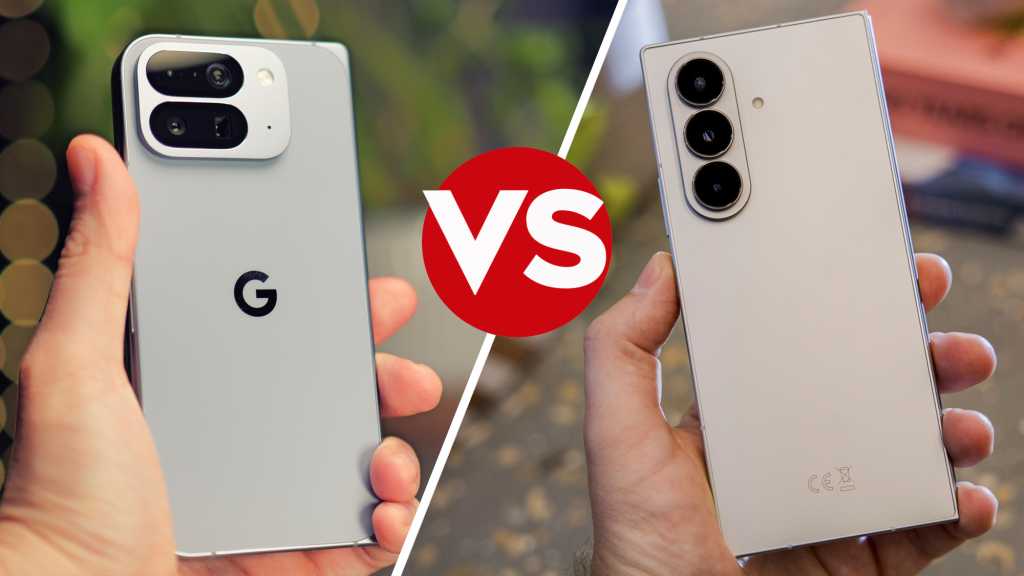
The arrival of the Google Pixel 10 Pro Fold has introduced exciting new features like an IP68 rating and Pixelsnap magnets to the foldable device market. If you’re considering an upgrade, now might be the perfect time to experience the world of foldable phones.
However, Google isn’t the only major player in the foldable arena. Just a few months ago, Samsung impressed us with the sleek and powerful Galaxy Z Fold 7. Can this new model compete with Google’s offering?
After spending quality time with both devices, I have gathered plenty of insights. Let’s delve into a detailed comparison of these two foldable phones.
Design
When it comes to design, the Pixel 10 Pro Fold and Galaxy Z Fold 7 take different approaches. Samsung has completely redesigned the Z Fold 7 for 2025, while the Pixel retains a similar look to its predecessor. Each device has unique design elements that may influence your preference.
Luke Baker
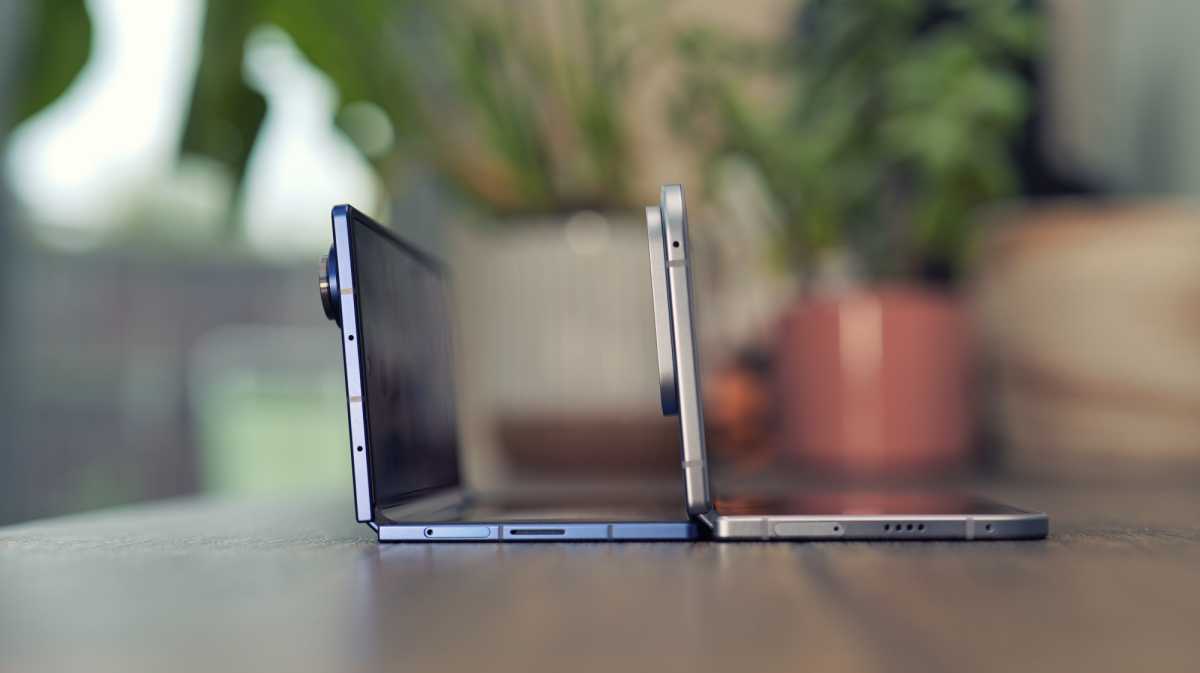
The Galaxy Z Fold 7 boasts a slim and lightweight design that closely resembles a traditional flagship phone when folded. It is lighter and thinner compared to the non-folding Galaxy S25 Ultra. The device features a super-slim bezel and a sharp angular design that maximizes screen space on both the interior and exterior displays.
For those seeking a folding phone that feels like a standard device, the Z Fold 7 stands out as the top choice. Additionally, the device’s design enhances its portability and screen utilization.
Luke Baker
In contrast, the Pixel 10 Pro Fold presents a different design approach with a thicker profile when folded and slightly heavier weight. The device features soft, rounded corners on both displays and a relatively chunky bezel.
Despite its bulkier appearance, the Pixel offers exceptional durability and confidence-inspiring build quality. It is the first foldable device to achieve an IP68 rating, making it dust and water resistant. In comparison, the Fold 7 has a lower IP48 rating, leaving it more vulnerable to dust-related issues.
Moreover, the Pixel 10 Pro Fold introduces Pixelsnap technology, akin to Apple’s MagSafe, allowing compatibility with a wide range of MagSafe accessories without the need for additional cases. While Samsung offers magnetic cases with similar functionality, the Pixel’s approach makes cases optional.
Displays
The Pixel 10 Pro Fold features a 6.4-inch cover display, while the Galaxy Z Fold 7 offers a slightly larger 6.5-inch screen. Both devices boast 8-inch foldable panels on the interior.
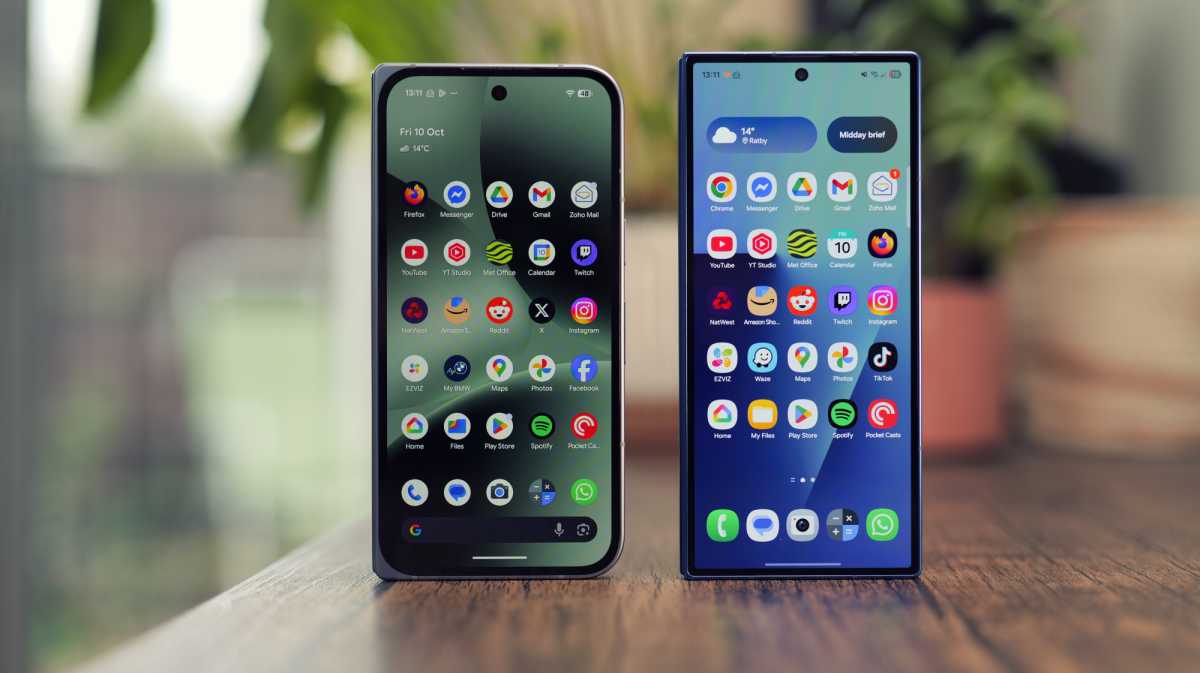
Despite the marginal difference in display sizes, the user experience varies due to design elements. The Pixel’s curved corners contrast with the sharper edges of the Samsung, impacting the overall screen perception.
Luke Baker
The Samsung device offers screens that feel larger in use due to its sharper corners that extend into the content. While the Pixel’s cover screen may feel slightly cramped, its soft corner radius enhances comfort, especially when unfolded. Additionally, the thicker bezel on the folding display provides a secure grip without accidental screen taps.
Although the Pixel screens exhibit slightly higher maximum brightness, the visual experience remains comparable between the two devices. Notably, the Samsung device adjusts display brightness to prevent overheating in sunlight, a feature that may impact user experience in outdoor settings.
Luke Baker
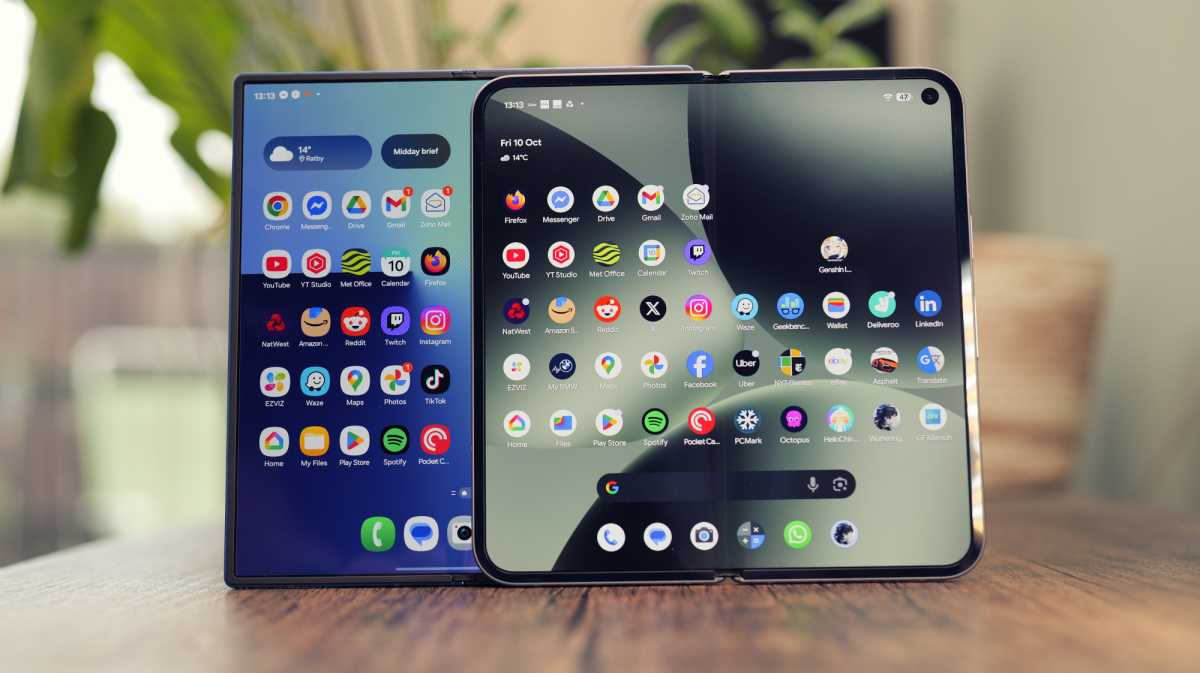
In terms of the display crease, the Samsung device offers a less noticeable crease compared to the Pixel, enhancing the overall viewing experience. While users may acclimate to the crease over time, sensitive users may prefer the smoother crease on the Samsung device.
Performance
The Samsung Galaxy Z Fold 7 is equipped with the powerful Qualcomm Snapdragon 8 Elite processor, known for its exceptional performance. In contrast, the Pixel 10 Pro Fold utilizes Google’s Tensor G5 chip, offering significant improvements over its predecessor.
The Tensor G5 chip delivers enhanced benchmark scores and a smoother user experience, although it falls slightly behind the Snapdragon in terms of raw performance. While everyday tasks like social media browsing and email management are seamless on both devices, demanding activities like gaming and video editing may showcase the Snapdragon’s superiority.

Luke Baker
Storage-wise, both devices offer a base configuration of 256GB, with options to upgrade to 512GB or 1TB. However, the Pixel boasts an advantage with 16GB of RAM across all models, while the Z Fold 7 requires the pricier 1TB model to match the Pixel’s RAM capacity.
In practical terms, the RAM difference may not significantly impact user experience, as both devices excel in multitasking. While heavy usage scenarios may reveal slight performance variations, both phones offer impressive performance capabilities.
Cameras
Both devices feature a triple camera setup on the rear and a selfie camera on each screen. The Pixel includes a 5x lens, while the Samsung incorporates a 3x lens in its camera array.












BYD Ignites Price Battle in Australia Despite Chinese Government Caution

Chaos Unleashed: The Xbox Reset Disaster

AI Security Threats: Search Poisoning, Coding Tool Leaks, and Code Execution Risks

LOVE alt delete: A Y2K Nightmare of Virtual Romance

Motorola Signature 27: Revolutionizing the Smartphone Industry in 2026

Nexterity Revolutionizes Pipefitting with Automated Solutions

Seamless Tab Sharing: Google Chrome’s Latest Feature for Continuity Across Devices

Enter to Win a Cutting-Edge Apple MacBook Neo in Our Giveaway!

Breaking Barriers: Audi A6 E-Tron Shatters World Record with 831-Mile Range on a Single Charge

EU Takes Action Against Instagram and Facebook for Violating Illegal Content Rules

Warning: Facebook Creators Face Monetization Loss for Stealing and Reposting Videos

Facebook’s New Look: A Blend of Instagram’s Style

Facebook Compliance: ICE-tracking Page Removed After US Government Intervention

Facebook and Instagram to Reduce Personalized Ads for European Users

InstaDub: Meta’s AI Translation Tool for Instagram Videos

Reclaim Your Account: Facebook and Instagram Launch New Hub for Account Recovery

Meta discontinues Messenger apps for Windows and macOS

Breaking Updates: Meta Connect 2025 Unveils Latest Developments

The BEST $300 Phone (2018) ft. MKBHD, Technical Guruji, iJustine + More

Samsung Galaxy S9 Plus Gaming Review! (vs OnePlus 5T)

THE BEST PHONE HTC EVER MADE?

The Truth about Google?

Samsung S9/ S9+ vs iPhone X vs Galaxy Note 8 Battery Life DRAIN TEST

Samsung S9 / S9+ vs Mate 10 Pro vs iPhone X Charging SPEED Test

The BEST APPS in 2018 – ft. MKBHD, UrAvgConsumer, iJustine + More

The ULTIMATE Smartphone Unboxing!!

HOW GOOD can a $250 Smartphone Camera be!?
-
 Facebook11 months ago
EU Takes Action Against Instagram and Facebook for Violating Illegal Content Rules
-
 Facebook11 months ago
Warning: Facebook Creators Face Monetization Loss for Stealing and Reposting Videos
-
 Facebook10 months ago
Facebook’s New Look: A Blend of Instagram’s Style
-
 Facebook12 months ago
Facebook Compliance: ICE-tracking Page Removed After US Government Intervention
-
 Facebook10 months ago
Facebook and Instagram to Reduce Personalized Ads for European Users
-
 Facebook12 months ago
InstaDub: Meta’s AI Translation Tool for Instagram Videos
-
 Facebook10 months ago
Reclaim Your Account: Facebook and Instagram Launch New Hub for Account Recovery
-
 Apple11 months ago
Meta discontinues Messenger apps for Windows and macOS
