The Importance of Reviewing Original Records for Cybersecurity Professionals
By Gary S. Miliefsky
Publisher, Cyber Defense Magazine
Over the past decade, cybersecurity experts have closely followed the annual evaluations of election technology at DEF CON’s Voting Village. These assessments, conducted by independent researchers and former government officials, have consistently highlighted vulnerabilities in various components of the election infrastructure. While these demonstrations have not proven any specific election was compromised, they underscore a crucial point: no electronic system should be considered immune to scrutiny.
Just like banks, power grids, and military systems undergo continuous testing, election infrastructure should also be subject to rigorous examination. As someone who has interviewed numerous cybersecurity professionals over the years, I have learned that security is not achieved through assumptions but rather through transparency, continuous testing, independent verification, and concrete evidence.
The recent release of the White House Election Integrity archives presents a valuable opportunity for cybersecurity professionals to delve into the original evidence rather than relying solely on headlines or social media narratives.
Having personally reviewed the first four declassified archives, which comprise 269 pages across 58 government documents from agencies like the FBI, CIA, DHS, and CISA, I can attest to the importance of approaching these records with a critical eye.
While the goal is not to pass judgment on guilt or innocence, it is essential to understand the contents of these records and why they are significant for cybersecurity professionals.
One key aspect of these releases is the decision to declassify them, allowing a wider audience to scrutinize the information previously restricted to a select few. Declassification does not validate the allegations within the documents but enables independent experts, journalists, and the public to assess the evidence firsthand.
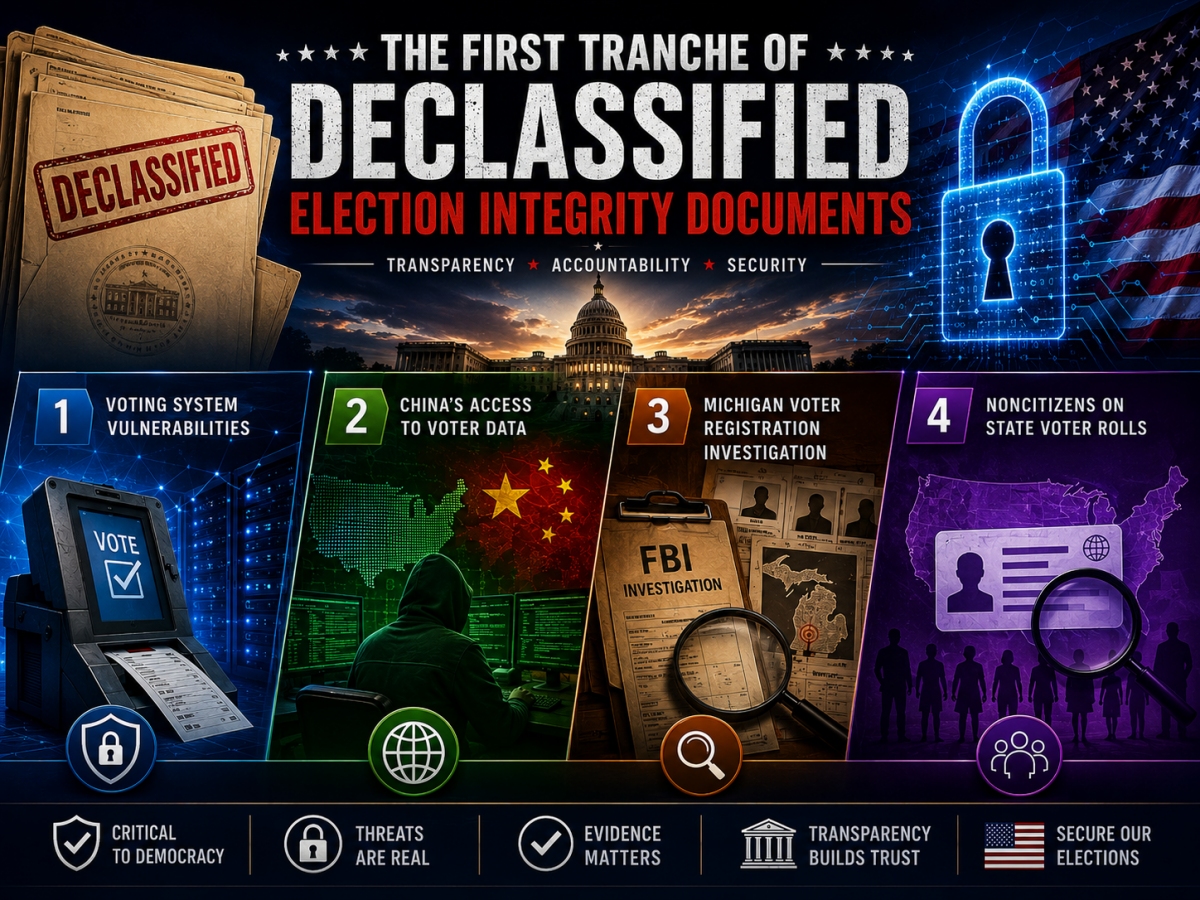
The release is organized into four collections, each shedding light on different aspects of election security and intelligence:
1. Vulnerabilities in Electronic Voting and Ballot-Counting Systems
Official Archive:
[Link to Archive]
Contents:
This collection includes assessments, technical reports, and intelligence on election infrastructure security, covering topics like election management systems, voter registration databases, and foreign cyber capabilities. Notably, it features technical assessments by CISA highlighting vulnerabilities in state and local government environments.
Analysis:
The documents emphasize the ongoing need for cybersecurity attention in election infrastructure, aligning with the standard approach to securing critical systems.
2. China’s Acquisition and Exploitation of American Voter Data
Official Archive:
[Link to Archive]
Contents:
This collection delves into China’s efforts to gather and leverage American voter information, drawing on intelligence assessments, FBI reports, and analytical products. It underscores the national security implications of foreign entities accessing detailed voter data for influence operations.
Analysis:
The intelligence reporting highlights the seriousness with which such threats are regarded within the U.S. Intelligence Community, underscoring the need for continued vigilance.
Key Takeaways from the Archives
Upon reviewing these collections, several conclusions emerge:
- Election infrastructure is not invulnerable to cyber threats.
- Foreign governments actively seek to influence democratic processes through data collection.
- Intelligence agencies have dedicated significant resources to understanding and countering these threats.
- Election security should be approached as a critical cybersecurity issue rather than a purely political concern.
These insights underscore the importance of examining the evidence provided in these archives for cybersecurity professionals.
3. Michigan Voter Registration Investigation
Official White House Archive:
[Link to Archive]
Contents:
This collection documents a comprehensive FBI investigation into suspicious voter registration activity in Michigan. The records reveal the depth of the investigation, including forensic analysis, witness interviews, and prosecutorial review memoranda.
Analysis:
The investigation’s scope underscores the importance of robust identity validation in ensuring election integrity, highlighting the significance of thorough technical and investigative scrutiny.
4. Noncitizens on State Voter Rolls
Official White House Archive:
[Link to Archive]
Contents:
This archive contains analyses by DHS regarding apparent noncitizen registrations in state voter databases. While the findings warrant further verification, they prompt a transparent review to bolster public confidence.
Analysis:
The identification of potential noncitizen registrations underscores the need for thorough validation and verification processes to ensure the integrity of voter rolls.
In conclusion, the archives emphasize that election infrastructure should be approached with the same level of scrutiny as other critical systems. Continuous testing, independent assessment, and transparency are essential for bolstering public trust in the electoral process.
As additional declassified materials are released, cybersecurity professionals should seize the opportunity to assess the evidence objectively and strengthen confidence in our democratic institutions.
Trust, but verify – this principle applies not only to cybersecurity but also to safeguarding our democratic processes. By engaging in thorough analysis and independent verification, we can fortify the security and integrity of our election infrastructure.
Gary S. Miliefsky, Chairman & CEO
Cyber Defense Media Group
Publisher, Cyber Defense Magazine
📘 For a comprehensive guide to cybersecurity best practices, check out:
Cybersecurity Simplified for Beginners
[Link to Book]
Gary Miliefsky is a prominent cybersecurity expert and the publisher of Cyber Defense Magazine. With a wealth of experience and a dedication to cybersecurity education and innovation, Gary’s insights are highly regarded in the industry. Through his work at Cyber Defense Media Group, he continues to influence the cybersecurity landscape and advocate for robust defense strategies against evolving cyber threats.