
Cars
Xpeng P7: The Chinese Electric Sedan Ready to Challenge Tesla Model 3 in Australia

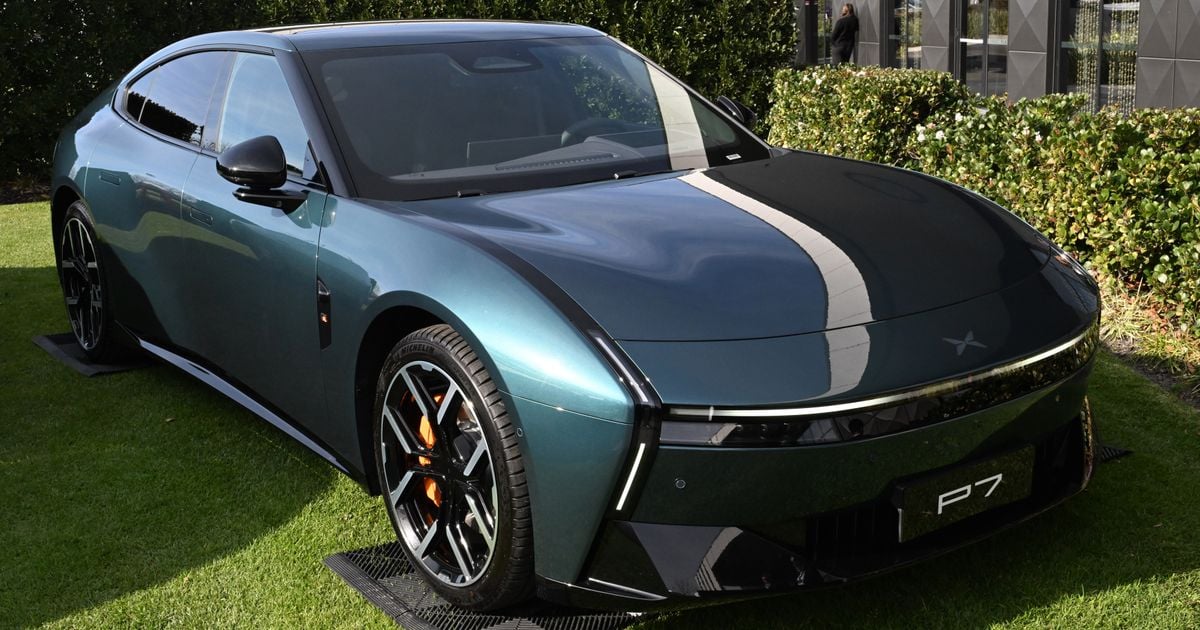
The Xpeng P7 electric vehicle (EV) has recently been unveiled in Melbourne, marking its debut in Australia. However, Xpeng has not yet confirmed whether this sleek liftback, positioned as a competitor to popular models such as the Tesla Model 3, Mazda 6e, and BYD Seal, will be included in its local lineup.
Introduced in China in 2025, the second-generation ‘E29’ P7 was showcased at the Australian relaunch of the brand. The lineup for the local market includes five models, with the P7 being the only one that has not been finalized for showroom release, alongside four SUVs and a people mover set to arrive in the next six months.
The Xpeng GX flagship SUV is also expected to make its way to Australia in 2027, although the exact timing is still under consideration.
“We are currently assessing the market,” stated Brian Gu, Xpeng’s vice chairman and president, regarding the potential launch of the P7 in Australia. He highlighted the evolving trend towards sedans being marginalized in the market, indicating that the decision to introduce more sedans has not been finalized.
The P7 boasts dimensions of 5017mm in length, 1970mm in width, and 1427mm in height. It is equipped with a rear-mounted 270kW/465Nm electric motor that drives the rear wheels in the base model, paired with a 74.9kWh lithium iron phosphate (LFP) battery. The claimed range on the CLTC cycle is 702km, which can extend up to 820km in higher-grade models featuring a 92.2kWh lithium ternary battery.
The flagship Ultra variant is powered by the larger battery, delivering 437kW/695Nm through a dual-motor all-wheel-drive system. It accelerates from 0-100km/h in 3.7 seconds and offers a range of 750km on the CLTC cycle.
In the Australian market, the P7 would compete directly with the Tesla Model 3 sedan, priced around $54,900 before on-road costs. While Tesla’s sales have been strong in 2026, especially with the Model Y SUV, the Model 3 has experienced a decline in sales in Australia.
On the other hand, the BYD Seal has seen a significant increase in sales this year, showcasing a 64.9% growth rate. Despite these trends, the P7 would enter a segment with relatively lower volume, especially with the introduction of new electric vehicles like the Mazda 6e liftback and the Kia EV4 sedan.
Xpeng’s lineup in China includes the M03 sedan, targeted at younger buyers and priced competitively. The P7+, offering a more subdued design compared to the P7, caters to customers seeking a larger liftback model.
While passenger cars have been overshadowed by SUVs in Australia’s automotive market, the P7’s arrival could offer a unique option for consumers seeking an electric sedan. The shift towards SUVs has been evident in recent years, with utes dominating annual sales charts since 2016.
In conclusion, the Xpeng P7 presents an intriguing option for the Australian market, with its advanced technology and impressive performance capabilities. As the automotive industry continues to evolve, Xpeng’s decision to introduce the P7 in Australia will be closely watched, especially in the context of changing consumer preferences and market trends.









Microsoft’s Breakthrough in Medical Superintelligence: The Diagnostic Orchestrator Revolution

Virtue and a Sledgehammer: The Cathartic Prelude

EdTech Intuitivo secures €1.35 million funding to streamline teachers’ tasks and enter Brazilian market

Score a Deal on Apple’s Magic Keyboards for iPad – but There’s a Catch

Unfolding Innovation: Coolpad’s $150 Android Phone with iPhone Duo-like Widescreen Display

iPhone Duo Production Surges by 44% to Meet High Demand

Pushing the Limits: Customizing Our Ultimate 2027 BMW 3 Series

AMD’s FSR 4.1 Enhancements Coming to Xbox Consoles and Handhelds

Introducing Kindle Plus: Your All-in-One Reading and Listening Experience

EU Takes Action Against Instagram and Facebook for Violating Illegal Content Rules

Warning: Facebook Creators Face Monetization Loss for Stealing and Reposting Videos

Facebook’s New Look: A Blend of Instagram’s Style

Facebook Compliance: ICE-tracking Page Removed After US Government Intervention

Facebook and Instagram to Reduce Personalized Ads for European Users

InstaDub: Meta’s AI Translation Tool for Instagram Videos

Reclaim Your Account: Facebook and Instagram Launch New Hub for Account Recovery

Meta discontinues Messenger apps for Windows and macOS

Breaking Updates: Meta Connect 2025 Unveils Latest Developments

Should you buy your Smartphones Refurbished!?

6 Amazing SECRET Android Launchers (2017 / 2018)

6 Value for Money Tech Products you NEED to try!

iPhone X Helicopter 1200ft Drop Test!! + Mous Case Review

7 UNBELIEVABLE Smartphone Magic Tricks!

Oneplus 5T vs Oneplus 1 – 3 Years Later.

Top 20 BEST Smartphones of 2017!

5 Amazing Upcoming Smartphone Features – 2018 / 2019

ULTIMATE Power Banks / The Best Power Banks (2017-2018)
-
 Facebook12 months ago
EU Takes Action Against Instagram and Facebook for Violating Illegal Content Rules
-
 Facebook1 year ago
Warning: Facebook Creators Face Monetization Loss for Stealing and Reposting Videos
-
 Facebook11 months ago
Facebook’s New Look: A Blend of Instagram’s Style
-
 Facebook1 year ago
Facebook Compliance: ICE-tracking Page Removed After US Government Intervention
-
 Facebook11 months ago
Facebook and Instagram to Reduce Personalized Ads for European Users
-
 Facebook1 year ago
InstaDub: Meta’s AI Translation Tool for Instagram Videos
-
 Facebook11 months ago
Reclaim Your Account: Facebook and Instagram Launch New Hub for Account Recovery
-
 Apple1 year ago
Meta discontinues Messenger apps for Windows and macOS
