
Inovation
Maximizing Resolution: The Power of Minimal Pixels

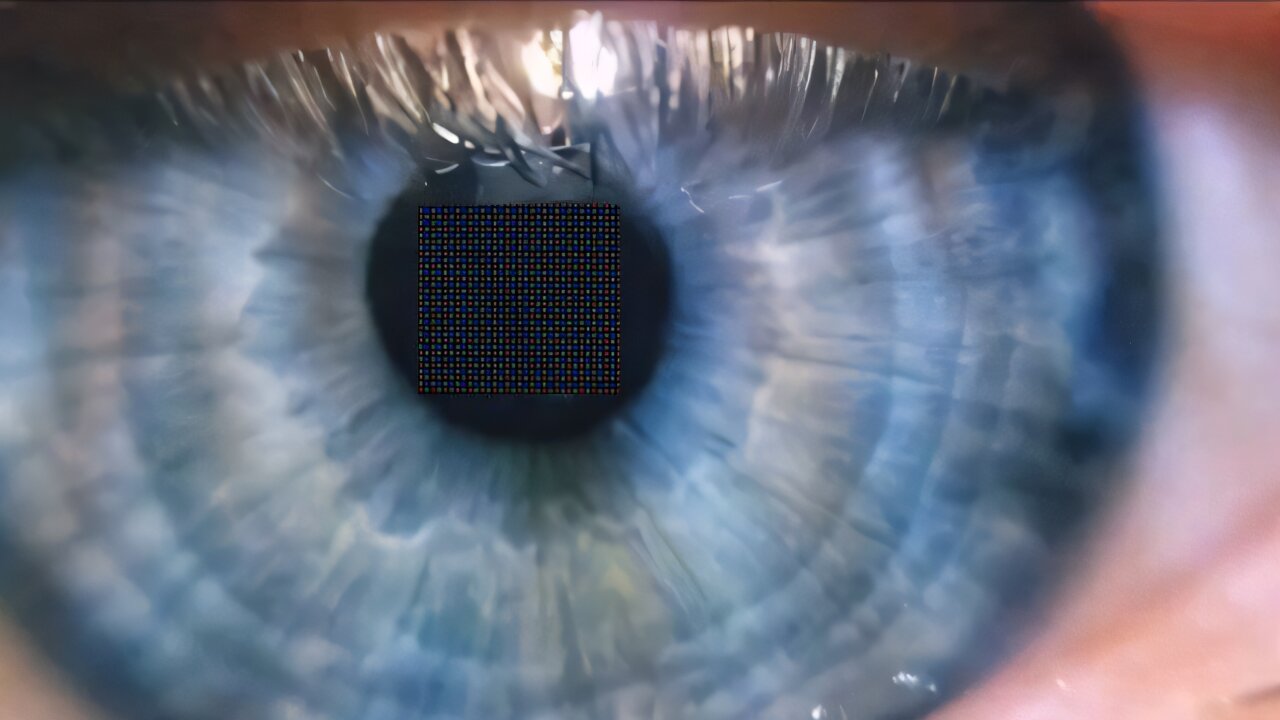
With the increasing complexity of information transfer in society, the need for high-precision image and video transmission screens is on the rise. Researchers from Chalmers University of Technology, the University of Gothenburg, and Uppsala University in Sweden have introduced a screen technology featuring the smallest pixels ever created, offering the highest resolution discernible by the human eye.
The color reproduction in these pixels is achieved through nanoparticles that control light scattering based on their dimensions and arrangement, with their optical properties being electrically adjustable. This groundbreaking technology, detailed in a published paper in Nature, opens the door to creating virtual worlds that are virtually indistinguishable from reality.
Kunli Xiong, Associate Senior Lecturer/Assistant Professor at the Department of Materials Science and Engineering at Uppsala University, the project’s originator and lead author of the study, commented, “The technology we have developed offers new ways to interact with information and the environment around us. It has the potential to expand creative boundaries, enhance remote collaboration, and even accelerate scientific research.”
Pixel size and quantity determine resolution, affecting how realistic images and videos appear on screens. In virtual or augmented reality settings where screens are small and close to the eye, the current pixel limitations hinder the experience due to their inability to be reduced beyond a certain size. For instance, on a micro-LED screen, pixels lose effectiveness when smaller than 1 micrometer.

To address this challenge, researchers have introduced retina E-paper, a novel reflective screen technology. Each pixel measures approximately 560 nanometers, with the total screen area comparable to the human pupil’s size, boasting a resolution exceeding 25,000 pixels per inch (ppi).
“Each pixel essentially corresponds to a single photoreceptor in the eye, which are the nerve cells in the retina converting light into biological signals. Human perception cannot distinguish resolutions higher than this,” explained Andreas Dahlin, Professor at the Department of Chemistry and Chemical Engineering at Chalmers.
Retina E-paper can be positioned very close to the eye. To showcase its capabilities, researchers recreated Gustav Klimt’s renowned artwork “The Kiss” on a surface of about 1.4 × 1.9 millimeters, making the image 1/4000th the size of a standard smartphone display.
Similar to previous research led by Dahlin, the screen is passive, meaning it lacks its light source. Instead, pixel colors appear when ambient light interacts with small structures on the surface, akin to the colorful plumage of small birds.
The ultrasmall pixels in retina E-paper contain tungsten oxide particles. Through adjusting the particles’ size and arrangement, researchers have effectively controlled light diffraction and reflection to create red, green, and blue pixels, enabling the display of all colors. Applying a weak voltage “turns off” the particles, rendering them black.
Giovanni Volpe, Professor at the Department of Physics at the University of Gothenburg, added, “This advancement marks a significant stride in shrinking screen sizes while enhancing quality and reducing energy consumption. Although further refinement is necessary, we anticipate retina E-paper will revolutionize the field and eventually impact us all.”
Citation:
Minimal pixels achieve the highest possible resolution visible to the human eye (2025, October 23)
retrieved 27 October 2025
from https://techxplore.com/news/2025-10-minimal-pixels-highest-resolution-visible.html
This document is subject to copyright. Apart from any fair dealing for the purpose of private study or research, no
part may be reproduced without the written permission. The content is provided for information purposes only.












Cyberpunk 2077: The Endless Battle with Phantom Liberty’s Chimera Tank

Unlock the Power of Adobe Premiere with a Free App for Android Phones – Tech Advisor

iBeer: How One App Took the App Store by Storm

Apple’s Innovative Approach to Fitness Tracking: A Screenless Solution in the Works

Rolls-Royce Cullinan Dominates Russian Luxury Car Market, Outselling Spectre, Ghost & Phantom Combined

Microsoft Appoints Brad Smith as Head of Corporate Communications

The Lord of the Rings: War in the North Legacy Edition – Patch One: The Beginning of a New Journey

Revolutionizing Android: 5 Innovative Features That Will Transform User Experience

Xiaomi 18 Pro: Global Launch Set for 2026, Confirmed by Tech Advisor

EU Takes Action Against Instagram and Facebook for Violating Illegal Content Rules

Warning: Facebook Creators Face Monetization Loss for Stealing and Reposting Videos

Facebook’s New Look: A Blend of Instagram’s Style

Facebook Compliance: ICE-tracking Page Removed After US Government Intervention

Facebook and Instagram to Reduce Personalized Ads for European Users

InstaDub: Meta’s AI Translation Tool for Instagram Videos

Reclaim Your Account: Facebook and Instagram Launch New Hub for Account Recovery

Meta discontinues Messenger apps for Windows and macOS

Breaking Updates: Meta Connect 2025 Unveils Latest Developments

Does a Cheap 2018 Smartphone beat a 2013 Flagship?

Samsung Galaxy S9 & S9+ UNBOXING!

Samsung Galaxy S9 Plus vs iPhone X

The BEST $300 Phone (2018) ft. MKBHD, Technical Guruji, iJustine + More

Samsung Galaxy S9 Plus Gaming Review! (vs OnePlus 5T)

THE BEST PHONE HTC EVER MADE?

The Truth about Google?

Samsung S9/ S9+ vs iPhone X vs Galaxy Note 8 Battery Life DRAIN TEST

Samsung S9 / S9+ vs Mate 10 Pro vs iPhone X Charging SPEED Test
-
 Facebook11 months ago
EU Takes Action Against Instagram and Facebook for Violating Illegal Content Rules
-
 Facebook12 months ago
Warning: Facebook Creators Face Monetization Loss for Stealing and Reposting Videos
-
 Facebook10 months ago
Facebook’s New Look: A Blend of Instagram’s Style
-
 Facebook12 months ago
Facebook Compliance: ICE-tracking Page Removed After US Government Intervention
-
 Facebook10 months ago
Facebook and Instagram to Reduce Personalized Ads for European Users
-
 Facebook12 months ago
InstaDub: Meta’s AI Translation Tool for Instagram Videos
-
 Facebook10 months ago
Reclaim Your Account: Facebook and Instagram Launch New Hub for Account Recovery
-
 Apple11 months ago
Meta discontinues Messenger apps for Windows and macOS
