
Gadgets
Revolutionize Your Live Streaming with OBSBOT Talent 2: The Ultimate All-In-One Production Switcher

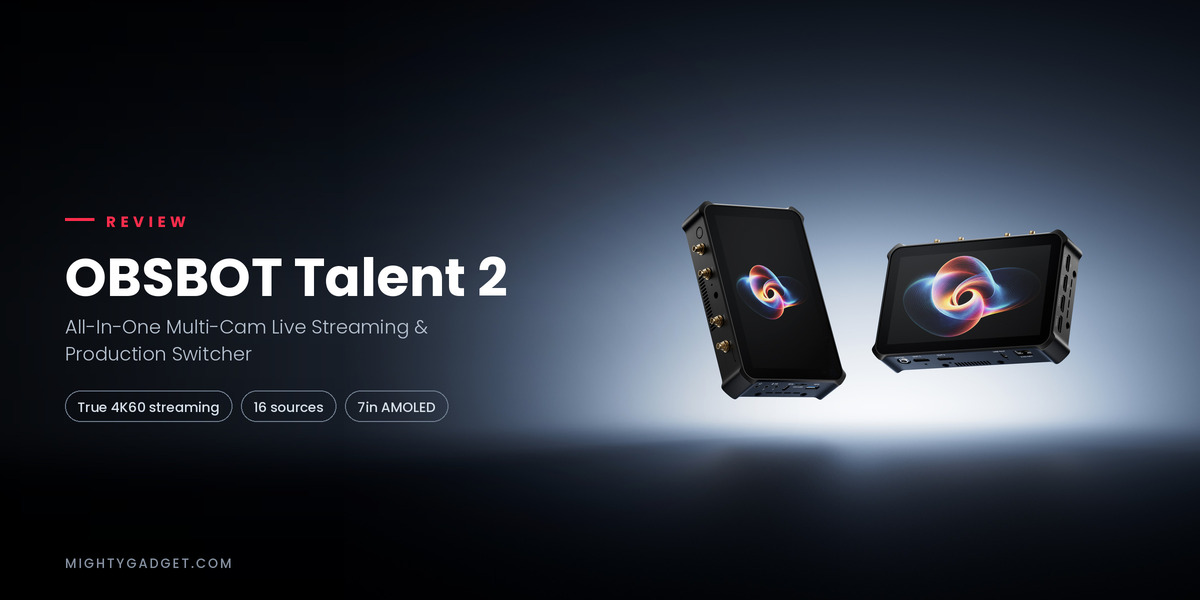
I reviewed the incredibly powerful and versatile OBSBOT Talent two years ago. It is an impressive piece of kit that functions as a multi-input switcher designed for live streaming, combining an encoder, switcher, recorder, monitor, and controller into a single device.
While the original Talent is still a powerful tool for streamers in 2026, the new Talent 2 takes things to the next level with more inputs and many other improvements across its extensive range of features.
Related Reviews
What is the OBSBOT Talent 2 / Features
The OBSBOT Talent 2 is the follow up to the original OBSBOT Talent, which I reviewed back in 2024. Like that first model, it is an all in one live production device that combines an encoder, switcher, monitor, recorder and streaming controller into a single unit, so you can run a multi camera stream without a laptop or a separate workstation.
OBSBOT calls it an “All-In-One Multi-Cam Live Streaming and Production Studio”, and the basic idea has not changed since the original Talent. You plug your cameras in, control everything from the touchscreen or an app, and push the output live to your chosen platforms. What has changed is the scale of what the device can handle. The original Talent topped out at 1080p output and three NDI sources. The Talent 2 supports true 4K streaming and up to 16 simultaneous video sources across HDMI, USB and IP, which puts it in a different tier of hardware entirely.
That jump in capability comes with a jump in price. OBSBOT lists the Talent 2 at $2,099 in the US, nearly double the $1,099 the original Talent launched at. UK pricing has not been confirmed at the time of writing.
OBSBOT Talent 2 vs OBSBOT Talent Specification Comparison
| OBSBOT Talent 2 | OBSBOT Talent | |
|---|---|---|
| Price | USD 2,099 | USD 1,099 |
| Dimension | 185.2 mm x 117.2 mm x 32.8 mm | 147.2 mm x 90 mm x 28.5 mm |
| Weight | 869.1 g | 402 g |
| Screen | 7″ AMOLED, 1920×1080, 800 nits, 100,000:1 contrast, 100% NTSC | 5.44″ AMOLED, 1920×1080, 350 nits, 6,000:1 contrast, 105% NTSC |
| 4K Streaming | Yes, up to 4K@60 | No, up to 1080p@60 |
| Video Input | 4x HDMI; 1x USB-A, 1x USB-C; SRT/RTMP/RTSP/NDI | 2x HDMI; 2x USB-A, 1x USB-C; RTMP/SRT/NDI |
| Video Output | 1x USB 3.0 Type-C, 2x HDMI 2.0 Type-A | 1x USB 3.0 Type-C |
| NDI Support (up to) | 10 | 3 |
| Ethernet Data Rate | 10/100/1000/2500 Mbps | 10/100/1000 Mbps |
| Box with integrated stand | Yes | No |
| PTZ Control | Yes (OBSBOT exclusive interface) | Yes |
| VISCA Control | Yes | Yes |
| Phone Control | Yes | No |
| Phone Camera Input | Yes | No |
| Built In App Store | Yes | No |
| Multi View | Yes | Yes |
| GFX Support | Yes | Yes |
| Picture in Picture | Yes | Yes |
| Chroma Key | Yes | Yes |
| Direct Live Stream | Facebook / Twitch / YouTube | Facebook / YouTube / Twitch |
| ISO Recording | Yes, up to 4x 4K60 | Yes, up to 2x 1080p60 |
| Encoder | H.264, H.265 | H.264, H.265 |
| Connection | Ethernet, Wi-Fi, Cellular, Bluetooth, USB Modem | Ethernet, Wi-Fi, Cellular, Bluetooth, USB Modem |
| Battery | Requires separate purchase. 7800mAh for 3 hours 30 minutes, 2200mAh for 2 hours 20 minutes | Requires separate purchase. 7800mAh for 3 hours 30 minutes, 2200mAh for 2 hours 20 minutes |
OBSBOT Talent 2 vs OBSBOT Talent Differences / Features
Screen and Design
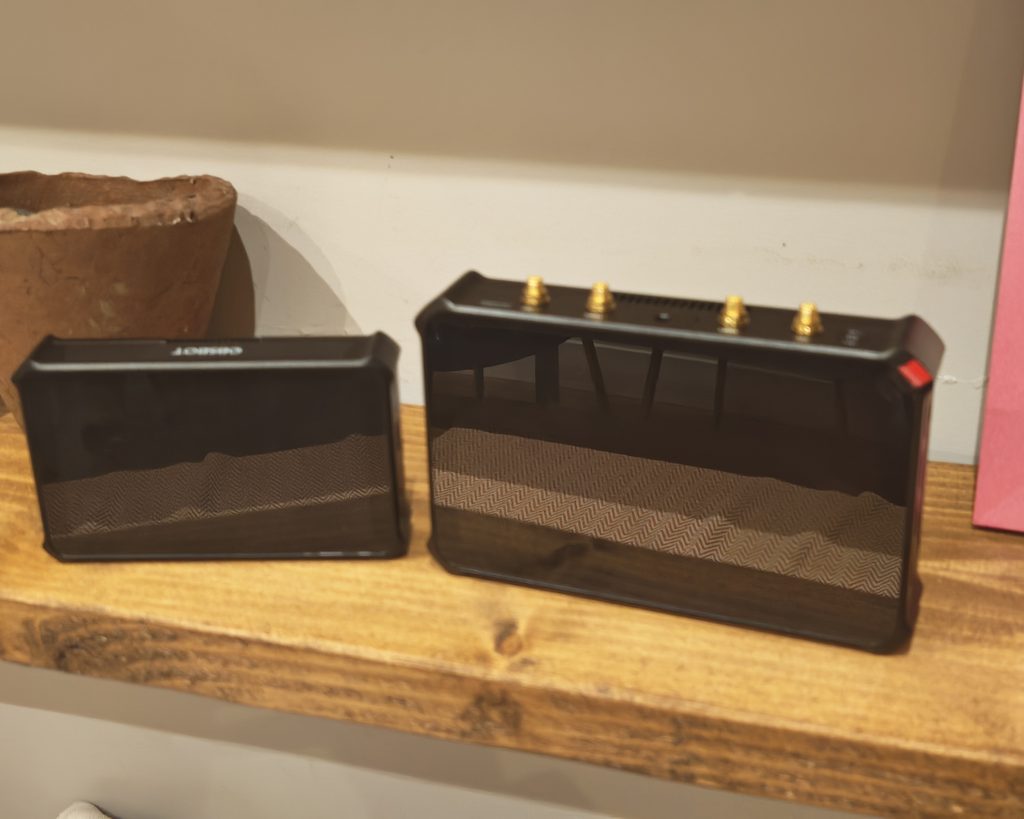
The most obvious change is the display, up from a 5.44 inch AMOLED panel at 350 nits and 6,000:1 contrast on the original Talent to a 7 inch AMOLED touchscreen at 800 nits and 100,000:1 contrast, with 100% NTSC colour coverage. It is a genuine improvement for monitoring footage in bright conditions, though it does mean the whole device has grown considerably. The Talent 2 measures 185.2 x 117.2 x 32.8mm and weighs 869.1g, compared with 147.2 x 90 x 28.5mm and 402g for the original, so this is a noticeably larger and heavier unit to carry around. The body is an aluminium alloy unibody with active cooling, and OBSBOT says it fits into a standard backpack alongside a set of cameras, though it will take up more room than before.
Source Acquisition
Input options have expanded significantly. The Talent 2 has four HDMI 2.0 ports, though only the first two support 4K, with the other two limited to 1080p. For USB, two ports function as video inputs, one USB-A and one USB-C, both capable of 4K at 60fps. A second USB-C port on the base, marked USB OUT, is a dedicated output for an external monitor rather than an additional input, so it does not add to the source count. On top of the physical ports, the Talent 2 adds IP based sources over NDI (HX2, HX3 and High Bandwidth), SRT, RTSP and RTMP, with up to 10 IP sources running at once. Combined with the physical inputs, OBSBOT quotes a maximum of 16 4K sources, against three NDI sources on the original Talent.
A newer addition is phone camera input. With the OBSBOT Live app and the latest Talent 2 firmware, a phone’s front or rear camera can be added as a source over USB-C, which is useful for adding an extra angle without buying another camera. This is a recent firmware addition rather than a feature that has been in the field for long, so I would treat it as one to test carefully rather than assume it behaves as smoothly as the native camera inputs.
Audio input is largely carried over from the original Talent: two 3.5mm mic or line inputs, one monitor output, and a built in mixer, with additional audio available from HDMI, USB, Bluetooth and incoming IP streams.
Streaming and Networking
The headline streaming feature is true 4K output to up to four platforms simultaneously, in either landscape or portrait orientation, up from the original Talent’s 1080p ceiling. Encoding is handled with H.264 and H.265, with H.265 offering meaningfully better quality per megabit on constrained connections.
Network connectivity has also been overhauled. The Talent 2 adds 2.5GbE Ethernet, up from Gigabit on the original, along with a built in 5G SIM slot and support for an external cellular dongle.
The Talent 2 features an upgraded antenna system with four dedicated connectors for 5G and Wi-Fi 6, a significant improvement over the original Talent’s reliance on 2.4G and 5G Wi-Fi along with a USB modem for cellular access. This enhancement should make the Talent 2 a more dependable option for streaming from venues with unreliable fixed-line internet connections.
Additionally, OBSBOT offers smart network bonding across 4G, 5G, Wi-Fi, and Ethernet with automatic failover, a feature that truly shines during long outdoor events. While verifying this feature in a brief review window may be challenging, the hardware is equipped to support it effectively.
In terms of camera control and recording capabilities, the Talent 2 retains features like AI tracking, preset recall, and compatibility with the Tail Air Smart Remote for remote operation. It also supports synchronized recording across up to three OBSBOT cameras and features substantial upgrades in ISO recording, now capable of capturing four independent 4K60 streams for maximum quality preservation during live switching.
Moreover, the Talent 2 offers a range of broadcasting graphics options, including picture-in-picture, scoreboards, lower thirds, and countdown timers, along with built-in chroma key and instant replay functionalities. These features operate similarly to those on the original Talent, ensuring a seamless workflow with increased resolution and source count.
However, the Talent 2 falls short in terms of power, as it continues to rely on two hot-swappable NP-F style batteries without including them in the package. This lack of included batteries adds to the overall cost of the device, especially considering the increased power demands due to the larger screen size and processing requirements.
Despite its power limitations, the Talent 2 offers a significant design upgrade compared to its predecessor, with a larger footprint and increased depth, showcasing a consistent textured dark grey herringbone finish across the rear panel. The device’s rear panel features two battery bays with LED indicators for easy monitoring, while the top edge highlights the networking upgrade with four gold SMA antenna connectors for enhanced connectivity options. This is a clear demonstration of the upgraded antenna system highlighted in OBSBOT’s materials, a feature not present in the original Talent model. The Talent 2 boasts an enhanced HDMI side with four ports, two of which support 4K output, providing increased flexibility for connecting cameras. Additionally, the audio, USB, and microSD side of the Talent 2 features a headphone jack, two 3.5mm inputs, a USB-C 3.0 port, and a microSD card slot, offering more options compared to the original Talent. On the bottom edge, the Talent 2 includes a 12V/5A power input with a locking barrel connector, two HDMI outputs, a USB-C output, and a 2.5 Gigabit Ethernet port, a significant improvement over the original model. The Talent 2 also features a user-friendly setup process, requiring the attachment of antennas and assembly stand kit before powering on the device. The onboarding process allows for easy network connection selection and device naming, showcasing the device’s Android-based interface. The menus, network picker, and general navigation on the OBSBOT Talent 2 should feel familiar to those who have used an Android phone or tablet, making the setup process straightforward without the need for a manual.
In terms of networking, OBSBOT Talent 2 excels by easily finding and connecting to 6GHz networks, ensuring a strong Wi-Fi 6 (6E) connection. Additionally, the device features a 2.5GbE Ethernet port, an upgrade from the original Talent’s Gigabit port, providing a reliable connection for full 4K output.
After connecting the device, a four-step walkthrough guides users through the interface, highlighting key areas such as the Scene List, Stream and Record controls, and sources like HDMI inputs and static Picture slots. This hand-holding approach is beneficial for first-time users, offering a brief introduction to the device’s functionality.
When creating a new show, users must choose between landscape and portrait orientation, as well as select the output quality (1080p, 1440p, or 2160p 4K) and frame rate (defaulting to 60fps). This streamlined process simplifies initial setup and ensures users can easily configure their preferred settings before going live.
Compared to the original OBSBOT Talent, the Talent 2 offers a more structured setup process, with a guided out-of-the-box wizard that caters to users unfamiliar with hardware switchers. Additionally, a browser-based Web UI is available for more in-depth configuration options, providing a larger view of settings for users who prefer to work from a laptop.
One important note for early users is that a firmware update may be required to enable certain features, such as the phone camera source functionality. It’s recommended to perform this update before any live events to avoid any last-minute issues.
Overall, the OBSBOT Talent 2’s user interface and settings are easy to navigate, with a main production view that keeps essential controls within reach. The settings menu is laid out in a single grid, making it simple to access various options quickly. Additionally, the device offers the ability to install additional apps for livestreaming and monitoring social networks during a show, as well as options for Tailscale and Netbird for remote network connectivity. A Tailscale connection allows the Talent 2 to access NDI or SRT sources from a machine on a different site, or be configured from outside the venue network without needing the client’s IT department to open ports. This feature is a practical addition for broadcast hardware and reflects the target market for OBSBOT. However, it raises concerns about long-term support as the Android packages curated by OBSBOT may not receive updates indefinitely.
The web UI of the Talent 2 provides a desktop-scale production interface accessible by typing the device’s IP address into a browser. This feature is beneficial for fixed installations, allowing users to perform tasks more efficiently on a larger screen with a mouse. It also enables remote operation, allowing the operator to control the device from a laptop while the Talent 2 is positioned elsewhere in the room.
In terms of performance, the Talent 2 operates quietly and remains cool even under heavy load. The interface remains responsive, with quick boot times and minimal lag during operation. However, there are occasional interface quirks due to the Android foundation, reminding users that this is a sophisticated software stack on top of a mobile operating system.
The Talent 2 supports various video input sources, including HDMI, NDI, RTMP, and more. Switching between sources is quick and seamless, with options for cut and fade transitions. However, IP sources may introduce latency due to the nature of NDI and SRT feeds, requiring users to measure and account for this latency in their setups. If you switch between an HDMI camera and an NDI camera focusing on the same subject, any discrepancy in audio sync will be immediately noticeable.
The Talent 2 offers smart auto switching modes like sequential, random, and Video Follows Audio (VFA). The VFA screen allows for more customization than expected, with individual policies for each source. This means you can assign specific audio channels to specific scenes and exclude others from the rotation. This feature is particularly useful for panel discussions with individual microphones, as it allows the device to switch to the speaker while disregarding static images or graphics sources.
The Live Stream panel supports six destination types, including YouTube, Twitch, Facebook Live, NDI, RTMP, and SRT Caller. You can log into major platforms through a standard OAuth flow on the device and easily create or select a broadcast without the need for a computer. The device also allows for up to four simultaneous destinations, with separate encode profiles for each destination.
When it comes to video quality, the Talent 2 excels in passing through 4K60 detail faithfully. The AMOLED panel offers accurate representation, and the device allows for adjustments in bitrates and encoding options to achieve optimal quality.
In terms of audio handling, the Talent 2 features an audio mixer with channel strips for various input sources. External audio devices can be easily connected and added as sources in the mixer. Overall, the Talent 2 provides a comprehensive solution for multi-cam live streaming and production needs. This small interface improvement eliminates the need to search through settings, distinguishing a mature product from a beginner’s attempt. The two 3.5mm inputs can handle mic or line level, with live level adjustments from the mixer and immediate meter responses. Monitoring through the headphone jack is clean with low enough latency for spoken word use. However, the built-in mixer lacks channel processing like compression, EQ, and noise gates visible in the mixer. For complex setups with multiple microphones in a challenging environment, a hardware mixer upstream may be necessary. But for a simple two-microphone podcast or interview setup, the built-in mixer is sufficient.
The OBSBOT Live app v1.5.0 and firmware update improved the audio mixer, indicating ongoing development in this area. Keeping the firmware up to date is recommended.
The Talent 2 offers a wide range of overlay types in the Create New GFX menu, including Lower Thirds, Titles, Scoreboards, and Countdown Timers. The built-in chroma key feature is useful for interview setups, course recordings, and virtual sets, provided there is good lighting and camera quality.
Integration with OBSBOT cameras is a standout feature of the Talent 2, allowing control of camera settings directly from the switcher interface. Synchronized recording across multiple cameras simplifies post-production editing. The Tail Air Smart Remote enhances control options, particularly in inaccessible venues. However, these features are only fully realized with OBSBOT cameras, as third-party cameras over HDMI lack integrated control capabilities. For those who already have Sony or Panasonic PTZ cameras, it’s important to carefully consider the Talent 2 compared to cheaper switchers. The device’s weakest point remains its battery, which is the same as the original Talent. While it uses NP-F style batteries, which are widely available and easy to swap, the device does not come with any batteries included. This means users will need to purchase them separately to use the device away from mains power.
The Talent 2 is priced at £1,739 in the UK and $2,099 in the US, significantly higher than the original Talent which was available for £929. This price increase reflects the shift from a product aimed at serious hobbyists to one geared towards professional use.
Alternative options include the YoloLiv YoloBox Ultra, which offers similar features at a lower price, and Blackmagic’s ATEM Mini range for users who don’t need portability. The original Talent, priced at £929, is still a viable option for those who don’t need 4K output.
Overall, the OBSBOT Talent 2 is a much-improved product with upgraded features that address previous limitations. However, the higher price point and lack of included batteries may be deterrents for some users. Ultimately, the decision to purchase the Talent 2 will depend on individual needs and budget considerations. When comparing the OBSBOT Talent 2 to the original Talent or the YoloBox Ultra, it is essential to consider the unique features that set it apart. The OBSBOT Talent 2 offers 4K streaming, four-channel 4K60 ISO recording, and a bright AMOLED touchscreen, along with integrated OBSBOT camera controls. These capabilities make it ideal for managing multi-camera productions efficiently. The device also provides extensive connectivity options, including IP sources and OBSBOT integration.
For those heavily invested in OBSBOT cameras and regularly produce multi-camera shows, the OBSBOT Talent 2 is the ultimate all-in-one solution. It combines cutting-edge features in a single box, offering unparalleled convenience and efficiency. However, for users who primarily stream in 1080p, use third-party cameras, or conduct a limited number of shows per year, the original Talent or a YoloBox may be a more cost-effective choice. Regardless of the device chosen, investing in NP-F batteries is highly recommended for optimal performance.
In conclusion, the OBSBOT Talent 2 stands out as the best device OBSBOT has produced, especially for users who require advanced multi-camera production capabilities. Its 4K streaming, IP sources, and OBSBOT integration make it a valuable tool for professionals in the industry. However, for those with different streaming needs or budget constraints, alternatives such as the original Talent or YoloBox may be more suitable. Ultimately, the choice depends on individual preferences and requirements. Transform the following:
Original: “I am going to the store to buy some groceries.”
Transformed: “I will be heading to the store to purchase groceries.” Transform the following:
Original: “I cannot believe that she betrayed me like that.”
Transformation: “I am in disbelief that she could betray me in such a way.”











Double the Excitement: Touchscreen MacBook Pro Launch and October Events

How to send ANY file Anywhere!

603 hp Anticipation: The iX3 M60 Reimagined

Microsoft’s Nadella Addresses White House Immigration Crackdown as Trump Commends Leadership

The Guillotine’s Shadow: A Tale of Survival in Revolutionary France

Unpacking the Potential Weakness of Alexa Tablets: A Tech Advisor’s Perspective

Revolutionize Your Live Streaming with OBSBOT Talent 2: The Ultimate All-In-One Production Switcher

From Inmate to Innovator: How a Former Prisoner is Revolutionizing the Ex-Con Market

Apple’s Unexpected ‘Welcome Home’ Launch Event Unveiled

EU Takes Action Against Instagram and Facebook for Violating Illegal Content Rules

Warning: Facebook Creators Face Monetization Loss for Stealing and Reposting Videos

Facebook’s New Look: A Blend of Instagram’s Style

Facebook Compliance: ICE-tracking Page Removed After US Government Intervention

Facebook and Instagram to Reduce Personalized Ads for European Users

InstaDub: Meta’s AI Translation Tool for Instagram Videos

Reclaim Your Account: Facebook and Instagram Launch New Hub for Account Recovery

Meta discontinues Messenger apps for Windows and macOS

Breaking Updates: Meta Connect 2025 Unveils Latest Developments
How to send ANY file Anywhere!

NEW Oneplus 5T Sandstone White Unboxing – The Ultimate Oneplus 5T?

HUAWEI P20 – THE SMARTPHONE REVOLUTION IS HERE?

How OnePlus succeeded when they should have failed.

Samsung sent us THIS! #AD

Ulefone Power 3 – Quad Camera Smartphone that last 2 weeks!

EPIC Smartphone FAILS that people will never forget.

The Best Android Launcher of 2018?

Faraday Future FF 91 – 1050 Horsepower Madness!
-
 Facebook12 months ago
EU Takes Action Against Instagram and Facebook for Violating Illegal Content Rules
-
 Facebook12 months ago
Warning: Facebook Creators Face Monetization Loss for Stealing and Reposting Videos
-
 Facebook10 months ago
Facebook’s New Look: A Blend of Instagram’s Style
-
 Facebook12 months ago
Facebook Compliance: ICE-tracking Page Removed After US Government Intervention
-
 Facebook10 months ago
Facebook and Instagram to Reduce Personalized Ads for European Users
-
 Facebook12 months ago
InstaDub: Meta’s AI Translation Tool for Instagram Videos
-
 Facebook10 months ago
Reclaim Your Account: Facebook and Instagram Launch New Hub for Account Recovery
-
 Apple12 months ago
Meta discontinues Messenger apps for Windows and macOS
