
Security
Securing the Future: A Comprehensive Guide to OT Security for Connected Robots

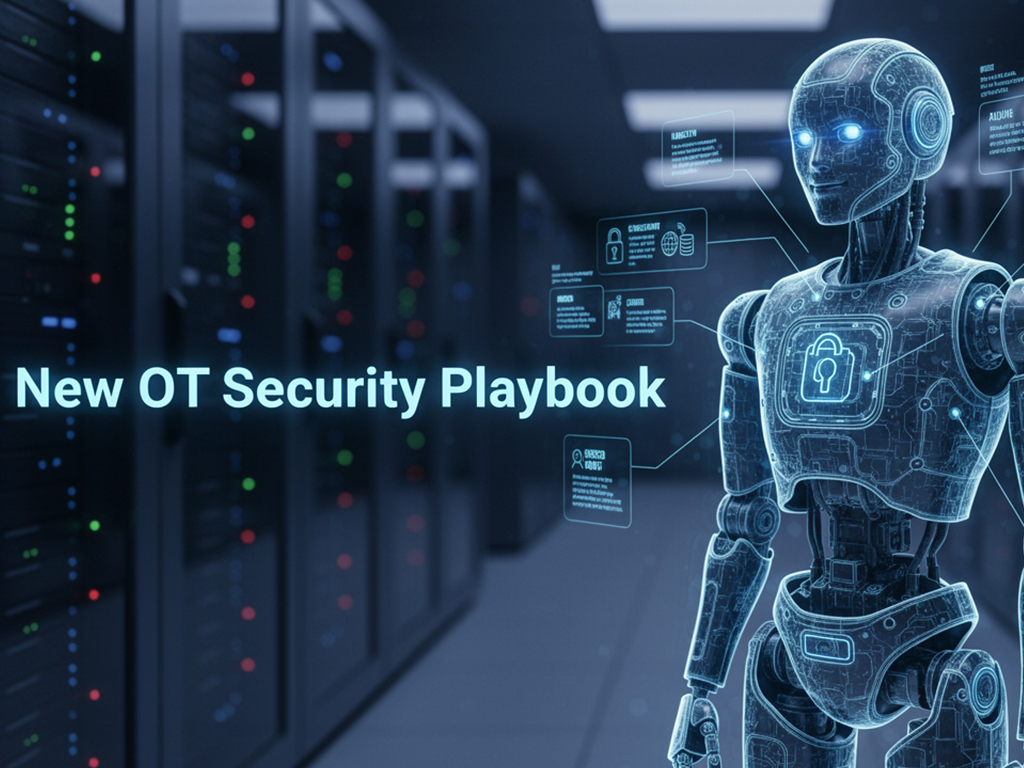
A Wake-Up Call for Industrial Security: Vulnerability in Universal Robots’ Collaborative Robot Platform
An alarming vulnerability has been uncovered in Universal Robots’ collaborative robot platform, serving as a stark reminder for industrial security leaders worldwide.
In a recent advisory issued by the Danish robotics company, a critical command-injection flaw affecting PolyScope 5, the control software utilized by its collaborative robots, was highlighted. This flaw, if exploited by an attacker gaining access to the robot’s remote-control interface over the network, could enable the execution of commands on the robot’s operating system without the need for authentication.
This vulnerability essentially opens the door for malicious actors to infiltrate the factory floor through compromised robots, potentially leading to production disruptions, equipment damage, and safety hazards for nearby workers.
Although Universal Robots has promptly released a fix for the issue and no public exploitation has been reported as of the advisory’s release, the incident underscores the rapid transformation of a software flaw in connected industrial equipment into a serious operational and safety threat.
As manufacturers increasingly deploy connected robots, autonomous systems, and industrial IoT technologies, the distinction between functional safety and cybersecurity is becoming increasingly blurred. Safeguarding workers and equipment now demands robust systems capable of withstanding both equipment malfunctions and cyberattacks.
To achieve this, manufacturers and their security leaders must collaborate with functional safety experts, system integrators, and operations teams to develop an OT security playbook that addresses the complexities of connected industrial systems. This collaborative approach is vital for both new robot deployments and existing systems.
In both scenarios, a cybersecurity issue has the potential to swiftly escalate into a critical operational problem.
The Evolution of Security in Connected Factories
While real-world instances of robot compromise remain relatively rare, the recent advisory serves as a stark reminder of the risks associated with connected industrial systems. Years of cautionary tales and prior advisories have highlighted the vulnerabilities of robotics-related systems and the potential impact of compromised robot controllers on production, equipment behavior, and safety.
What sets this latest incident apart is the sheer scale of exposure. In 2024, over 542,000 industrial robots were deployed globally, marking a significant increase from the previous decade. Concurrently, 90% of global manufacturers acknowledge the importance of digital transformation for maintaining competitiveness, with 59% already embracing smart manufacturing practices. This trend signifies the growing integration of physical systems into connected factory environments.
With the proliferation of these environments, safety, security, and operations leaders must engage with functional safety partners, integrators, and equipment suppliers early in the design phase to proactively address potential security vulnerabilities.
This collaborative effort necessitates clear guidelines for determining assessment criteria, ownership of decisions, change management protocols, and incident response procedures.
Key Initiatives for Security and Technology Leaders
A contemporary OT security playbook commences by aligning cybersecurity strategies with the functionality, operation, and impact of robots on production. Three critical priorities serve as a pragmatic starting point:
- Comprehensive Mapping of the Cyber-Physical Environment
Establishing a robust foundation involves creating a comprehensive cyber-physical asset inventory and evaluating each system’s control capabilities, operational characteristics, and potential consequences of compromise.
Going beyond mere identification of IP addresses and device models, this inventory should encompass the understanding of mobility capabilities of robots, remote accessibility of controllers, potential alterations in speed, paths, torque, and tool coordinates, and the impact of device failures on production.
The recent incident involving Universal Robots underscores the significance of this visibility. Effective response to a robot controller issue hinges on the ability to identify relevant controllers, their connectivity, and the systems they influence.
Moreover, to counteract “signal spoofing” incidents where a system exhibits normal behavior while engaging in malicious activities, manufacturers should implement cross-validation mechanisms. Leveraging independent sensors like external AI vision can ensure that physical movements align with control commands.
Threat modeling should also be integrated into the design and deployment processes for robots and autonomous systems. Collaborating with functional safety experts can aid in identifying potential cyber vulnerabilities impacting robot operations across new and existing deployments.
- Enhanced Access Control to Critical Systems
Implementing secure architecture and access control protocols that restrict access to robot systems, govern connectivity, and regulate permissible alterations is imperative. Without these controls, a single compromised entry point could precipitate safety hazards, quality issues, and production disruptions across the factory.
This entails segmenting OT networks, isolating robot workstations and controllers, and enforcing stringent access controls through measures such as remote maintenance controls, multi-factor authentication, least privilege principles, and vendor account lifecycle management.
Similar considerations should extend to secure communication practices and engineering change oversight.
- Preparedness for Cyber-Physical Incidents
Establishing robust monitoring, change management, and incident response capabilities tailored to the impact of connected robots on motion, production quality, equipment behavior, and worker safety is paramount.
Traditional cybersecurity monitoring alone is insufficient. Visibility into robot programs, control parameters, speed configurations, firmware versions, and anomalous remote connections is essential.
Yet, visibility represents only a part of the equation. The new OT security playbook should outline protocols for system restoration, transitioning to manual safe mode, conducting incident response drills, and harmonizing cybersecurity efforts with functional safety measures.
Converging Safety and Security Initiatives
The advent of connected robots has redefined the scope of cybersecurity considerations. Compromised systems can now transcend data breaches and network disruptions to impact the real-world performance of connected equipment.
For manufacturers and their security leaders, the imperative lies in aligning cybersecurity, functional safety, operations, and equipment suppliers to formulate a unified OT security strategy. The rapid evolution of connected robotics necessitates proactive safety and security measures, rather than reactive responses post-incident.
By fostering collaborative partnerships across disciplines, organizations can mitigate the potential ramifications of cybersecurity lapses on production efficiency.
KC Chen currently serves as the Vice President of Technology at TMRTEK, a subsidiary of NEXCOM, where he spearheads technology strategy and product development initiatives in the realm of industrial cybersecurity and OT security solutions. With a wealth of experience in industrial computing, embedded systems, and secure product design, his focus lies in bridging practical engineering with cybersecurity compliance to empower organizations in building resilient, scalable, and future-proof solutions for critical industrial environments.
For further information, KC can be contacted through the company website: https://www.nexcom.com/index.html.













Top 20 BEST Smartphones of 2017!

2027 Toyota Fortuner Spotted Once More in Thailand: Sneak Peek at the Latest Model

Securing the Future: A Comprehensive Guide to OT Security for Connected Robots

Ascending to the Zenith: Boss Rush Mode and New Game+ in Saros’ Update

Upgrade Alert: Exciting Changes Coming to Your Old Google Home & Nest Speakers

Samsung Galaxy S27+: Why Downgrading Would Be a Mistake

Nordic DeepTech Fund: Bridging Startups and Industry Leaders

Exciting Updates Await: Apple’s MacBook Pro Event Unveiled

Apple Retail Staff Issue Warning on iPhone Duo Walk-In Policy

EU Takes Action Against Instagram and Facebook for Violating Illegal Content Rules

Warning: Facebook Creators Face Monetization Loss for Stealing and Reposting Videos

Facebook’s New Look: A Blend of Instagram’s Style

Facebook Compliance: ICE-tracking Page Removed After US Government Intervention

Facebook and Instagram to Reduce Personalized Ads for European Users

InstaDub: Meta’s AI Translation Tool for Instagram Videos

Reclaim Your Account: Facebook and Instagram Launch New Hub for Account Recovery

Meta discontinues Messenger apps for Windows and macOS

Breaking Updates: Meta Connect 2025 Unveils Latest Developments
Top 20 BEST Smartphones of 2017!

5 Amazing Upcoming Smartphone Features – 2018 / 2019

ULTIMATE Power Banks / The Best Power Banks (2017-2018)

TOP 5 BEST UPCOMING SMARTPHONES – 2018!!

How to Apply a Screen Protector

The Flagship Samsung Smartphone you Never Considered.

Finally Fixing my Wi-Fi – Zyxel Multy X!

$25,000 Gaming Setup – EVOLUTION!

The Maze Alpha X is HERE!
-
 Facebook12 months ago
EU Takes Action Against Instagram and Facebook for Violating Illegal Content Rules
-
 Facebook1 year ago
Warning: Facebook Creators Face Monetization Loss for Stealing and Reposting Videos
-
 Facebook10 months ago
Facebook’s New Look: A Blend of Instagram’s Style
-
 Facebook1 year ago
Facebook Compliance: ICE-tracking Page Removed After US Government Intervention
-
 Facebook10 months ago
Facebook and Instagram to Reduce Personalized Ads for European Users
-
 Facebook1 year ago
InstaDub: Meta’s AI Translation Tool for Instagram Videos
-
 Facebook11 months ago
Reclaim Your Account: Facebook and Instagram Launch New Hub for Account Recovery
-
 Apple12 months ago
Meta discontinues Messenger apps for Windows and macOS