
Security
Ransom Busters Demands $60,000 from Ransomware Victims after Hacking Servers

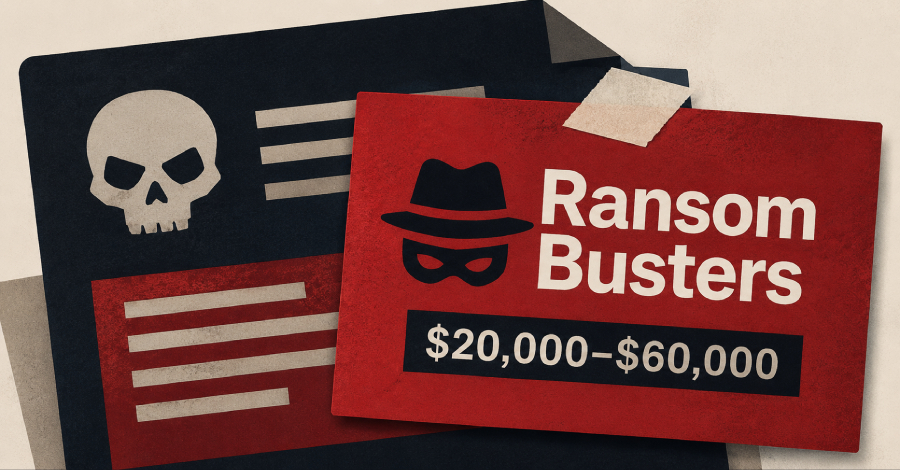
Ransom Busters Offers to Delete Stolen Data from Ransomware Servers for a Fee
A group known as Ransom Busters has been actively reaching out to organizations affected by ransomware attacks, offering to delete stolen data from ransomware groups’ servers in exchange for a payment ranging from $20,000 to $60,000.
The unusual proactive approach of Ransom Busters sets them apart from typical cybersecurity firms, who usually offer assistance after a ransomware attack becomes public knowledge. The group has been identified as an affiliate involved with multiple ransomware-as-a-service (RaaS) operations.
In their emails to victims, Ransom Busters claim to have discovered vulnerabilities in administrative panels maintained by ransomware groups, allowing them access to servers for over three years. They demand payment to help victims regain access to their files, data, and delete all backups held by the ransomware group.
Despite their claims, cybersecurity experts have noted that Ransom Busters’ activities likely violate U.S. laws, casting doubt on the legitimacy of their operations. The group’s insistence on payment for their services has raised suspicions about their true motives.
Common Tactics and Tools Used by Ransom Busters
An analysis of incidents involving Ransom Busters revealed similarities in their tactics and tools, including the use of:
- SoftPerfect Network Scanner for internal reconnaissance
- s5cmd for exfiltrating data to cloud storage via AWS
- Remotely remote monitoring and management (RMM) tool installed through a PowerShell script
Other shared characteristics include the creation of a local backdoor account with the password “Numlock!123” and the use of the attacker-controlled hostname “DESKTOP-BBETH6K.” These findings suggest that a single operator, likely an affiliate, is behind Ransom Busters’ activities.
Victims of ransomware attacks are warned to be cautious of dealing with criminal actors like Ransom Busters, as there is no guarantee that paying them will result in the deletion of stolen data. The group’s deceptive tactics highlight the risks associated with engaging with malicious actors for data recovery.
UNC6671’s Extortion Campaigns Target Financial Services and Legal Industries
GuidePoint has uncovered an ongoing campaign by UNC6671 targeting financial services, legal, and other industries since April under various extortion brands such as Falcon, Helix, Pink, Redact, and BlackFile. The group has collected over $8 million in payments across 15 Bitcoin wallets, with an average extortion amount of $600,000.
UNC6671’s tactics reflect a shift towards purposeful targeting of large organizations, moving away from opportunistic ransomware attacks. The group’s use of a custom console called Work Panel enables sophisticated reconnaissance and credential theft, representing a significant advancement in vishing-driven attacks.
As the ransomware landscape continues to evolve, new groups like Tengu, CRPx0, and Majinahanashi have emerged, each with their own unique tactics and targets. Majinahanashi, in particular, has targeted countries like Switzerland, Italy, Germany, Bulgaria, and India, using a combination of traditional and modern ransomware techniques.
Check Point’s report on the state of ransomware in Q2 2026 highlights the increasing fragmentation of the ransomware ecosystem, with a growing number of active groups engaging in pre-positioned access operations to maximize their impact.
CRPx0 and Akira: Unusual Ransomware Groups with Distinctive Tactics
CRPx0 stands out for its support of white-label operations, providing resources to RaaS buyers to manage ransomware campaigns under their own brand. The group also offers a Hacking-as-a-Service (HaaS) program, including services for data breaches and network compromises.
On the other hand, Akira has focused on defense evasion tactics, such as rebooting victim hosts into Safe Mode with Networking to disable security tools. Despite a lower victim count compared to other groups, Akira’s methods demonstrate a commitment to evading detection and maximizing their impact.
The ransomware landscape continues to evolve, with average ransom payments increasing significantly in Q2 2026 due to high-profile extortion campaigns targeting law firms. As ransomware groups become more sophisticated in their tactics, organizations must remain vigilant to protect against these evolving threats.











Tesla’s Groundbreaking Feature: Use at Your Own Risk

NO GAME NO LIFE: Grasshopper Manufacture’s Indie Leap

Strengthening Ties: GEC Enhances Ireland-UK Startup Network in the Midst of EU Discussions

Unbeatable Deal: The AirPods Pro 3 for Only $179

Breaking News: Exclusive Details on the Latest Fitbit Edge Features

Apple Store Security Alert: HK Police Demand Fix for $3.8M Fraud Loophole

Faraday Future FF 91 – 1050 Horsepower Madness!

Massive Recall: Thousands of Toyota Land Cruiser SUVs Pulled from UAE Roads

Massive’s Rise to the Top: Leading Splinter Cell, Ghost Recon, and a New Ubisoft Dieselpunk MOBA

EU Takes Action Against Instagram and Facebook for Violating Illegal Content Rules

Warning: Facebook Creators Face Monetization Loss for Stealing and Reposting Videos

Facebook’s New Look: A Blend of Instagram’s Style

Facebook Compliance: ICE-tracking Page Removed After US Government Intervention

Facebook and Instagram to Reduce Personalized Ads for European Users

InstaDub: Meta’s AI Translation Tool for Instagram Videos

Reclaim Your Account: Facebook and Instagram Launch New Hub for Account Recovery

Meta discontinues Messenger apps for Windows and macOS

Breaking Updates: Meta Connect 2025 Unveils Latest Developments
Faraday Future FF 91 – 1050 Horsepower Madness!

The Truth about the OnePlus 5T – REAL Review.

Concept Smartphones that are better than Real Smartphones

Samsung Galaxy SII Unboxing!

The SECRET to Maximise Smartphone Battery Life?

We Designed the Ultimate Gaming Smartphone of 2018!

Using the Cheapest Smartphone in the World.

Samsung Galaxy S9+ Unboxing! (Clone)

Unboxing the First Ever Samsung Galaxy S!!
-
 Facebook12 months ago
EU Takes Action Against Instagram and Facebook for Violating Illegal Content Rules
-
 Facebook12 months ago
Warning: Facebook Creators Face Monetization Loss for Stealing and Reposting Videos
-
 Facebook10 months ago
Facebook’s New Look: A Blend of Instagram’s Style
-
 Facebook12 months ago
Facebook Compliance: ICE-tracking Page Removed After US Government Intervention
-
 Facebook10 months ago
Facebook and Instagram to Reduce Personalized Ads for European Users
-
 Facebook12 months ago
InstaDub: Meta’s AI Translation Tool for Instagram Videos
-
 Facebook10 months ago
Reclaim Your Account: Facebook and Instagram Launch New Hub for Account Recovery
-
 Apple12 months ago
Meta discontinues Messenger apps for Windows and macOS
