
Mobile Tech
Legal Battle: Apple Takes on OpenAI in AI Hardware Trade Secret Dispute

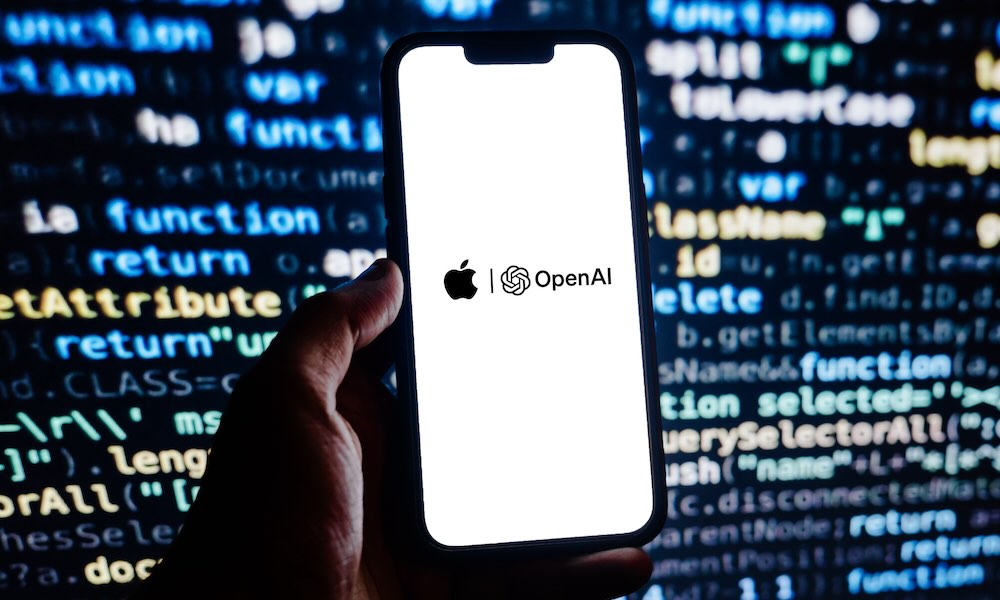
Apple has filed a lawsuit against OpenAI, alleging that the ChatGPT creator has been stealing trade secrets about its products, not only trying to poach employees from Apple, but asking them to share details about secret projects and even coaching them on how to do so.
News of the lawsuit was first broken by Chance Miller at 9to5Mac, which beat bigger outlets like The New York Times to the punch. Miller shared a statement from an Apple spokesperson explaining the motivation behind the lawsuit, which seems aimed squarely at OpenAI’s recent efforts to develop AI hardware technologies.
At Apple, our teams are constantly developing breakthrough technologies to create the best products and services in the world, and protecting their work and intellectual property is something we take very seriously. Recently, significant evidence has emerged suggesting individuals employed by OpenAI wrongfully took Apple’s secret and confidential information regarding our unreleased technologies, processes, and products. We will always defend our teams’ hard work and innovations, and we are taking all appropriate steps to do so.
Apple statement to 9to5Mac
The lawsuit specifically names two former Apple employees, Chang Liu and Tang Tan, the latter of whom joined forces with Jony Ive to help co-found OpenAI’s hardware venture, and now serves as its chief hardware officer. However, it notably makes no mention of other previous Apple heavyweights such as Ive himself or Evans Hankey, who served as Apple’s vice president of industrial design after Ive’s departure, and eventually also left to join up with her former boss in the AI venture that ultimately entered OpenAI’s orbit.
In fact, as John Gruber points out at Daring Fireball, Apple goes far out of its way to avoid any mention of them, describing the project in question as “a venture co-founded by Mr. Tan and other former Apple leaders.” Hearing Jony Ive referred to so parenthetically is odd, but it’s clear that it’s Tan that Apple has in its primary crosshairs.
The Anatomy of an Inside Job
The complaint, filed in the US District Court for the Northern District of California, specifically calls out both Tan and Liu as the perpetrators of what appears to be a deliberate operation to coax as many trade secrets out of their former associates as they possibly can.
This includes not only asking potential hires to share details about secret projects they’d worked on at Apple, but going so far as to ask them to bring device components and prototypes to interviews and even coaching them on how to get information out of Apple without triggering security processes.
Messages left on an Apple-issued work laptop revealed that Mr. Liu also coached his former Apple colleague (whom he was recruiting to join OpenAI) on ways to “avoid trouble with the security team” when copying confidential Apple files. Knowing that OpenAI interviews would involve discussing Apple technology, Mr. Liu advised her on which confidential Apple material about unannounced Apple products she should study before her interview.
Apple lawsuit against OpenAI
Apple’s lawsuit also explicitly accuses Liu of a deliberate plan to steal trade secrets during his move to OpenAI in January 2026. Liu had worked as a senior system electrical engineer at Apple for eight years, but after leaving he allegedly failed to respond to a request to return his devices and comply with the standard exit procedures.
The court filing notes that Apple is still investigating the matter, as “Mr. Liu has taken steps to hide the full extent of his theft,” but has already discovered several “troubling facts,” including a failure to return an Apple-issued work laptop, access to a former colleague’s Apple-issued computer, and hacking into Apple’s secure network through “a rare, previously unknown authentication bug.”
Apple also claims that Liu “celebrated his improper access” through messages to a colleague, and “surreptitiously accessed and downloaded dozens of Apple’s confidential hardware-related files, including voluminous, detailed information about unreleased products, engineering presentations, technical specifications, and proprietary project data” after he had already begun working for OpenAI.
‘Show and Tell’ Interviews and ‘Need to Know’ Evasions
Tang Yew Tan, who spent twenty-four years at Apple, departing as vice president of product design for iPhone and Apple Watch, had an extremely high level of access to Apple’s “most sensitive projects, trusted partner relationships, proprietary manufacturing techniques, and unreleased products.” Apple claims that its investigation shows that Tan has now been “methodically using Apple’s confidential information to benefit OpenAI.”
This includes using confidential internal project codenames to pepper new hires with questions about unannounced Apple products, and asking them to bring products and parts for “show and tell” sessions during their job interviews.
The lawsuit goes on to claim that Tan has warned new hires not to tell Apple they have taken jobs at OpenAI so they can retain access to confidential information that can be funneled to the AI company’s hardware engineering teams.
After his own departure, Mr. Tan improperly retained or obtained an internal Apple managers’ document marked “Need to Know” that describes security procedures for employee departures. Messages left on Apple-issued work devices show that Mr. Tan and his OpenAI colleagues have been sharing this document with new hires before they give notice to Apple of their departures, previewing Apple’s security protocols.
Apple lawsuit against OpenAI
A Rotten Foundation: Taking OpenAI to Task
While Apple’s lawsuit only names Tan and Liu, it aims to hold OpenAI accountable for what it calls “a coordinated pattern of misconduct at an institutional level,” claiming “The Corporate Defendants […] have been acting in concert and as an enterprise” to steal and exploit Apple’s confidential information to their own ends.
OpenAI’s nascent hardware business now rests on the shakiest of foundations, rotten to its core by its illegal reliance on misappropriated trade secrets.
Apple lawsuit against OpenAI
Apple adds that it considered this “the tip of the iceberg,” as it has no way of knowing what’s actually going on behind closed doors.
OpenAI’s activities remain largely hidden, with insights coming from Tan and Liu’s infiltration of Apple and the trend of departing employees taking measures to avoid Apple’s security protocols. The lawsuit against OpenAI aims to protect trade secrets and halt their actions, potentially exposing the extent of corruption. If Tan is acting independently, Altman and Ive may need to remove him, though this could be viewed as a strategic move to protect themselves. Apple likely seeks full transparency, whether through legal proceedings or private negotiations. The outcome may unfold publicly or in discreet corporate settings.











iPhone Duo: The Future of Mobile Dominance

Tech Advisor: The Delayed Android 17 QPR1 Update for Pixel 11

Venture Capital Firm Monte Carlo Capital Secures €13 Million for Fund II to Back Early-Stage DeepTech, AI, and SpaceTech Startups

The Battle Over iPhone Driver’s Licenses: Florida and Rhode Island Stand Firm

How Smart is the AI-Powered Huawei Mate 10 – with EMUI 8.0?

Reviving the Legacy: Porsche Mission S Unveils Carrera GT-Inspired Gauge Cluster

Navigating the New Normal: Satya Nadella’s Journey in the Post-COVID World of Microsoft

Persona 4 Reborn: Unveiling Naoto Shirogane’s Return in New Trailer

Unveiling the Powerhouse: Xiaomi 18 Pro Max Global Leak Exposes Impressive Performance Features

EU Takes Action Against Instagram and Facebook for Violating Illegal Content Rules

Warning: Facebook Creators Face Monetization Loss for Stealing and Reposting Videos

Facebook’s New Look: A Blend of Instagram’s Style

Facebook Compliance: ICE-tracking Page Removed After US Government Intervention

Facebook and Instagram to Reduce Personalized Ads for European Users

InstaDub: Meta’s AI Translation Tool for Instagram Videos

Reclaim Your Account: Facebook and Instagram Launch New Hub for Account Recovery

Meta discontinues Messenger apps for Windows and macOS

Breaking Updates: Meta Connect 2025 Unveils Latest Developments
How Smart is the AI-Powered Huawei Mate 10 – with EMUI 8.0?

I used a 2012 Smartphone in 2018 – Here’s what happened.

How to send ANY file Anywhere!

NEW Oneplus 5T Sandstone White Unboxing – The Ultimate Oneplus 5T?

HUAWEI P20 – THE SMARTPHONE REVOLUTION IS HERE?

How OnePlus succeeded when they should have failed.

Samsung sent us THIS! #AD

Ulefone Power 3 – Quad Camera Smartphone that last 2 weeks!

EPIC Smartphone FAILS that people will never forget.
-
 Facebook12 months ago
EU Takes Action Against Instagram and Facebook for Violating Illegal Content Rules
-
 Facebook12 months ago
Warning: Facebook Creators Face Monetization Loss for Stealing and Reposting Videos
-
 Facebook10 months ago
Facebook’s New Look: A Blend of Instagram’s Style
-
 Facebook12 months ago
Facebook Compliance: ICE-tracking Page Removed After US Government Intervention
-
 Facebook10 months ago
Facebook and Instagram to Reduce Personalized Ads for European Users
-
 Facebook12 months ago
InstaDub: Meta’s AI Translation Tool for Instagram Videos
-
 Facebook10 months ago
Reclaim Your Account: Facebook and Instagram Launch New Hub for Account Recovery
-
 Apple12 months ago
Meta discontinues Messenger apps for Windows and macOS
