
Startups
Revolutionizing Entrepreneurship: A European Founder’s Guide to Success in the Digital Age

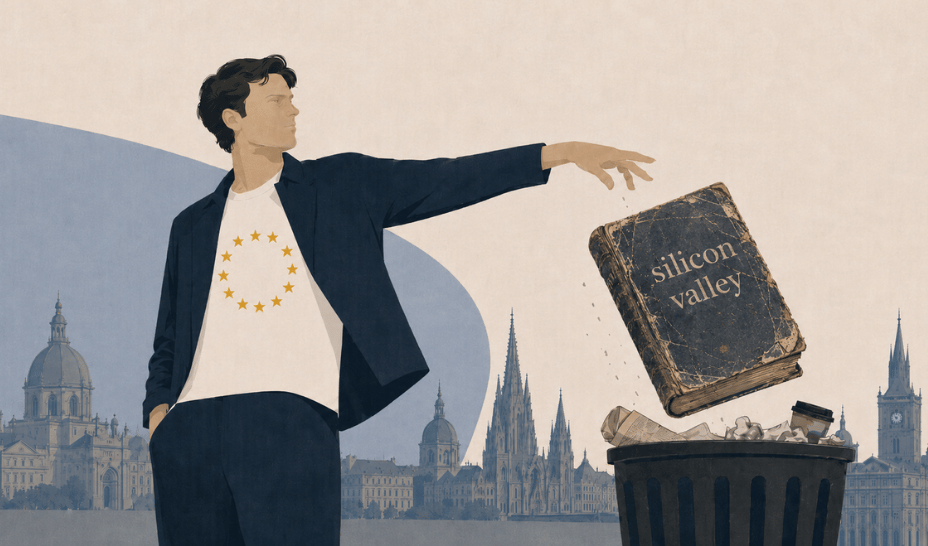
It’s fashionable to dunk on Europe, especially in tech circles. Post something dismissive about European regulation, talent drain, or the absence of a homegrown Meta, and watch the engagement roll in on X. It’s easy content but increasingly irrelevant to what’s actually happening on the ground.
Yes, Europe has struggled to produce tech giants at American scale. It has relied heavily on US infrastructure, from cloud providers to social platforms. That much is fair.
But to reduce the continent to a punchline is to ignore the companies that have already broken through: Spotify, Revolut, Klarna, Oura, Mistral, Helsing, Lovable. These aren’t flukes. They’re proof that European founders can build globally relevant technology companies, even if the surrounding ecosystem hasn’t always made it easy.
And right now, the ecosystem is shifting fast.
The geopolitical catalyst
The war in Ukraine kick-started a reintegration of the European continent that had stalled for decades. It forced hard conversations about energy independence, defence production, and strategic autonomy. And then, just as Europe began moving, its biggest ally started acting like an adversary. There is nothing rational about Donald Trump’s attacks on European allies in his pursuit of Greenland. But irrationality is contagious, and Europe is catching it in a good way.
This matters for founders because irrationality is the requirement for ambition. It’s irrational to invest money in most startups, but somebody has to do this.
Previously, building European AI infrastructure, defence technology, or sovereign hardware seemed like a fool’s errand. Who would buy it, other than a handful of national government apparatuses? Now these categories are suddenly urgent. Governments are writing checks. Enterprises adjust their purchasing. The market for European-built critical technology has shifted from “nice to have” to “strategic necessity” almost overnight.
The categories that struggled to attract funding and attention just a few years ago now have both. And the talent is there. Europe produces world-class engineers, researchers, and operators. What it has historically lacked is the narrative permission to build big and think strategically. That permission is now being granted, not by investors or institutions, but by geopolitics itself.
Stop seeking validation from Silicon Valley
European founders are operating in a hostile communications environment, especially online. The dominant tech discourse is American, and it’s increasingly polarised against Europe. Both sides of the Atlantic are becoming more radical in how they talk about each other. Just browse any discussion thread.
The instinct for many European founders is still to seek validation from Silicon Valley. Chase US media coverage, get noticed by American influencers and measure themselves against YC benchmarks. But the playbook that worked for consumer social and SaaS apps doesn’t apply to defence tech or critical infrastructure. American VCs and tech influencers are optimising for outcomes that have little to do with European strategic needs.
Your audience is not Silicon Valley. Your audience is European users, customers, enterprises, and the emerging defence and infrastructure ecosystem that’s forming right now. European founders should focus their energy there: documenting their journey, building in public selectively, and creating a narrative of European technological sovereignty that resonates domestically.
Sell the vision, not the spreadsheet
When I look at European startup decks, even at the Seed stage, I often find something closer to a private equity than a venture pitch: P&Ls, detailed business plans, competitor matrices. Meanwhile, their American counterparts lead with the product, the team’s pedigree, and the sheer vastness of the opportunity. Partly this reflects what European investors have historically demanded. But founders can shape this dynamic rather than just respond to it.
This spreadsheet-first mentality then bleeds into how founders talk about their companies publicly. I’ve seen unicorn exits built by the archetypal “engineer” founder who’d rather code than sell, so it’s not a hard blocker. But it makes it much harder to compete against ambitious Americans who lead with vision, raise the most capital, hire the best people, and scale aggressively. The good news is that the tide seems to be shifting. In the last year or two, I’m seeing more and more European founders state wildly ambitious goals without qualifying them with a disclaimer. I hope this continues.
The goal is to find the balance between outrageous and possible, and build your entire story around that.
Power the flywheel
Once you have the story, you need to feed it constantly. This means shipping and sharing: finding the most exciting thing that happened in the past week and putting it out immediately. Product updates, new customers, partnerships, and user testimonials. You need a steady stream of these to keep shaping your narrative and powering the flywheel of attention, credibility, and momentum.
Share everywhere. Start with the channels where you already have an audience, but don’t limit yourself. Long-form opinions belong on Substack. Product demos belong on X and LinkedIn. Founder reflections belong on podcasts. The point is not to pick one channel but to match the right format to the right venue and be relentlessly consistent.
This means engaging the local media ecosystem, both traditional outlets and the new wave of podcasts, newsletters, and live shows that are hungry for authentic founder stories. Give them access. Share your wins. You’re building something together.
Pick your fights wisely
European founders shouldn’t be afraid to attack the true relics holding the continent back. German notaries require physical presence for routine business filings. GDPR implementations are so complex that only Google and Meta can navigate them through armies of expensive lawyers. These are real obstacles, and calling them out is fair game.
But stop apologising for the regulations that actually work in Europe’s favour. The Digital Markets Act is forcing American Big Tech to open its products and enable local competition. That’s industrial strategy. China’s Great Firewall, for all its problems, enabled the country to build an independent tech ecosystem worth hundreds of billions of dollars and millions of high-paying jobs.
Empowering European Tech Founders: Leveraging Regulations for Success
Rather than viewing European regulations as obstacles, successful tech founders in Europe understand the value of regulatory leverage as a competitive tool. It is not something to be ashamed of, but rather a strategic advantage that can set their companies apart.
Those founders who spend their time complaining about regulations are missing the point. Instead, those who can use regulations to their advantage will be the ones who make a significant impact in the industry.
Take Andreas Klinger’s example with EU Inc. He demonstrated how one founder can rally others to create a simplified pan-European business entity, showcasing how frustration can be transformed into a movement.
Seizing Europe’s Opportunity
The current realignment in Europe presents a unique opportunity for the tech sector that may not last indefinitely. Founders who prioritize geopolitics over internal debates, cater to European customers, craft their own narratives, and stop seeking validation solely from traditional investment hubs like Sand Hill Road, stand a chance to shape the future of European technology.









Football Manager 27: Get Ready for Kickoff with the Ultimate Match Day Experience Trailer!

Google Pixel 11a: A Closer Look at the Familiar Design

Cerebras Systems’ Andrew Feldman: A Disruptive Force in 2026

The Halide Camera App Revolutionizes iPhone 18 Pro Photography with Full Aperture Control

Google Explores Paid Partnerships with Publishers for AI-Driven Search Results

Siri Home Hub: Apple’s Latest Smart Assistant Set to Debut on October 13

Revolutionizing the Road: BMW i3 Series Unleashes Impressive Performance and Extended Driving Range in 2027

Sneak Peek: Vibrant New Shades Unveiled for Amazon’s Latest Budget-Friendly Kindle

Catapulting the UK Semiconductor Industry: Building Resilient Supply Chains

EU Takes Action Against Instagram and Facebook for Violating Illegal Content Rules

Warning: Facebook Creators Face Monetization Loss for Stealing and Reposting Videos

Facebook’s New Look: A Blend of Instagram’s Style

Facebook Compliance: ICE-tracking Page Removed After US Government Intervention

Facebook and Instagram to Reduce Personalized Ads for European Users

InstaDub: Meta’s AI Translation Tool for Instagram Videos

Reclaim Your Account: Facebook and Instagram Launch New Hub for Account Recovery

Meta discontinues Messenger apps for Windows and macOS

Breaking Updates: Meta Connect 2025 Unveils Latest Developments

Huawei P Smart – Huawei’s new Killer Budget Smartphone!

MYSTERY Package from Xiaomi – HUGE UNBOXING!

5 ways you’re using your Smartphone wrong.

THE INSANE DUAL BATTERY SMARTPHONE!

ELEPHONE U PRO UNBOXING AND REVIEW!

Mrwhosetheboss – 1 Million Subscribers

The Surprising TRUTH about Samsung – 15 things you did not know.

10 Incredible Android DIY Hacks!

Does a Cheap 2018 Smartphone beat a 2013 Flagship?
-
 Facebook11 months ago
EU Takes Action Against Instagram and Facebook for Violating Illegal Content Rules
-
 Facebook12 months ago
Warning: Facebook Creators Face Monetization Loss for Stealing and Reposting Videos
-
 Facebook10 months ago
Facebook’s New Look: A Blend of Instagram’s Style
-
 Facebook12 months ago
Facebook Compliance: ICE-tracking Page Removed After US Government Intervention
-
 Facebook10 months ago
Facebook and Instagram to Reduce Personalized Ads for European Users
-
 Facebook12 months ago
InstaDub: Meta’s AI Translation Tool for Instagram Videos
-
 Facebook10 months ago
Reclaim Your Account: Facebook and Instagram Launch New Hub for Account Recovery
-
 Apple11 months ago
Meta discontinues Messenger apps for Windows and macOS
