
Security
Widespread Phishing Attack Targets Over 80 Organizations with SimpleHelp and ScreenConnect RMM Tools

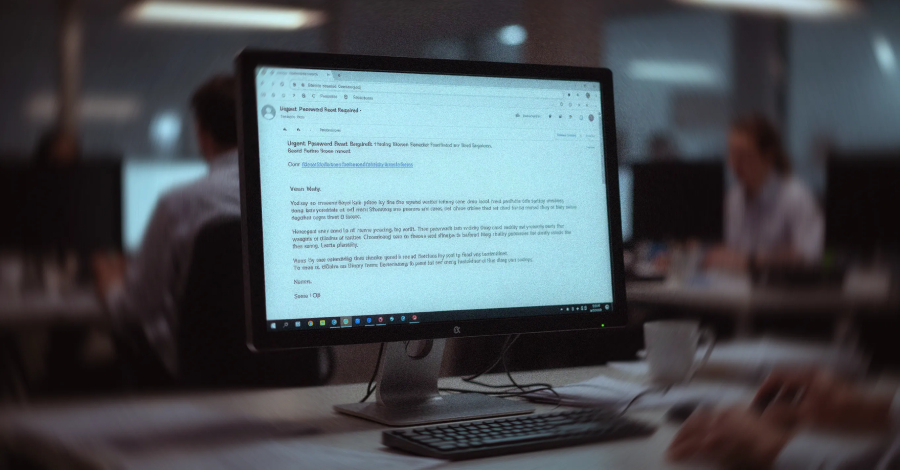
An Overview of the VENOMOUS#HELPER Phishing Campaign
A sophisticated phishing campaign, known as VENOMOUS#HELPER, has been actively targeting various organizations since April 2025. This campaign utilizes legitimate Remote Monitoring and Management (RMM) software to establish persistent remote access to compromised systems.
According to cybersecurity experts at Securonix, over 80 organizations, primarily in the U.S., have fallen victim to this campaign. The tactics employed in VENOMOUS#HELPER bear similarities to previously identified threat clusters by Red Canary and Sophos, the latter referring to it as STAC6405. While the perpetrators remain unidentified, the attack is believed to be financially motivated, possibly linked to an Initial Access Broker (IAB) or a precursor to a ransomware operation.
The attackers exploit the trust associated with legitimate RMM tools like SimpleHelp and ScreenConnect to circumvent security defenses. By utilizing these tools, the threat actors create a redundant dual-channel access system, ensuring continuous operations even if one channel is compromised.
The phishing scheme begins with an email impersonating the U.S. Social Security Administration (SSA), prompting recipients to verify their email addresses and download a supposed SSA statement from a link embedded in the message. The link directs users to a compromised Mexican business website, gruta.com.mx, evading email filters.

The “SSA statement” download from server.cubatiendaalimentos.com.mx delivers the SimpleHelp RMM tool, indicating that the attacker compromised a cPanel user account on a legitimate hosting server to stage the attack.
Upon opening the JWrapper-packaged Windows executable, the malware establishes itself as a Windows service with Safe Mode persistence. It includes a “self-healing watchdog” to ensure continuous operation, checks for security products every 67 seconds, and monitors user activity every 23 seconds.
The SimpleHelp client gains SeDebugPrivilege for desktop access and leverages elev_win.exe for SYSTEM-level privileges. This enables the attacker to view the screen, insert keystrokes, and access user resources.
Subsequently, the attacker deploys ConnectWise ScreenConnect for additional communication capabilities, ensuring uninterrupted access to the compromised system.
The researchers highlight that the deployed SimpleHelp version offers extensive remote administration features, allowing the attacker to execute commands discreetly, transfer files, and move laterally within the network undetected.








Microsoft’s Facial Recognition: Designing Games with Your Emotions

Maximizing Storage Space: Tips for Android Users

Enveda’s $311M Funding Boost to Accelerate Nature-Inspired AI Drug Development in Clinical Trials

Effortlessly Syncing One Number Across Two iPhones in iOS 27

Unveiling the New Adventure Model

Enhanced Precision: The New Surface Mouse with Haptic Feedback and Customizable Action Button

Purdue and University of Illinois Join Forces to Enhance Semiconductor Industry Talent Pool

Unveiling the Secrets of ARC Raiders: Exploring Frozen Trails, Pendola Pass, Weapon Amplification, and Beyond

Samsung Galaxy S25: Unveiling Android 17 in September – Tech Advisor

EU Takes Action Against Instagram and Facebook for Violating Illegal Content Rules

Warning: Facebook Creators Face Monetization Loss for Stealing and Reposting Videos

Facebook’s New Look: A Blend of Instagram’s Style

Facebook Compliance: ICE-tracking Page Removed After US Government Intervention

Facebook and Instagram to Reduce Personalized Ads for European Users

InstaDub: Meta’s AI Translation Tool for Instagram Videos

Reclaim Your Account: Facebook and Instagram Launch New Hub for Account Recovery

Meta discontinues Messenger apps for Windows and macOS

Breaking Updates: Meta Connect 2025 Unveils Latest Developments

THE BEST PHONE HTC EVER MADE?

The Truth about Google?

Samsung S9/ S9+ vs iPhone X vs Galaxy Note 8 Battery Life DRAIN TEST

Samsung S9 / S9+ vs Mate 10 Pro vs iPhone X Charging SPEED Test

The BEST APPS in 2018 – ft. MKBHD, UrAvgConsumer, iJustine + More

The ULTIMATE Smartphone Unboxing!!

HOW GOOD can a $250 Smartphone Camera be!?

10 Android Apps you NEED to try in 2018

They could not believe how cheap this Phone is
-
 Facebook11 months ago
EU Takes Action Against Instagram and Facebook for Violating Illegal Content Rules
-
 Facebook11 months ago
Warning: Facebook Creators Face Monetization Loss for Stealing and Reposting Videos
-
 Facebook10 months ago
Facebook’s New Look: A Blend of Instagram’s Style
-
 Facebook11 months ago
Facebook Compliance: ICE-tracking Page Removed After US Government Intervention
-
 Facebook10 months ago
Facebook and Instagram to Reduce Personalized Ads for European Users
-
 Facebook11 months ago
InstaDub: Meta’s AI Translation Tool for Instagram Videos
-
 Facebook10 months ago
Reclaim Your Account: Facebook and Instagram Launch New Hub for Account Recovery
-
 Apple11 months ago
Meta discontinues Messenger apps for Windows and macOS
