
AI
Revolutionizing Drug Discovery: Bristol Myers Squibb Acquires Nvidia’s AI System

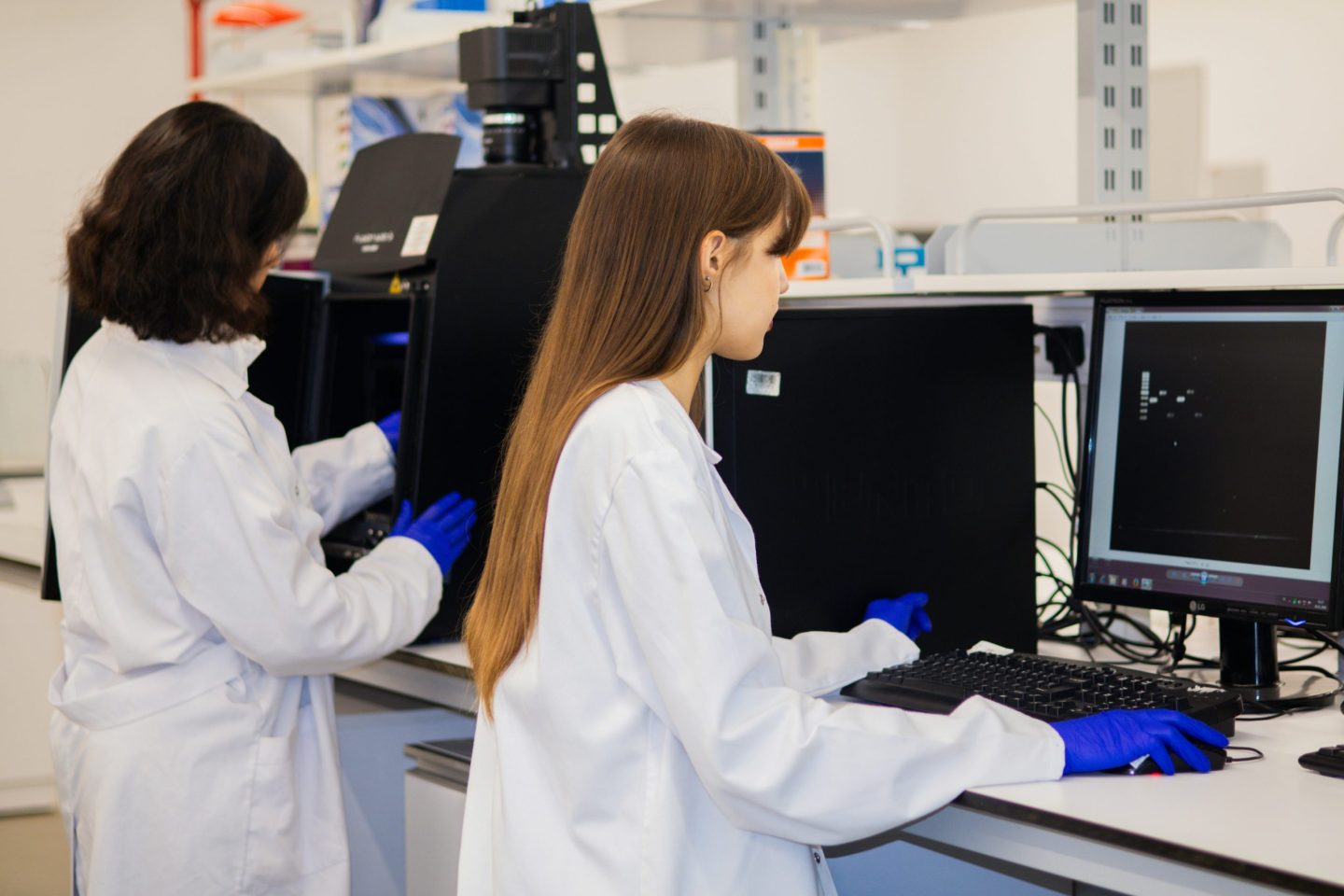
Bristol Myers Squibb has announced the acquisition of an Nvidia DGX SuperPOD based on the chipmaker’s Vera Rubin architecture. The purpose of this purchase is to bolster artificial intelligence capabilities in the company’s drug discovery and development processes.
This move makes Bristol Myers Squibb the first life sciences organization to invest in a DGX SuperPOD powered by Vera Rubin. Nvidia recently introduced this architecture as the next generation of AI computing systems.
Expanding Computing Capacity
The new cluster will consist of eight DGX Vera Rubin NVL72 systems, each combining Nvidia Vera central processing units and Rubin graphics processing units. This infrastructure will enable BMS to train proprietary models and conduct predictions across its research programs, focusing on compounds, proteins, and scientific data.
The financial details of the acquisition were not disclosed. This purchase will enhance BMS’s existing Nvidia infrastructure, which includes an older SuperPOD system that lags behind the Vera Rubin technology.
BMS has been operating its current DGX SuperPOD for approximately three years and plans to integrate it with the Vera Rubin system to create a shared computing environment accessible globally to its research sites.
The SuperPOD software stack is designed to manage training, prediction, and development workloads efficiently across the infrastructure. This expansion will provide more scientists with direct access to computing resources at BMS.
Greg Meyers, Chief Digital and Technology Officer at BMS, highlighted the increasing computing demands as the company deploys larger AI models in its research activities.
Erin Davis, Vice President of Research Business Insights and Technology at BMS, noted that the current infrastructure is at full capacity due to significant predictions involving large molecules and the development of internal foundation models.
Davis emphasized that the new system will be accessible to a broader group of researchers without the limitations of the current infrastructure, ensuring quicker access to computing resources.
Applying AI in Drug Discovery
BMS utilizes AI extensively in its drug discovery processes, incorporating it into small-molecule and large-molecule programs. The technology is instrumental in target identification, lead optimization, large-molecule predictions, and internal model development.
The implementation of AI in target identification has significantly reduced manual research efforts, while large-molecule prediction workloads are driving the need for additional graphics processing capacity.
Robert Plenge, Chief Research Officer at BMS, expressed that the new system will enable scientists to evaluate a larger number of potential drug candidates during the early development stages.
Computational screening allows researchers to assess compounds before selecting a subset for further testing in the laboratory. BMS uses a method called “Predict First,” which leverages model-generated predictions to exclude unsuitable molecules before selecting candidates for synthesis.
Payal Sheth, Senior Vice President of Therapeutic Discovery Sciences at BMS, highlighted the use of predictions to identify molecules with specific properties, streamlining the synthesis process.
This approach helps narrow down the compounds sent for laboratory testing, enabling researchers to focus on molecules that align with the program’s requirements.
BMS has also harnessed AI to expand its library of CELMoD compounds, designed to degrade cancer-causing proteins selectively. The company is studying these compounds in various diseases, aided by AI modeling to evaluate protein targets and potential compounds efficiently.
The company is also leveraging AI tools to expedite the production of medicines for clinical trials, with the process already showing significant time savings and potential for further improvements.
Plenge cited an experimental sickle cell disease treatment in early clinical development as an example of AI-supported research, emphasizing the valuable role of AI tools in drug discovery.
The Vera Rubin system will grant researchers access to Nvidia’s BioNeMo Agent Toolkit, tailored for biological and drug-discovery applications. BioNeMo provides a range of tools for various research tasks within a unified workflow.
BMS executives stressed that human researchers will continue to review model outputs and make decisions on advancing compounds or programs based on AI-generated data.
Connecting Research Sites
BMS is introducing tools to simplify complex computing tasks, enabling researchers to initiate prediction requests using natural-language instructions. The environment will be managed through Nvidia Mission Control, facilitating cluster provisioning, infrastructure monitoring, and workload management.
The unified infrastructure will facilitate the sharing of data and model outputs across different research sites, ensuring seamless collaboration and knowledge sharing among teams.
Sheth highlighted the shared environment’s role in retaining information from experiments and research programs, emphasizing the importance of institutionalizing learnings across the organization.
The two SuperPODs will operate through a common data environment, allowing teams from various locations to access shared datasets and model outputs. This environment will incorporate data from experiments, clinical findings, and research partnerships.
BMS plans to allocate the new computing capacity across different areas, including small- and large-molecule design, clinical research, and digital-twin applications. The Vera Rubin system is expected to provide increased computing capacity while optimizing energy usage.
Meyers highlighted the efficiency of the Vera Rubin system in delivering enhanced computing capacity per watt of electricity consumed, emphasizing the importance of energy efficiency in hosting such infrastructure.
BMS did not specify a deployment date or the hosting location for the new system, indicating ongoing developments in their AI and computing capabilities.
(Photo by Chidera Faustina Okeke)
See also: US public health agencies to test OpenAI and Anthropic AI models

Want to learn more about AI and big data from industry leaders? Check out AI & Big Data Expo taking place in Amsterdam, California, and London. The comprehensive event is part of TechEx and is co-located with other leading technology events including the Cyber Security & Cloud Expo. Click here for more information.
AI News is powered by TechForge Media. Explore other upcoming enterprise technology events and webinars here.












The Affordable Next-Gen Xbox: Debunking the $1,800 Price Tag

Revelation: A New Dawn in the Helldivers Universe

Battery Life Halved by Garmin’s New Voice Controls

Revolutionizing Energy: The Future of Next-Gen Battery Life

Warhound Secures $200M Investment to Develop Advanced Military Canines Equipped with Anduril Technology

No, the iPhone Duo isn’t a miniature device

Rebirth of Resilience: The Evolution of Crisis Management in the Digital Age

Australian Court Rules Against Apple’s App Store Monopoly

MY NEW CAR?! (Q&A)

EU Takes Action Against Instagram and Facebook for Violating Illegal Content Rules

Warning: Facebook Creators Face Monetization Loss for Stealing and Reposting Videos

Facebook’s New Look: A Blend of Instagram’s Style

Facebook Compliance: ICE-tracking Page Removed After US Government Intervention

Facebook and Instagram to Reduce Personalized Ads for European Users

InstaDub: Meta’s AI Translation Tool for Instagram Videos

Reclaim Your Account: Facebook and Instagram Launch New Hub for Account Recovery

Meta discontinues Messenger apps for Windows and macOS

Breaking Updates: Meta Connect 2025 Unveils Latest Developments
MY NEW CAR?! (Q&A)

Should you buy your Smartphones Refurbished!?

6 Amazing SECRET Android Launchers (2017 / 2018)

6 Value for Money Tech Products you NEED to try!

iPhone X Helicopter 1200ft Drop Test!! + Mous Case Review

7 UNBELIEVABLE Smartphone Magic Tricks!

Oneplus 5T vs Oneplus 1 – 3 Years Later.

Top 20 BEST Smartphones of 2017!

5 Amazing Upcoming Smartphone Features – 2018 / 2019
-
 Facebook12 months ago
EU Takes Action Against Instagram and Facebook for Violating Illegal Content Rules
-
 Facebook1 year ago
Warning: Facebook Creators Face Monetization Loss for Stealing and Reposting Videos
-
 Facebook11 months ago
Facebook’s New Look: A Blend of Instagram’s Style
-
 Facebook1 year ago
Facebook Compliance: ICE-tracking Page Removed After US Government Intervention
-
 Facebook11 months ago
Facebook and Instagram to Reduce Personalized Ads for European Users
-
 Facebook1 year ago
InstaDub: Meta’s AI Translation Tool for Instagram Videos
-
 Facebook11 months ago
Reclaim Your Account: Facebook and Instagram Launch New Hub for Account Recovery
-
 Apple1 year ago
Meta discontinues Messenger apps for Windows and macOS
