
AI
Bain & Company’s AI Guide for CEOs: A Launch into Singapore’s Innovation Hub

The Importance of AI Transformation in Southeast Asia
A recent report by Bain & Company highlights the challenges faced by organizations in Southeast Asia when it comes to adopting artificial intelligence (AI). Many businesses in the region are still in the early stages of product testing because they view AI as a set of tools rather than a fundamental shift in business operations. In their guide, The Southeast Asia CEO’s Guide to AI Transformation, the authors emphasize the need for leaders to envision how AI can reshape their industry and revenue strategies before investing in areas that promise tangible results.
One of the main obstacles to AI adoption in Southeast Asia is the diverse mix of cultures, income levels, and market sizes across the region. Unlike more homogenous markets, the varying consumer behaviors and economic disparities make it challenging for businesses to implement AI efficiently. The report suggests that simply focusing on efficiency gains may not yield significant returns. Instead, real benefits arise when AI is used to revolutionize business processes, accelerate decision-making, and enhance operational capacity without expanding the workforce.
According to Bain’s analysis, the average wages in Southeast Asia are approximately 7% of US levels, limiting the potential cost savings from labor reductions. Additionally, only 40% of the region’s market value comes from large corporations, compared to 60% in India. This disparity means that smaller firms may struggle to absorb the initial costs of AI implementation, prompting leaders to prioritize speed, scalability, and innovation over cost-cutting measures.
Current Impact of AI in Southeast Asia
Despite the challenges, some organizations in the region have already witnessed significant benefits by aligning their AI initiatives with business objectives. The guide showcases examples of using AI to streamline product launches, optimize supply chains, and create new revenue opportunities. For instance, predictive models can help factories minimize machine downtime and boost production, while financial institutions leverage AI for compliance tasks.
Aadarsh Baijal, a senior partner at Bain, emphasizes that the success of AI initiatives hinges on leaders’ understanding of market dynamics. Viewing AI as a strategic business transformation rather than a software deployment is crucial for driving sustainable growth and competitiveness.
Key Considerations for AI Implementation
The guide underscores the importance of focusing on people, culture, and skills, in addition to technological advancements, for successful AI transformation. While many organizations perceive scaling AI as a talent acquisition challenge, Bain argues that existing talent within the company can be leveraged effectively. Building collaborative teams and providing adequate training on AI usage are vital for seamless integration into daily workflows.
The authors identify two essential groups involved in driving successful AI adoption: the “Lab,” comprising technical teams responsible for process innovation, and the “Crowd,” encompassing business employees who require AI literacy for practical application. Balancing expertise and widespread training is key to embedding AI systems into routine operations.
Addressing data quality, governance issues, integration with existing systems, and ongoing maintenance are crucial preparatory steps for sustainable AI implementation. Without a solid foundation, achieving substantial gains from AI initiatives at scale can be challenging.
Promoting Enterprise AI in the Region
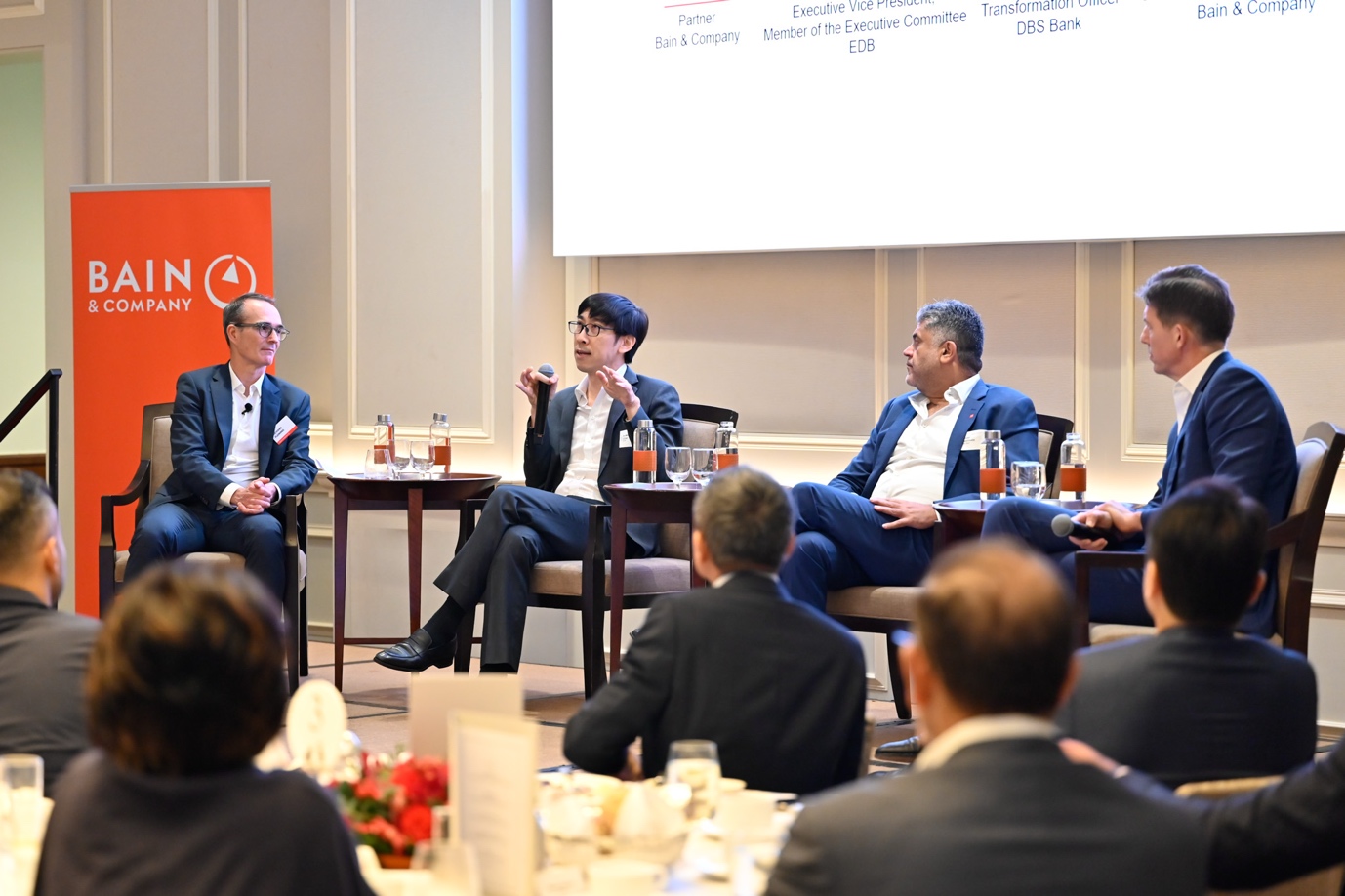
Bain’s initiative to establish an AI Innovation Hub in Singapore, supported by the Singapore Economic Development Board (EDB), aims to assist companies in transitioning from pilot projects to scalable AI solutions. The hub will focus on advanced manufacturing, energy, financial services, healthcare, and consumer goods sectors, offering production-ready AI systems and expertise to accelerate AI adoption.
The burgeoning AI ecosystem in Singapore, with over a thousand startups and projected economic value from AI, underscores the region’s potential for AI innovation. By cultivating internal talent and fostering a culture of AI-centric operations, businesses in Southeast Asia can gain a competitive edge in the evolving market landscape.
Embracing AI as a transformative business strategy, as advocated in Bain’s AI guide, positions organizations for long-term success and sustainability amidst increasing competition in Southeast Asia.
Explore more insights on AI and big data from industry leaders: AI & Big Data Expo
Stay informed with the latest enterprise technology updates from TechForge Media. Discover upcoming events and webinars here.












Cyberpunk 2077: The Endless Battle with Phantom Liberty’s Chimera Tank

Unlock the Power of Adobe Premiere with a Free App for Android Phones – Tech Advisor

iBeer: How One App Took the App Store by Storm

Apple’s Innovative Approach to Fitness Tracking: A Screenless Solution in the Works

Rolls-Royce Cullinan Dominates Russian Luxury Car Market, Outselling Spectre, Ghost & Phantom Combined

Microsoft Appoints Brad Smith as Head of Corporate Communications

The Lord of the Rings: War in the North Legacy Edition – Patch One: The Beginning of a New Journey

Revolutionizing Android: 5 Innovative Features That Will Transform User Experience

Xiaomi 18 Pro: Global Launch Set for 2026, Confirmed by Tech Advisor

EU Takes Action Against Instagram and Facebook for Violating Illegal Content Rules

Warning: Facebook Creators Face Monetization Loss for Stealing and Reposting Videos

Facebook’s New Look: A Blend of Instagram’s Style

Facebook Compliance: ICE-tracking Page Removed After US Government Intervention

Facebook and Instagram to Reduce Personalized Ads for European Users

InstaDub: Meta’s AI Translation Tool for Instagram Videos

Reclaim Your Account: Facebook and Instagram Launch New Hub for Account Recovery

Meta discontinues Messenger apps for Windows and macOS

Breaking Updates: Meta Connect 2025 Unveils Latest Developments

Does a Cheap 2018 Smartphone beat a 2013 Flagship?

Samsung Galaxy S9 & S9+ UNBOXING!

Samsung Galaxy S9 Plus vs iPhone X

The BEST $300 Phone (2018) ft. MKBHD, Technical Guruji, iJustine + More

Samsung Galaxy S9 Plus Gaming Review! (vs OnePlus 5T)

THE BEST PHONE HTC EVER MADE?

The Truth about Google?

Samsung S9/ S9+ vs iPhone X vs Galaxy Note 8 Battery Life DRAIN TEST

Samsung S9 / S9+ vs Mate 10 Pro vs iPhone X Charging SPEED Test
-
 Facebook11 months ago
EU Takes Action Against Instagram and Facebook for Violating Illegal Content Rules
-
 Facebook12 months ago
Warning: Facebook Creators Face Monetization Loss for Stealing and Reposting Videos
-
 Facebook10 months ago
Facebook’s New Look: A Blend of Instagram’s Style
-
 Facebook12 months ago
Facebook Compliance: ICE-tracking Page Removed After US Government Intervention
-
 Facebook10 months ago
Facebook and Instagram to Reduce Personalized Ads for European Users
-
 Facebook12 months ago
InstaDub: Meta’s AI Translation Tool for Instagram Videos
-
 Facebook10 months ago
Reclaim Your Account: Facebook and Instagram Launch New Hub for Account Recovery
-
 Apple11 months ago
Meta discontinues Messenger apps for Windows and macOS
