
Cars
Revolutionizing Electric Vehicles: BMW’s Cutting-Edge 800-Volt Battery and Charging System

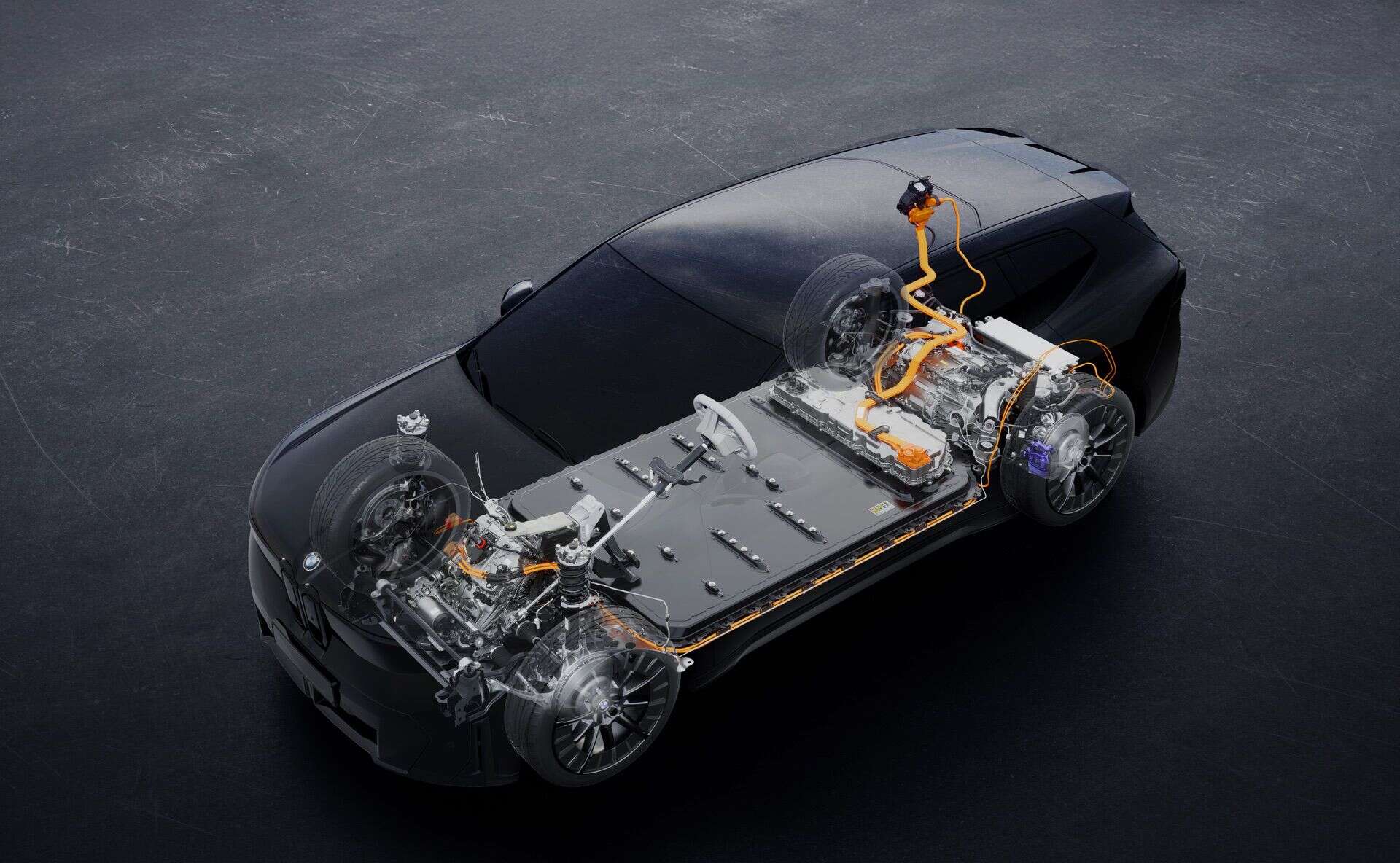
BMW has unveiled its sixth-generation eDrive platform, marking a significant overhaul of its battery, power electronics, and charging systems since the debut of the original i3. Unlike previous iterations that saw incremental improvements, the Gen6 platform introduces a brand-new battery format, pack structure, voltage architecture, thermal concept, charging software backend, and energy-management strategy. This clean-sheet design is the result of careful consideration of electrochemical limits, thermal behavior, and real-world charging data.
The core innovation of the Gen6 platform is the transition from a 400-volt to an 800-volt battery pack. This new pack features cylindrical cells arranged in a cell-to-pack configuration, eliminating the need for modules or structural struts. By removing intermediate housings, BMW has been able to increase usable volume, reduce electrical and thermal resistance between cells and cooling surfaces, and optimize thermal flow. The cylindrical format was chosen for its lower internal resistance, more uniform heat distribution, and improved fast-charge ion transport, allowing for high peak charging power and stability under high current.
The platform also integrates an “Energy Master” unit directly into each high-voltage battery, serving as a centralized control module for managing high-voltage and low-voltage distribution, battery protection, communication with the charging system, and bidirectional energy functions. This architecture eliminates the need for additional hardware for vehicle-to-home (V2H), vehicle-to-grid (V2G), or vehicle-to-load (V2L) capabilities, as all required components are native to the pack and drive electronics.
One of the standout features of the Gen6 platform is its 400kW charging capability. Engineers emphasized that the charging curve is defined by cell chemistry and internal resistance, rather than software smoothing or idealized targets. The battery reaches peak charging power just above ten percent state of charge and maintains 400 kW for approximately three minutes before settling into a sustained high-power plateau. The tapering profile beyond twenty percent state of charge is dictated by the physics of the cylindrical cells, ensuring safe and efficient charging.
BMW has also made significant backend improvements to enhance the charging experience. An AI-powered geolocation correction layer corrects inaccurately placed public chargers on maps, while the “Power Learning” system records real-world charging power data to provide accurate charging estimates and optimize charging stops. These backend systems help bridge the gap between advertised charging conditions and actual user experience.
Furthermore, the Gen6 platform introduces bidirectional charging capabilities, allowing for V2H, V2G, and V2L operations. The BMW Wallbox Professional supports bidirectional operation in Europe up to 11 kW, while in the U.S., it is rated up to 19.2 kW. Vehicle-to-grid services are being rolled out commercially in Germany through a partnership with E.ON, with a focus on shallow cycling to limit battery wear.
In the U.S., all iX3 models will come equipped with AC Charging Professional as standard, featuring an onboard charger rated at approximately 15.4 kW AC and enabling bidirectional functions. The AI-controlled charging flap automatically opens when approaching a charging stop, streamlining the charging process.
Overall, the Gen6 platform represents a significant leap forward in battery technology and charging infrastructure, offering faster charging speeds, enhanced backend systems, and versatile bidirectional capabilities. With its innovative design and advanced features, BMW is setting new standards for electric vehicle performance and convenience.










Revolutionizing Android: 5 Innovative Features That Will Transform User Experience

Xiaomi 18 Pro: Global Launch Set for 2026, Confirmed by Tech Advisor

Comparing Farmtech Solutions: Poly Tape vs Electric Fence Wire

Unbeatable Deals on Top-tier Apps: Own Them Forever at a Fraction of the Cost

Does a Cheap 2018 Smartphone beat a 2013 Flagship?

Expert Tips for Buying a BMW X5: Insights from a Seasoned Owner of 103 Models

Microsoft’s Bold Vision: The Copilot ‘Super App’ Set to Rival Office in Influence

Lost in the Fantasia: The Rise and Fall of a Colourful JRPG

The Ultimate Performance: Exploring Phones with Qualcomm Snapdragon 8 Elite Gen 6 Processor

EU Takes Action Against Instagram and Facebook for Violating Illegal Content Rules

Warning: Facebook Creators Face Monetization Loss for Stealing and Reposting Videos

Facebook’s New Look: A Blend of Instagram’s Style

Facebook Compliance: ICE-tracking Page Removed After US Government Intervention

Facebook and Instagram to Reduce Personalized Ads for European Users

InstaDub: Meta’s AI Translation Tool for Instagram Videos

Reclaim Your Account: Facebook and Instagram Launch New Hub for Account Recovery

Meta discontinues Messenger apps for Windows and macOS

Breaking Updates: Meta Connect 2025 Unveils Latest Developments
Does a Cheap 2018 Smartphone beat a 2013 Flagship?

Samsung Galaxy S9 & S9+ UNBOXING!

Samsung Galaxy S9 Plus vs iPhone X

The BEST $300 Phone (2018) ft. MKBHD, Technical Guruji, iJustine + More

Samsung Galaxy S9 Plus Gaming Review! (vs OnePlus 5T)

THE BEST PHONE HTC EVER MADE?

The Truth about Google?

Samsung S9/ S9+ vs iPhone X vs Galaxy Note 8 Battery Life DRAIN TEST

Samsung S9 / S9+ vs Mate 10 Pro vs iPhone X Charging SPEED Test
-
 Facebook11 months ago
EU Takes Action Against Instagram and Facebook for Violating Illegal Content Rules
-
 Facebook12 months ago
Warning: Facebook Creators Face Monetization Loss for Stealing and Reposting Videos
-
 Facebook10 months ago
Facebook’s New Look: A Blend of Instagram’s Style
-
 Facebook12 months ago
Facebook Compliance: ICE-tracking Page Removed After US Government Intervention
-
 Facebook10 months ago
Facebook and Instagram to Reduce Personalized Ads for European Users
-
 Facebook12 months ago
InstaDub: Meta’s AI Translation Tool for Instagram Videos
-
 Facebook10 months ago
Reclaim Your Account: Facebook and Instagram Launch New Hub for Account Recovery
-
 Apple11 months ago
Meta discontinues Messenger apps for Windows and macOS
