
Startups
From SpaceX’s Rocket Engine to Orbit: The Journey of a Space-Age Innovator

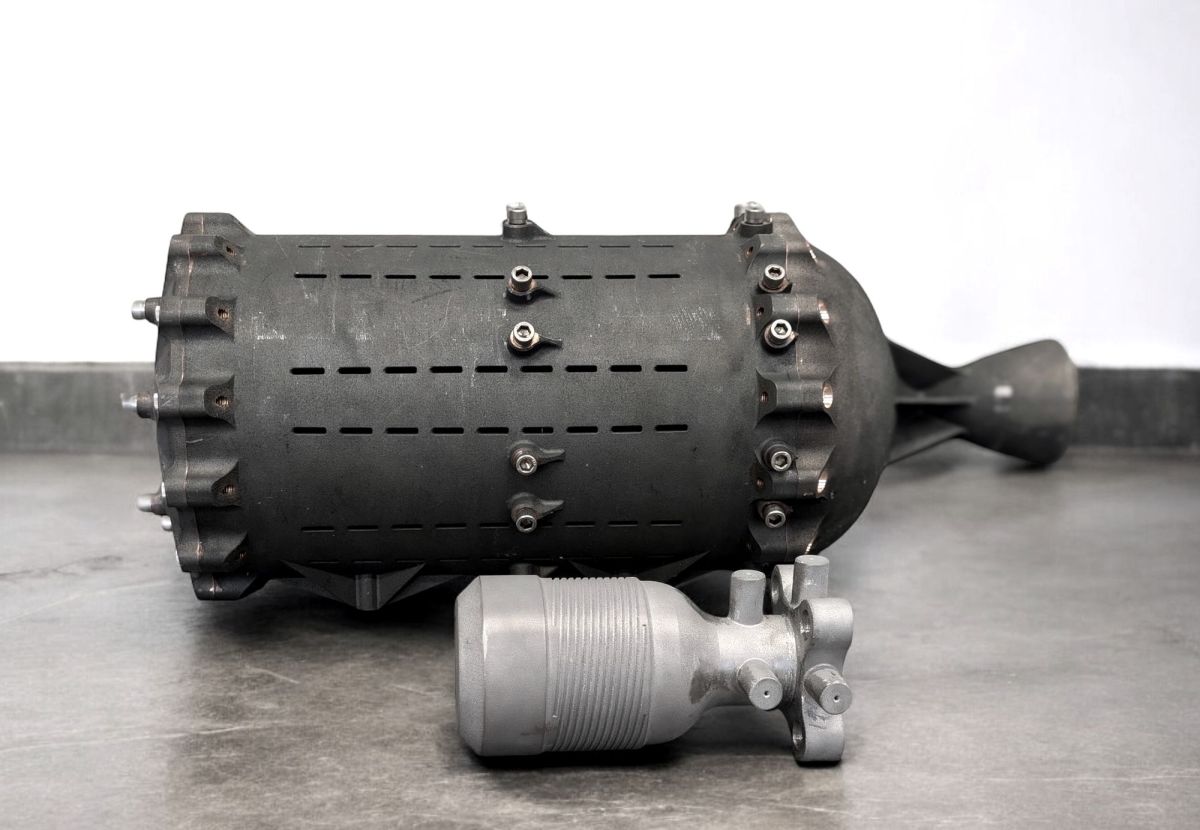
A New Era in Rocket Propulsion: Portal Space Systems Revolutionizing Space Travel
In the realm of space exploration, Jeff Thornburg stands out as a visionary leader who has successfully transitioned from government research to pioneering work in the private sector. His latest venture, Portal Space Systems, aims to transform an overlooked NASA concept into a cutting-edge propulsion system for future spacecraft.
Established in 2021, Portal recently secured a significant milestone with a $50 million Series A funding round, elevating the company’s value to $250 million. Leading investors such as Geodesic Capital, Mach33, Booz Allen Ventures, ARK Invest, AlleyCorp, and FUSE have shown confidence in Portal’s innovative approach.
At the core of Portal’s technology is solar thermal propulsion, a revolutionary concept that harnesses the sun’s energy to propel spacecraft at unprecedented speeds. While traditional satellite engines rely on chemical fuel or solar electricity for propulsion, Portal’s engines utilize solar heat to supercharge spacecraft mobility.
The concept of solar thermal propulsion dates back to the 1960s, with intermittent research efforts yielding promising results. Thornburg, alongside co-founders Ian Vorbach and Prashaanth Ravindran, is determined to bring this technology to fruition within the next two years.
Thornburg’s journey from the U.S. Air Force to pivotal roles at SpaceX, Stratolaunch, and Amazon’s Project Kuiper underscores his expertise in propulsion systems. His work on the groundbreaking Raptor engine at SpaceX exemplifies his commitment to pushing the boundaries of rocket technology.
Solar thermal power represents a significant leap forward in rocket propulsion, offering enhanced performance and efficiency. Despite NASA’s earlier exploration of this technology, commercial viability was hindered by limited demand for in-space propulsion. However, the landscape has shifted with the surge in satellite deployment and the need for agile spacecraft capabilities.
Portal’s strategic partnerships, including $45 million in military funding, underscore the potential for leveraging its technology in orbital operations. With a focus on space mobility and propulsion solutions, Portal is poised to become a pivotal player in the evolving space industry.
The Future of Space Travel: Portal’s Path to Orbit
To validate its technology in practical settings, Portal is gearing up for orbital testing. Recent milestones include the successful launch of flight electronics and upcoming spacecraft prototypes. The anticipated debut of the SuperNova spacecraft in 2027 heralds a new era of high-speed orbital transportation.
Advancements in additive manufacturing and materials science have enabled Portal to develop innovative components like the Hex thruster, integrating solar concentration and propulsion mechanisms. This technological prowess positions Portal as a frontrunner in the realm of advanced propulsion systems.
While nuclear-powered rockets garner attention for interplanetary travel, regulatory complexities pose significant challenges. Portal’s focus on nuclear thermal propulsion offers a pragmatic alternative, leveraging existing solar heat principles for future nuclear applications.
Thornburg’s pragmatic approach emphasizes the importance of on-orbit testing for rapid technology maturation, bypassing the need for costly ground facilities. By demonstrating the viability of advanced propulsion concepts in space, Portal is paving the way for transformative advancements in space exploration.













Unleashing Potential: Overcoming Limitations

Uncovering the Bystander Problem: Insights from a Former AWS Security Engineer on Amazon’s Bee AI Devices

Arizona Sunshine: Unleashing the Doggy Co-op Mode in January

International Collaboration: Surrey, Sheffield, and Melbourne Join Forces on £3.2m Project to Create Provably Secure Sandbox for AI Agents

Tech Advisor Announces Samsung Galaxy Phones Now Available on Google Play Store

Exploring the Boundaries of Physical AI: Insights from an Nvidia Veteran Turned Investor

The Latest Updates on Apple’s iPhone Duo

Google Unveils Revolutionary ‘Universal’ Online Shopping Cart for Seamless Shopping Experience

Upgrade Alert: HomePod Mini 2 and HomePod 2 Set to Become Default Mac Speakers

EU Takes Action Against Instagram and Facebook for Violating Illegal Content Rules

Warning: Facebook Creators Face Monetization Loss for Stealing and Reposting Videos

Facebook’s New Look: A Blend of Instagram’s Style

Facebook Compliance: ICE-tracking Page Removed After US Government Intervention

Facebook and Instagram to Reduce Personalized Ads for European Users

InstaDub: Meta’s AI Translation Tool for Instagram Videos

Reclaim Your Account: Facebook and Instagram Launch New Hub for Account Recovery

Meta discontinues Messenger apps for Windows and macOS

Breaking Updates: Meta Connect 2025 Unveils Latest Developments

Finally Fixing my Wi-Fi – Zyxel Multy X!

$25,000 Gaming Setup – EVOLUTION!

The Maze Alpha X is HERE!

Cool Tech under $100 – December!

MYSTERY UNBOXING FROM GOOGLE!

TOP 6 Smartphones from Companies you NEVER Expected!

A Surprise Smartphone from EE!

DOOGEE MIX 2 VS DOOGEE MIX 1!

INCREDIBLE Smartphone Gadgets on Amazon!
-
 Facebook12 months ago
EU Takes Action Against Instagram and Facebook for Violating Illegal Content Rules
-
 Facebook1 year ago
Warning: Facebook Creators Face Monetization Loss for Stealing and Reposting Videos
-
 Facebook10 months ago
Facebook’s New Look: A Blend of Instagram’s Style
-
 Facebook1 year ago
Facebook Compliance: ICE-tracking Page Removed After US Government Intervention
-
 Facebook10 months ago
Facebook and Instagram to Reduce Personalized Ads for European Users
-
 Facebook1 year ago
InstaDub: Meta’s AI Translation Tool for Instagram Videos
-
 Facebook11 months ago
Reclaim Your Account: Facebook and Instagram Launch New Hub for Account Recovery
-
 Apple12 months ago
Meta discontinues Messenger apps for Windows and macOS
