
Tech News
Mastering Mobile Healthcare App Development: A Comprehensive Overview

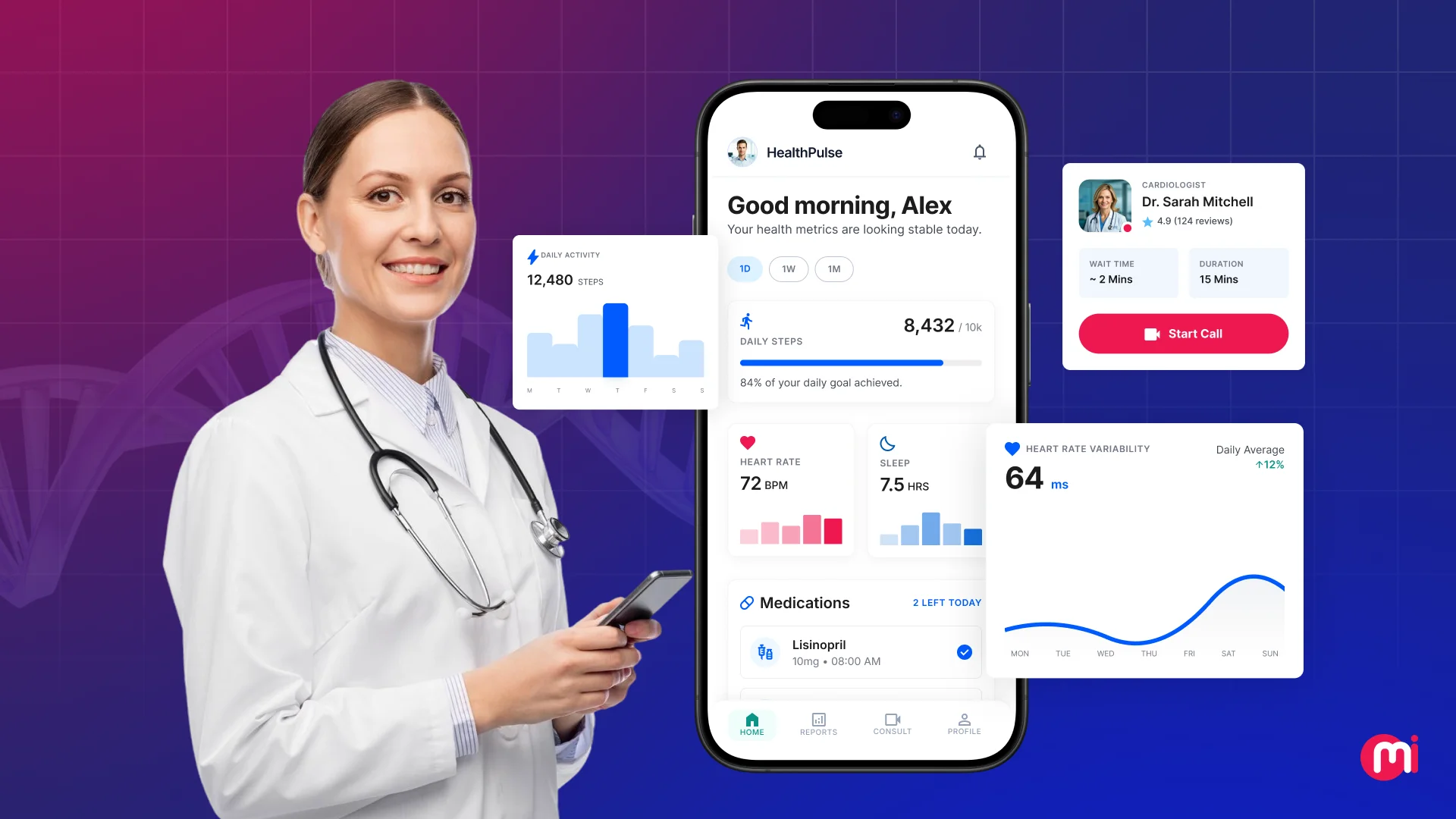
Healthcare delivery has undergone a significant shift, with patients now expecting the same level of on-demand convenience from their care providers as they do from banking or e-commerce services. This shift has led to demands in the healthcare sector for virtual consultations, digital prescriptions, remote monitoring, and real-time access to medical records directly from smartphones.
Investing in healthcare app development services is no longer just about building a digital product. It now involves creating secure, compliant, and scalable mobile solutions that can operate effectively within complex clinical environments while enhancing patient engagement and operational efficiency.
The market growth in the healthcare mobile application sector reflects this shift. The global healthcare mobile application market is estimated to be at USD 16.7 billion in 2026 and is projected to reach USD 47.0 billion in 2031, growing at a 23.0% CAGR.
As healthcare organizations continue to transition towards mobile-first care delivery, understanding how mHealth applications are designed, developed, and deployed has become essential.
Key Takeaways:
– The global mHealth app market is projected to grow from $16.7B in 2026 to $47B by 2031, reflecting rapid digital healthcare adoption worldwide.
– Clinical-grade healthcare apps help providers reduce administrative workload, improve care coordination, streamline telehealth workflows, and enhance chronic care monitoring through real-time mobile accessibility.
– Healthcare organizations should prioritize interoperability, accessibility, workflow-focused UX, scalability planning, and continuous adoption monitoring to ensure long-term clinical and operational success of mHealth platforms.
– mHealth apps must operate within highly regulated environments requiring HIPAA compliance, EHR interoperability, encrypted data handling, secure authentication, and clinical-grade reliability standards.
– Selecting the right tech stack, cloud infrastructure, interoperability standards, and security architecture directly impacts scalability, compliance readiness, performance, and long-term maintenance costs.
– EHR integration should be prioritized from the MVP stage. Delaying interoperability planning is the most common reason mHealth apps fail to achieve real clinical adoption.
What Is mHealth App Development?
mHealth app development is the process of creating mobile apps that help patients, doctors, hospitals, and healthcare providers manage healthcare services more efficiently. These mobile apps can be used for virtual consultations, appointment booking, patient monitoring, medical records access, diagnostics, remote care delivery, care coordination, and improving mobile healthcare workflows. Unlike traditional mobile applications, healthcare mobile apps must operate within highly regulated environments involving:
– Sensitive patient health information (PHI)
– HIPAA, GDPR, and applicable regional compliance requirements
– EHR/EMR interoperability
– Real-time clinical communication
– Secure authentication and access management
– Clinical-grade reliability and scalability
This guide walks you through every meaningful aspect of mobile healthcare app development — from understanding the benefits for patients and providers, and must-have features, to the step-by-step build process, compliance requirements, cost expectations, and the trends reshaping the space right now.
Key Trends and Emerging Technologies in mHealth App Development:
– Ambient Clinical Documentation and AI Note-Taking
– Precision Medicine and Hyper-Personalization
– Hospital at Home Expansion
– Wearables Reaching Clinical-Grade Accuracy
– 5G-Enabled Continuous Monitoring
– Mental Health Apps Moving Into Clinical Mainstream
– Interoperability as Infrastructure
Why Choose MindInventory as Your Healthcare App Development Partner:
At MindInventory, our experts have over a decade of experience building mobile healthcare applications and enterprise digital solutions across providers, payers, and health technology companies. Our teams work across the full delivery scope, from clinical workflow discovery to post-launch adoption support. We prioritize compliance and security-first architecture, ensuring that your healthcare app meets the rigorous demands of the industry.
FAQ’s On mHealth App Development:
– How long does mHealth app development take?
– What makes healthcare app development different from any other mobile app build?
– Should we choose native or cross-platform development for an mHealth app?
– Can mHealth apps integrate with wearable devices and medical IoT systems?
– Is HIPAA compliance alone enough for a healthcare mobile app?
In conclusion, the healthcare mobile app development sector is rapidly evolving, with a focus on improving patient engagement, operational efficiency, and compliance with regulatory standards. By investing in mHealth app development services and staying up-to-date with emerging technologies, healthcare organizations can provide innovative and secure mobile solutions that enhance patient care and streamline clinical workflows.













Malevolent Warlock Harnesses SharePoint Vulnerabilities to Disable Security Measures and Unleash Ransomware

Resident Evil: Timelines Collide – A Mysterious Crossover Adventure

Tech Titan’s Body Scan Revolution Hits US Shores

GrayKey Tool Outsmarts iPhone’s 72-Hour Inactivity Reboot

Unleashing Power: The Mercedes-AMG GT 63 Pro Hits Malaysian Roads at RM 2.09 million

Revised Game++: Conquering Bugs and Keeping Pants Intact

Power Players: Europe’s Top AI Influencers

Beware: The Secret iOS 27 Setting That’s Sapping Your Battery Life

Concept Smartphones that are better than Real Smartphones

EU Takes Action Against Instagram and Facebook for Violating Illegal Content Rules

Warning: Facebook Creators Face Monetization Loss for Stealing and Reposting Videos

Facebook’s New Look: A Blend of Instagram’s Style

Facebook Compliance: ICE-tracking Page Removed After US Government Intervention

Facebook and Instagram to Reduce Personalized Ads for European Users

InstaDub: Meta’s AI Translation Tool for Instagram Videos

Reclaim Your Account: Facebook and Instagram Launch New Hub for Account Recovery

Meta discontinues Messenger apps for Windows and macOS

Breaking Updates: Meta Connect 2025 Unveils Latest Developments
Concept Smartphones that are better than Real Smartphones

Samsung Galaxy SII Unboxing!

The SECRET to Maximise Smartphone Battery Life?

We Designed the Ultimate Gaming Smartphone of 2018!

Using the Cheapest Smartphone in the World.

Samsung Galaxy S9+ Unboxing! (Clone)

Unboxing the First Ever Samsung Galaxy S!!

Huawei P Smart – Huawei’s new Killer Budget Smartphone!

MYSTERY Package from Xiaomi – HUGE UNBOXING!
-
 Facebook11 months ago
EU Takes Action Against Instagram and Facebook for Violating Illegal Content Rules
-
 Facebook12 months ago
Warning: Facebook Creators Face Monetization Loss for Stealing and Reposting Videos
-
 Facebook10 months ago
Facebook’s New Look: A Blend of Instagram’s Style
-
 Facebook12 months ago
Facebook Compliance: ICE-tracking Page Removed After US Government Intervention
-
 Facebook10 months ago
Facebook and Instagram to Reduce Personalized Ads for European Users
-
 Facebook12 months ago
InstaDub: Meta’s AI Translation Tool for Instagram Videos
-
 Facebook10 months ago
Reclaim Your Account: Facebook and Instagram Launch New Hub for Account Recovery
-
 Apple12 months ago
Meta discontinues Messenger apps for Windows and macOS
