
Tech News
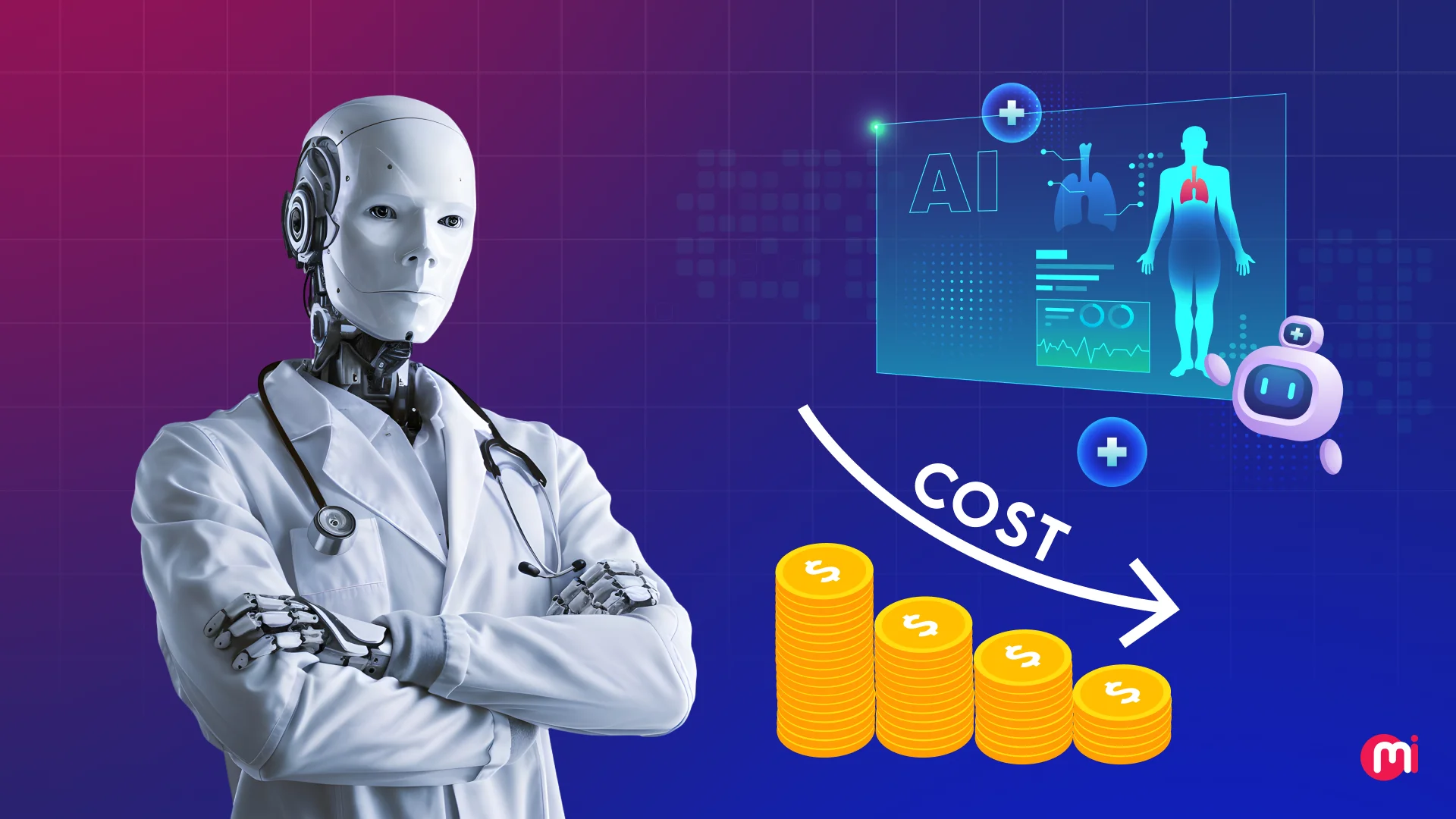
Maximizing Healthcare Efficiency: AI Solutions for Cost Reduction and ROI

- AI/ML
- Last Updated: June 8, 2026

Healthcare costs are rising fast. Systems are under pressure to do more with less. Margins are shrinking. Demand is growing.
A large share of spending is still tied to inefficiencies. Manual processes. Delayed diagnoses. Avoidable hospital visits. These gaps add billions in unnecessary costs every year.
This is where AI is making a real impact.
AI is no longer experimental. It is being used to automate workflows, improve clinical decisions, and predict risks early.
Key Takeaways:
– AI reduces healthcare costs by targeting inefficiencies, errors, and delays across the system.
– The biggest cost savings come from administrative automation, with up to a 13-25% reduction in admin expenses.
– Early detection and predictive care lower expensive hospitalizations and long-term treatment costs.
– AI improves operational efficiency by optimizing staff, beds, and high-cost assets like imaging equipment.
– Fraud detection and claims automation reduce revenue leakage and improve financial control.
– Personalized treatment helps avoid unnecessary procedures and reduces overall care costs.
– AI in drug discovery shortens development cycles and lowers R&D spending.
– Successful implementation depends on starting small, focusing on high-impact use cases, and scaling strategically.
– AI is not just improving healthcare; it is becoming a core strategy for sustainable cost reduction.
Role of AI in Healthcare Cost Reduction (At a Glance):
– AI reduces costs by targeting the biggest sources of waste in healthcare, improving efficiency and decision-making across the system in key areas like administrative work, diagnostics, and operations.
– It automates repetitive tasks, reduces errors, speeds up processes, enables early detection, and predictive analytics, leading to lower operational costs, better resource utilization, and improved patient outcomes.
– AI delivers value through administrative automation, improved diagnostics, predictive analytics, operational optimization, readmission reduction, fraud detection, and personalized treatment. It is a transformational tool that can revolutionize healthcare delivery and cost reduction. By focusing on early detection and improved diagnostics, predictive analytics and preventive care, operational efficiency and resource optimization, fraud detection and claims management, personalized treatment and reduced waste, and drug discovery and R&D cost reduction, healthcare organizations can harness the power of AI to drive cost savings and improve patient outcomes. By following key implementation strategies and real-world examples like GE HealthCare’s optimization of hospital operations, organizations can pave the way for a future of AI-powered healthcare cost optimization that delivers better care at a lower cost.
FAQs
The ongoing rise in healthcare costs can be attributed to various factors:
- Administrative Inefficiencies
- Rising Prevalence of Chronic Diseases
- Workforce Shortages
- Increasing Demand for Healthcare Services
- Delayed Diagnoses and Treatments
- Hospital Readmissions and Avoidable Complications
- Fragmented Healthcare Systems and Data Silos
- Rising Costs of Medical Technologies and Medications
- Regulatory and Compliance Requirements
- Growing Operational and Infrastructure Expenses
Artificial Intelligence (AI) plays a crucial role in reducing healthcare costs by automating administrative tasks, enhancing diagnostics, enabling early intervention, and optimizing resource utilization. It effectively minimizes wastage, errors, and unnecessary treatments.
The implementation of AI technology has the most significant impact on administrative workflows, diagnostics, predictive care, hospital operations, claims management, and drug discovery within the healthcare sector.
While the initial investment in AI implementation can be substantial, healthcare organizations typically experience long-term cost savings through reduced operational expenses, enhanced efficiency, and improved patient outcomes.
The timeline for achieving ROI from AI initiatives in healthcare varies depending on the specific use case. Administrative automation projects can yield results within months, while clinical and predictive applications may require more time to scale effectively.
AI technologies can effectively identify high-risk patients and facilitate early intervention, thereby reducing complications and preventing unnecessary hospital readmissions.
AI solutions optimize scheduling, staffing, and resource allocation in hospital settings. They assist in maximizing infrastructure utilization and minimizing idle capacity.
AI technology supports clinical decision-making by providing data-driven insights, enhancing accuracy. However, its effectiveness is further amplified when combined with human expertise.
Healthcare organizations can initiate their AI journey by focusing on high-impact use cases such as administrative automation. It is essential to ensure data readiness, opt for scalable solutions, and continually measure ROI to guide further adoption and success.













Unlocking the Secrets of Apple’s Event: Three Simple Ways to Tune In Tomorrow

Ford Australia: Recalls and Brand Resilience

Microsoft Sets New Patch Tuesday Record with Latest Updates

Breakthrough Superconducting Technology: Imec’s NbTiN Circuits and 30nm Interconnects

Unleash the Hunt in Monster Hunter Wilds: Ascendance – Watch the First Trailer Now!

The Top 5 Most Stunning iPhone Colors of All Time – Tech Advisor

The Future of Foldable Technology: A Breakthrough Beyond the iPhone – Tech Advisor’s Top Pick for 2026

The Exploration Company’s Reusable High-Thrust Rocket Engine: A €387 Million Investment for Accelerated Development

Pusheen’s Playtime Adventure: Coming Soon to Apple Arcade

EU Takes Action Against Instagram and Facebook for Violating Illegal Content Rules

Warning: Facebook Creators Face Monetization Loss for Stealing and Reposting Videos

Facebook’s New Look: A Blend of Instagram’s Style

Facebook Compliance: ICE-tracking Page Removed After US Government Intervention

Facebook and Instagram to Reduce Personalized Ads for European Users

InstaDub: Meta’s AI Translation Tool for Instagram Videos

Reclaim Your Account: Facebook and Instagram Launch New Hub for Account Recovery

Meta discontinues Messenger apps for Windows and macOS

Breaking Updates: Meta Connect 2025 Unveils Latest Developments

12 Incredible Android SECRETS, TIPS and TRICKS

The Ultimate Smartphone Camera Comparison.

Top 10 Android Launchers you’ve NEVER tried.

Our Bezel-less future! Q&A 5.0

The $200 OnePlus phone? Lenovo S5 is HERE!

OnePlus 6 vs Samsung Galaxy S9 Plus

Honor 10 UNBOXING!

OnePlus 6 vs iPhone X Camera Test Comparison

MYSTERY Package from Xiaomi – MASSIVE UNBOXING!
-
 Facebook11 months ago
EU Takes Action Against Instagram and Facebook for Violating Illegal Content Rules
-
 Facebook11 months ago
Warning: Facebook Creators Face Monetization Loss for Stealing and Reposting Videos
-
 Facebook9 months ago
Facebook’s New Look: A Blend of Instagram’s Style
-
 Facebook11 months ago
Facebook Compliance: ICE-tracking Page Removed After US Government Intervention
-
 Facebook9 months ago
Facebook and Instagram to Reduce Personalized Ads for European Users
-
 Facebook11 months ago
InstaDub: Meta’s AI Translation Tool for Instagram Videos
-
 Facebook9 months ago
Reclaim Your Account: Facebook and Instagram Launch New Hub for Account Recovery
-
 Apple11 months ago
Meta discontinues Messenger apps for Windows and macOS
