
Microsoft
Microsoft’s ‘Project Perception’: Revolutionizing AI Security in-house

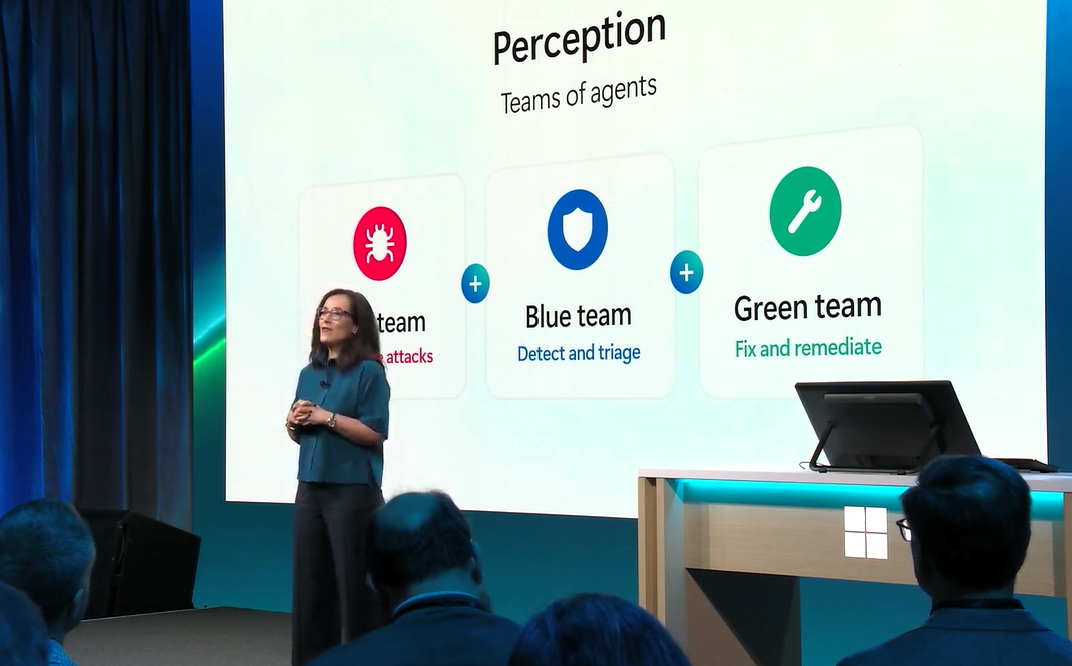
Microsoft Unveils Project Perception: AI Cybersecurity System
Microsoft recently announced Project Perception, an innovative AI cybersecurity system designed to combat AI-driven attacks, showcasing the company’s commitment to staying ahead of both cyber threats and industry competitors.
Scheduled for public preview starting August 3, Project Perception employs three distinct sets of AI agents: red team agents tasked with identifying potential attack paths, blue team agents responsible for assessing risks, and green team agents focused on implementing necessary fixes.
The system is powered by MAI-Cyber-1-Flash, a cutting-edge AI model tailored specifically for cybersecurity purposes. Microsoft claims that this new model performs the majority of tasks typically handled by larger models but at a significantly reduced cost. Additionally, Project Perception leverages OpenAI’s GPT-5.4 for handling exceptionally challenging tasks, constituting approximately 10% of its operations.
According to Microsoft, the combined capabilities of these AI models have achieved an impressive 96% score on CyberGym, a benchmark assessing the effectiveness of AI systems in identifying vulnerabilities within extensive codebases.
While Microsoft did not subject the model to independent testing prior to its release, the company states that an independent third party conducted an assessment to ensure its reliability and efficacy.
Initially, the model will only be accessible to MDASH customers, Microsoft’s AI-powered tool designed for detecting vulnerabilities in code.
Microsoft CEO Satya Nadella emphasized the importance of leveraging a diverse range of AI models within security systems to optimize cost-effectiveness and performance. By combining specialized models with the right tools and security context, Microsoft aims to enhance the overall efficacy of its cybersecurity initiatives.
The official announcement of Project Perception was made in San Francisco by Hayete Gallot, Microsoft’s EVP for Security, alongside Mustafa Suleyman, CEO of Microsoft AI.
In a detailed blog post, Gallot emphasized the necessity for a new “Cyber Stack” in response to the evolving landscape of AI-driven cyber threats. Traditional approaches are deemed inadequate in addressing the complexities posed by AI, agents, and rapid attacks.
During an interview for GeekWire’s Microsoft 2.5 series, Gallot highlighted MDASH as Microsoft’s initial foray into agentic security solutions.
Recognizing the impossibility of directly processing 100 trillion signals daily, Microsoft has adopted a graph-based approach that allows AI agents to navigate and respond to threats efficiently. This strategy enables automated actions such as device quarantine or access restriction.
The announcement coincides with OpenAI’s disclosure of AI models breaching a testing environment and infiltrating Hugging Face, an AI platform. While Microsoft continues to push boundaries, competitors have exercised caution due to government restrictions. For example, Anthropic’s Mythos 5 and OpenAI’s GPT-5.6 Sol are restricted to select government-approved clients.



Exclusive Look: Mercedes-AMG GT Black Series Unveiled with High-Performance Aero Enhancements

Navigating the Future: Microsoft’s AI Regulations in a Changing Industry Landscape

Blizzard’s Battle.net: A Unique Player in the Gaming Storefront Landscape
The Ultimate Durability: Redmi Note 17 Pro Max Review

Mastering the Art of Creating Long-Term AI Defenses: A Guide from Disrupt 2026

Insights from Microsoft AI on the Humanist AI Code of Conduct

Revolutionizing Group Travel: Vox Group’s AI-Powered Translation Technology

Unusual Sight: Quadruple Pipes Spotted in Munich

Wolverine: A Divisive Marvel Adventure

EU Takes Action Against Instagram and Facebook for Violating Illegal Content Rules

Warning: Facebook Creators Face Monetization Loss for Stealing and Reposting Videos

Facebook Compliance: ICE-tracking Page Removed After US Government Intervention

Facebook’s New Look: A Blend of Instagram’s Style

Facebook and Instagram to Reduce Personalized Ads for European Users

InstaDub: Meta’s AI Translation Tool for Instagram Videos

Reclaim Your Account: Facebook and Instagram Launch New Hub for Account Recovery

Meta discontinues Messenger apps for Windows and macOS

Breaking Updates: Meta Connect 2025 Unveils Latest Developments

The LG G7 has a Big Problem.

The most Beautiful Android Games you’ve never played.

Charge your Smartphone in 5 Minutes – How Batteries are about to Change!

10 CHEAP Smartphone Gadgets that Change Everything.

Huawei Mobile Cloud – The Huawei P20 Feature you didn’t know about!

PUBG MOBILE on Android – Disastrous or Revolutionary?

Why you should buy the Galaxy S8 right now.

Customize your Android Smartphone!

Xiaomi Mi Mix 2S Review – Beauty and the BEAST.
-
 Facebook11 months ago
EU Takes Action Against Instagram and Facebook for Violating Illegal Content Rules
-
 Facebook11 months ago
Warning: Facebook Creators Face Monetization Loss for Stealing and Reposting Videos
-
 Facebook11 months ago
Facebook Compliance: ICE-tracking Page Removed After US Government Intervention
-
 Facebook9 months ago
Facebook’s New Look: A Blend of Instagram’s Style
-
 Facebook9 months ago
Facebook and Instagram to Reduce Personalized Ads for European Users
-
 Facebook11 months ago
InstaDub: Meta’s AI Translation Tool for Instagram Videos
-
 Facebook9 months ago
Reclaim Your Account: Facebook and Instagram Launch New Hub for Account Recovery
-
 Apple11 months ago
Meta discontinues Messenger apps for Windows and macOS
