
Microsoft
The Impact of AI Spending and Cloud Margins on Stock Performance: Analyzing the Reasons Behind the Continuous Decline

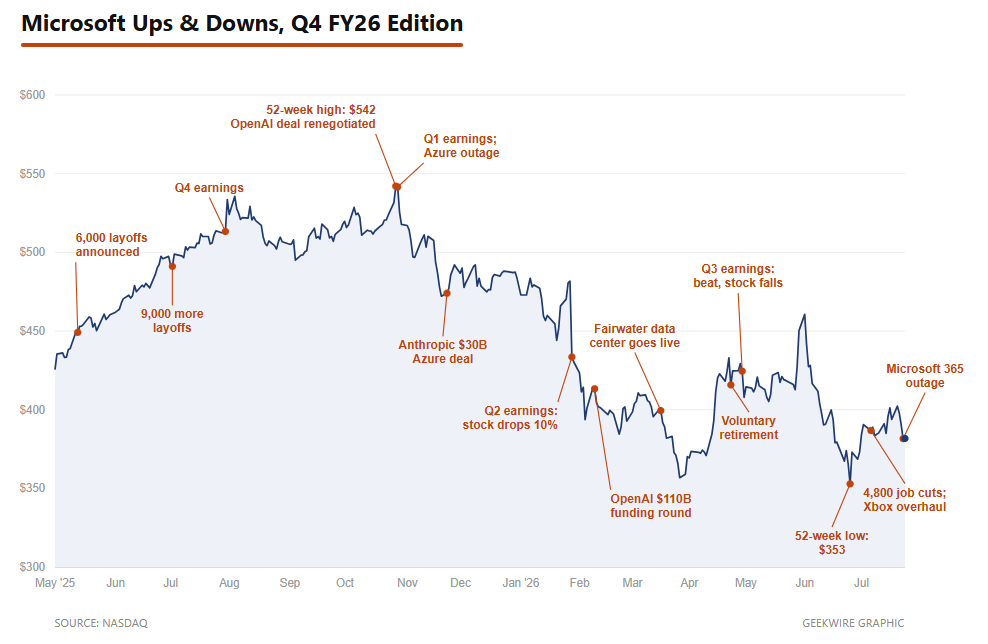
Microsoft’s Fiscal Year-End Results: What to Expect
Microsoft has consistently exceeded earnings expectations in recent years, yet its stock is currently at a one-year low. While revenue and profits are important metrics to watch as the company reports its fiscal year-end results, other factors are also influencing Wall Street’s perception.
Here are the key statistics and trends to keep an eye on as Microsoft prepares to announce its fourth-quarter results for the fiscal year 2026, ending on June 30.
Key Figures: Analysts are anticipating a revenue of approximately $87.7 billion for the quarter, a 14.7% increase from the previous year. Earnings per share are expected to be $4.24, a 16% rise. Microsoft’s own revenue guidance falls between $86.7 billion and $87.8 billion, with Wall Street aiming for the upper end of the company’s range.
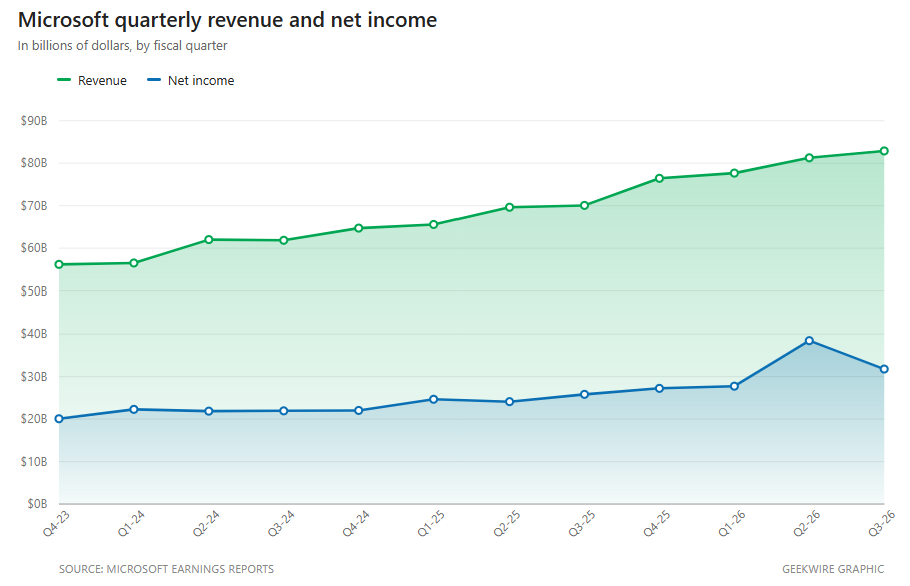
For the entire fiscal year, the projected revenue is around $329 billion, marking a 17% increase from the previous year’s $281.7 billion.
Capital Expenditure: One of the significant aspects to watch is Microsoft’s capital spending, which is expected to exceed $40 billion for the quarter, setting a new record. The majority of this expenditure goes towards GPUs and other short-lived hardware components.
Looking ahead, investors will be keen on Microsoft’s guidance for future capex, as the company provides its first capital spending projections for fiscal 2027, which commenced on July 1.
Capex Concerns: Following Google parent Alphabet’s lead, Microsoft may face scrutiny over its capital spending. Alphabet reported a revenue increase of 24% and cloud revenue surge of 82%, prompting a higher capital spending forecast of up to $205 billion. This move led to a stock decline and raised questions about the balance between spending and returns.
Investors are questioning whether the substantial capital investments in data centers and chips will yield the expected returns, especially as revenue realization may take years to materialize.
Cloud Margins: Microsoft’s cloud gross margin has experienced a decline from 72% to 66% in recent quarters, attributed to AI infrastructure costs and increased usage of GitHub Copilot. The company projects a margin of about 64% for the upcoming quarter.
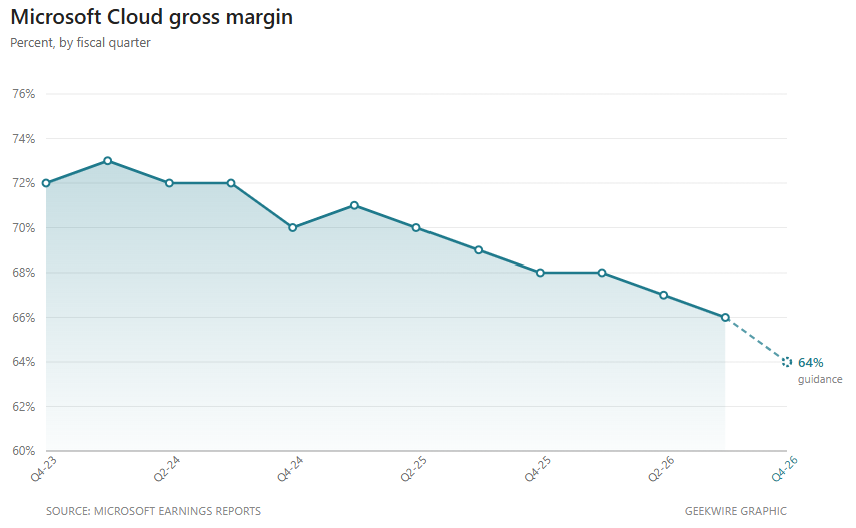
As Microsoft absorbs the costs of data centers over time, the impact is reflected in the cloud operating expenses, highlighting the immediate effect of capital spending on earnings.
Microsoft Azure: Microsoft anticipates a 39% to 40% growth in its Azure cloud business for the fourth quarter, with some analysts forecasting even higher figures. However, actual growth rates may diverge from expectations, as seen in previous quarters.
The scarcity of computing capacity has constrained Azure’s growth, with Microsoft prioritizing internal projects over customer demands. This imbalance may persist through 2026, leading to potential collaborations with other cloud providers to meet demand.
Copilot and AI Revenue: Microsoft’s AI business has shown significant growth, with an annual revenue run rate of $37 billion as of April. The company’s initiatives, such as the Microsoft Frontier Company, aim to drive AI adoption among customers.
Microsoft’s evolving AI strategy, including changes in GitHub Copilot pricing, reflects its commitment to AI innovation and customer engagement.
The OpenAI Backlog: Microsoft’s remaining performance obligations have surged, signaling strong demand for AI solutions. However, a significant portion of these obligations is tied to OpenAI, raising concerns about concentration risk.
Recent changes in the Microsoft-OpenAI partnership underscore the evolving dynamics of the AI ecosystem.
Reliability: Microsoft faced network disruptions in its Azure data center, impacting services like Teams and SharePoint. While not reflected in the upcoming earnings report, this incident highlights the challenges of integrating AI into operational processes.
Retirement Charge: Microsoft will incur one-time costs from its voluntary retirement program, affecting operating margins. The company’s strategic workforce adjustments aim to enhance efficiency and align with future growth objectives.
Windows: Windows OEM revenue is expected to decline, influenced by factors like previous PC upgrade cycles and memory shortages. Microsoft’s response to rising memory costs, including Xbox price adjustments, reflects the broader market challenges.
As Microsoft prepares to announce its quarterly results alongside other tech giants, the focus remains on key performance indicators and strategic initiatives shaping the company’s future trajectory.













Amazon’s Quick AI Assistant: Mobile Expansion Rivalry with Microsoft and Google

First Hydrogen’s Groundbreaking Launch: Introducing the First Humanoid Robot by RoboticsCo

Warrior Cats: Clans of the Forest – A New Adventure Coming This October

Apple Watch Rivals Emulate Key Whoop Feature, But Face Bad Timing – Tech Advisor

Galaxy Z Fold 8 Dominates iPhone Duo: How Apple is Fighting Back

The Importance of Implementing a First Aid Plan in Every Startup

Get Ahead of the Game: Preorder the Latest Apple Watch Series 12 and Ultra 4 Today!

AI Agents: The Ultimate Problem Solvers

Customize your Android Smartphone!

EU Takes Action Against Instagram and Facebook for Violating Illegal Content Rules

Warning: Facebook Creators Face Monetization Loss for Stealing and Reposting Videos

Facebook’s New Look: A Blend of Instagram’s Style

Facebook Compliance: ICE-tracking Page Removed After US Government Intervention

Facebook and Instagram to Reduce Personalized Ads for European Users

InstaDub: Meta’s AI Translation Tool for Instagram Videos

Reclaim Your Account: Facebook and Instagram Launch New Hub for Account Recovery

Meta discontinues Messenger apps for Windows and macOS

Breaking Updates: Meta Connect 2025 Unveils Latest Developments
Customize your Android Smartphone!

Xiaomi Mi Mix 2S Review – Beauty and the BEAST.

Samsung Galaxy X – New Info!

RED MAGIC UNBOXING – The Ultimate Gaming Phone?

12 Incredible Android SECRETS, TIPS and TRICKS

The Ultimate Smartphone Camera Comparison.

Top 10 Android Launchers you’ve NEVER tried.

Our Bezel-less future! Q&A 5.0

The $200 OnePlus phone? Lenovo S5 is HERE!
-
 Facebook11 months ago
EU Takes Action Against Instagram and Facebook for Violating Illegal Content Rules
-
 Facebook11 months ago
Warning: Facebook Creators Face Monetization Loss for Stealing and Reposting Videos
-
 Facebook9 months ago
Facebook’s New Look: A Blend of Instagram’s Style
-
 Facebook11 months ago
Facebook Compliance: ICE-tracking Page Removed After US Government Intervention
-
 Facebook9 months ago
Facebook and Instagram to Reduce Personalized Ads for European Users
-
 Facebook11 months ago
InstaDub: Meta’s AI Translation Tool for Instagram Videos
-
 Facebook9 months ago
Reclaim Your Account: Facebook and Instagram Launch New Hub for Account Recovery
-
 Apple11 months ago
Meta discontinues Messenger apps for Windows and macOS
