
AI
Revolutionizing Energy Markets with AI-Powered Weather Forecasting

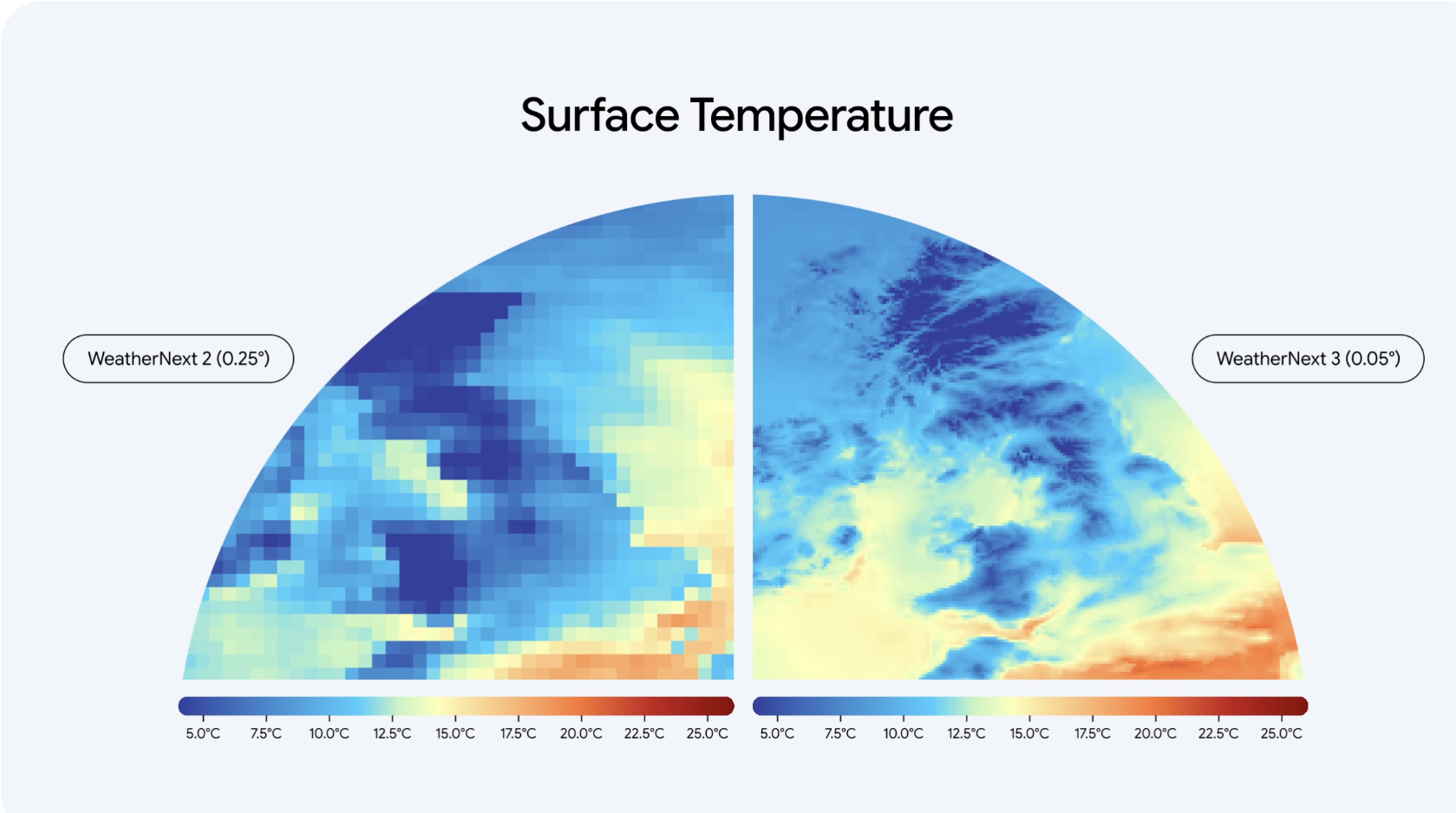
Google has introduced a revolutionary AI weather forecasting model that predicts wind speed, cloud cover, and sunlight levels every hour, specifically targeting the energy sector. This model, known as WeatherNext 3, provides detailed forecasts at a five-kilometre resolution, enabling better predictions for grid operators and developers of wind and solar assets.
Released by Google DeepMind and Google Research, WeatherNext 3 aims to address the challenges faced by grid operators due to the increasing reliance on renewable energy sources. With renewables accounting for a significant portion of new capacity additions, accurate forecasting becomes crucial to match supply with demand.
The commercial impact of WeatherNext 3 extends beyond the energy sector, as it now powers weather results in various Google platforms such as Search, Maps, and the Google Maps Platform Weather API. This integration provides both consumer-facing and enterprise-level benefits, allowing for easy access to forecast data through Google Cloud services.
The energy sector’s interest in AI weather forecasting stems from the need to predict generation and consumption patterns accurately. With the rise of renewables and data centers driving electricity demand, utilities face challenges in forecasting load requirements and optimizing energy generation.
Google’s entry into the weather forecasting market poses a significant challenge to established players such as Vaisala, Solcast, and IBM. By leveraging its extensive reach and hourly data updates, Google aims to provide a competitive edge in the market.
One key differentiator of WeatherNext 3 is its real-time data ingestion from satellite imagery and weather stations, reducing the reliance on traditional numerical weather prediction models. While the model boasts improved accuracy compared to existing products, independent validation is essential to assess its performance accurately.
Google’s strategic interest in AI weather forecasting aligns with its commitment to sustainability, as evidenced by its renewable energy procurement agreements and data center operations. Accurate forecasting tools like WeatherNext 3 enable companies to optimize clean energy utilization and improve operational efficiency.
As Google continues to innovate in the AI and sustainability space, the pricing and accessibility of WeatherNext 3 will be crucial factors for utilities considering a switch from traditional forecasting solutions. With its focus on real-time data and improved accuracy, Google aims to drive positive change in the energy sector through advanced weather forecasting technology.












Revolutionizing Firefighting: Embracing Innovation, Safety, and Resilience in the Modern Era

Love and Loss: The Last Of Us Chronicles

Google Pixel 10 and 11: Enhanced AI Battery Usage Summaries Unveiled

WhatsApp Discontinues Support for Older Android Versions – Tech Advisor

Accel in Advanced Discussions to Lead $1B Funding Round for Thinking Machines, Valued at $40B

Revolutionizing Energy Markets with AI-Powered Weather Forecasting

The Ultimate Smartphone Camera Comparison.

Boosting EV Servicing Equipment in Australia: Government Investment Drives Growth

The Dark Depths: A Terrifying Tale of Photophobic Monsters and Frantic Digging

EU Takes Action Against Instagram and Facebook for Violating Illegal Content Rules

Warning: Facebook Creators Face Monetization Loss for Stealing and Reposting Videos

Facebook Compliance: ICE-tracking Page Removed After US Government Intervention

Facebook’s New Look: A Blend of Instagram’s Style

Facebook and Instagram to Reduce Personalized Ads for European Users

InstaDub: Meta’s AI Translation Tool for Instagram Videos

Reclaim Your Account: Facebook and Instagram Launch New Hub for Account Recovery

Meta discontinues Messenger apps for Windows and macOS

Breaking Updates: Meta Connect 2025 Unveils Latest Developments
The Ultimate Smartphone Camera Comparison.

Top 10 Android Launchers you’ve NEVER tried.

Our Bezel-less future! Q&A 5.0

The $200 OnePlus phone? Lenovo S5 is HERE!

OnePlus 6 vs Samsung Galaxy S9 Plus

Honor 10 UNBOXING!

OnePlus 6 vs iPhone X Camera Test Comparison

MYSTERY Package from Xiaomi – MASSIVE UNBOXING!

The BEASTLY 2018 Gaming Setup.
-
 Facebook11 months ago
EU Takes Action Against Instagram and Facebook for Violating Illegal Content Rules
-
 Facebook11 months ago
Warning: Facebook Creators Face Monetization Loss for Stealing and Reposting Videos
-
 Facebook11 months ago
Facebook Compliance: ICE-tracking Page Removed After US Government Intervention
-
 Facebook9 months ago
Facebook’s New Look: A Blend of Instagram’s Style
-
 Facebook9 months ago
Facebook and Instagram to Reduce Personalized Ads for European Users
-
 Facebook11 months ago
InstaDub: Meta’s AI Translation Tool for Instagram Videos
-
 Facebook9 months ago
Reclaim Your Account: Facebook and Instagram Launch New Hub for Account Recovery
-
 Apple11 months ago
Meta discontinues Messenger apps for Windows and macOS
