
Mobile Tech
The Battle of Technology: iPhone 18 Pro vs AI

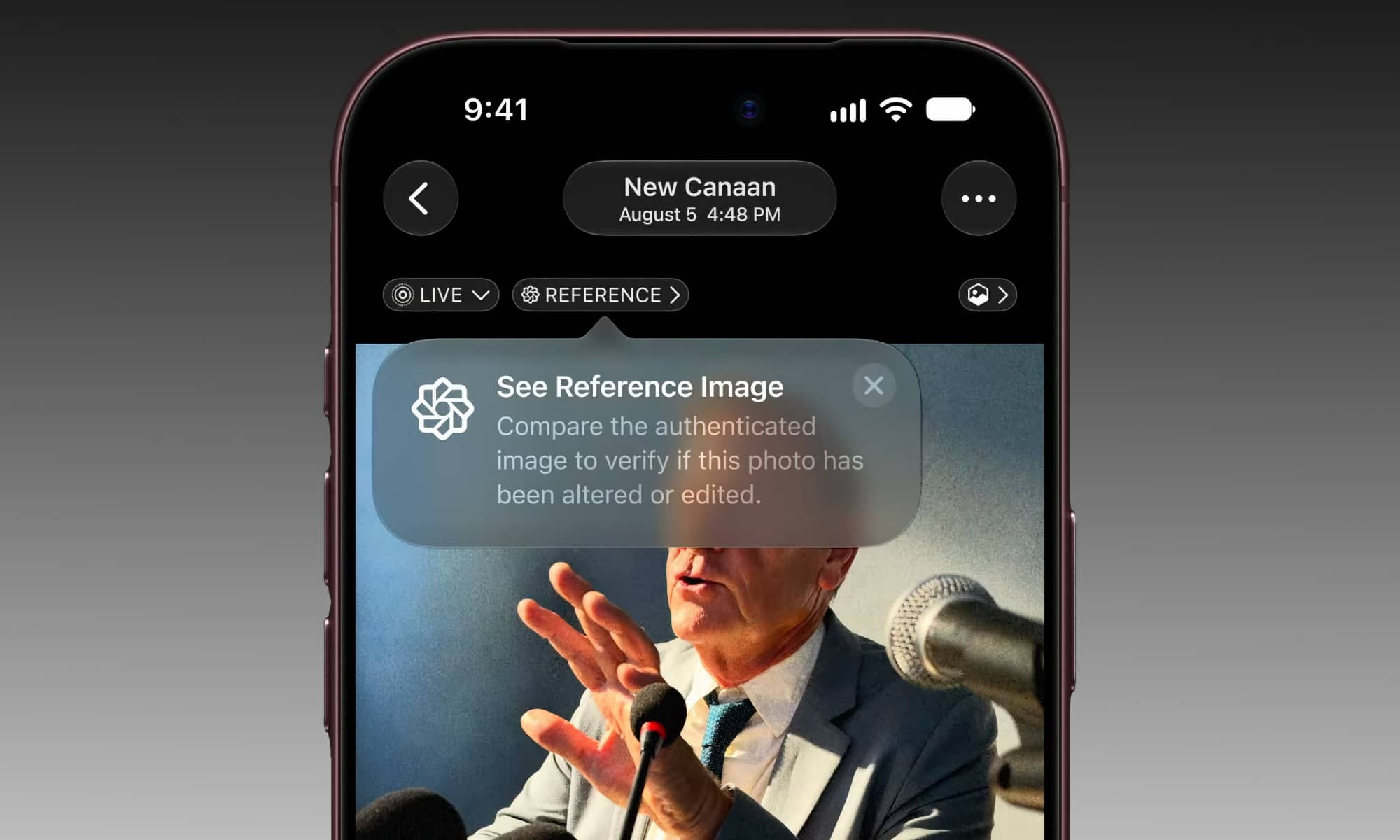
One of the most interesting new photography features in this year’s iPhone 18 Pro models is also one that most of us will probably never have a need for — an “anti-AI” feature that Apple calls “Reference Image.”
While the new variable aperture and manual controls are undeniably cool, most of the early reviews have suggested they’re less useful than you might think. The sensor even in the largest iPhone 18 Pro Max still pales compared to what you’ll find on a traditional camera, so the ability to change the aperture doesn’t do as much for the depth of field as you might think.
It’s an improvement, to be sure — as is the ability for the lens to open up to an even wider f/1.48 — but like many of the features on Apple’s flagship iPhones, it’s a feature that will make the most difference to those looking to do more creative photography.
Along the same lines, Apple Reference Image is a feature that will likely be far more relevant to photographers with a legitimate need to prove the authenticity of the photos they take. The new feature proves the image was taken with an iPhone and hasn’t been modified. But what’s especially brilliant about the feature is how Apple has bent over backward to protect the photographer’s privacy.
How Apple Reference Image Works
We first saw hints of the feature in iOS 27 code last month. At the time, though, it seemed like the feature might have been a bit further off. What nobody realized at the time was that the code was almost ready to go — it’s that it was destined to be exclusive to the iPhone 18 Pro and iPhone 18 Pro Max.
That’s not just an artificial limitation, either. In order to create a non-repudiable signature, Apple Reference Image requires a camera sensor that’s been designed to store the necessary data — and one that can’t be tampered with.
This means Apple Reference Image is not just exclusive to the iPhone 18 Pro and iPhone 18 Pro Max (the iPhone Duo won’t be getting it), but it also only works on photos taken with the main camera sensor — the so-called “Wide” lens. That’s the only sensor that’s equipped with the new technology, with each one cryptographically certified to provide a chain of trust from the moment the photons create the pixels.
Apple recently published a post on its security blog providing a deeper dive into how the feature actually works under the hood, noting that it beats existing methods like the Coalition for Content Provenance and Authenticity (C2PA) open standard. That’s because C2PA only attaches the provenance metadata after the photo is captured, which means there’s an opportunity to compromise the photo before that certification is applied.
Apple Reference Image offers a trustworthy, scalable guarantee that a reference image is what it claims to be: a real photograph, captured by a real sensor in an iPhone camera, at a specific time. It sets a new standard for verifiable digital photography.
Apple
Apple adds that C2PA also creates “privacy risks for photographers working in dangerous conditions by tying the image to a public identity.” Depending on the C2PA implementation, that might be a device rather than a person, but it still risks the photo being traced back to its source.
One of Apple’s goals in building Apple Reference Image was to ensure this couldn’t happen. “We are concerned this puts some photographers, such as those operating in conflict zones, in a difficult position,” Apple notes.
It’s also not strictly necessary. Apple Reference Image isn’t about copyright or authorship of a photo; it’s about authenticity — providing a cryptographically signed digital “negative” that proves the photo is real and not AI-generated, and that it hasn’t been modified.
Apple has gone one step further, not only avoiding any traceable credentials, but also ensuring that photos taken by the same sensor (the same iPhone) can’t be associated with each other.
The iPhone 18 Pro won’t capture Apple Reference Images by default, as most people don’t need this feature — and it requires extra processing and creates images that are at least slightly larger due to the additional data that needs to be packed into them. In fact, there’s a “Reference Mode” toggle in Settings > Camera that will need to be toggled on before you can use the feature.
Once you’ve switched it on, it will appear as a new shooting mode in the Camera app, alongside the other usual entries like Photo, Video, Portrait, and the new iOS 27 Siri mode. You’ll need to switch to that mode when you want to capture an Apple Reference Image.
When shooting in Reference mode, the sensor itself does a secure boot to prevent tampering and cryptographically signs the pixel data immediately at the moment a photo is captured. It also prevents the sensor firmware from modifying that data, which means that iOS receives every pixel precisely as the sensor captured it.
Sensor-produced metadata is also signed alongside the pixel data, with the Secure Enclave Processor (SEP) being used to sign information that isn’t recorded by the sensor itself, such as “digital zoom boundaries and focal length.”
Even if a hacker were able to exploit some other vulnerability in iOS, the secure boot and hardware pipeline of the sensor would make it virtually impossible to tamper with the photo before it’s signed.
Photos are also timestamped not based on the time your iPhone is set to, but by pulling the time from a cryptographic time service run by Apple. Since these won’t necessarily be accurate to the second or even the minute, an upper and lower bound are stored as part of the signed payload.
Currently, only iPhone 18 Pro or iPhone 18 Pro Max users have the capability to create Apple Reference Images. However, users can still “develop,” view, and share reference images using the Photos app on any iPhone, iPad, or Mac running iOS 27, iPadOS 27, or macOS 27. When viewing a Reference Image, a button will allow the viewer to send it to Apple’s Private Cloud Compute (PCC), which processes the image, essentially creating a digital negative that shows the original sensor output.
Apple is staying ahead of the game by implementing composite post-quantum cryptography (RSA-3072 paired with ML-DSA-87). This strategy is reminiscent of their approach with iMessage a couple of years ago, where they adopted a new PQ3 protocol to safeguard current iMessage conversations from potential decryption in the future as cryptographic technology evolves over the next few decades.
The design of Apple Reference Images is not just technologically advanced but also prioritizes security and privacy. For a deep dive into the technical aspects, interested individuals can explore the document titled “Apple Reference Image: A New Approach for Verified Photography.”









Adecco Group Introduces Agentforce Coworker Program to Enhance Collaboration Among 27,000 Employees

The Battle of Technology: iPhone 18 Pro vs AI

Revolutionizing Luxury: The 2027 Porsche Cayenne Electric with Automatic Doors and Wireless Charging

Capcom Takes a Stand Against Microtransactions in Monster Hunter Wilds: Ascendance

Uncovering the Hidden Quirks of iPhone Duo Design: A Tech Advisor’s Perspective

Xiaomi Redmi Note 17 5G Slashes Prices on Amazon – Tech Bargain Alert!

The Rise of Garden Rooms: Ireland’s Newest Home Craze

Lidl’s Autonomous Delivery Fleet: Revolutionizing Logistics in Germany

Streamlining Data Transfer: iOS 27.2 Facilitates Seamless App Upgrades

EU Takes Action Against Instagram and Facebook for Violating Illegal Content Rules

Warning: Facebook Creators Face Monetization Loss for Stealing and Reposting Videos

Facebook Compliance: ICE-tracking Page Removed After US Government Intervention

Facebook’s New Look: A Blend of Instagram’s Style

Facebook and Instagram to Reduce Personalized Ads for European Users

InstaDub: Meta’s AI Translation Tool for Instagram Videos

Reclaim Your Account: Facebook and Instagram Launch New Hub for Account Recovery

Meta discontinues Messenger apps for Windows and macOS

Breaking Updates: Meta Connect 2025 Unveils Latest Developments

10 Android Mods that Change Everything

I used the first Android Phone in the World.

DOOGEE MIX 4 UNBOXING (PROTOTYPE)!

MYSTERY UNBOXING FROM SAMSUNG!

The Truth about Huawei P20 Pro – REAL Review

How to Love your Android Phone again.

The LG G7 has a Big Problem.

The most Beautiful Android Games you’ve never played.

Charge your Smartphone in 5 Minutes – How Batteries are about to Change!
-
 Facebook11 months ago
EU Takes Action Against Instagram and Facebook for Violating Illegal Content Rules
-
 Facebook11 months ago
Warning: Facebook Creators Face Monetization Loss for Stealing and Reposting Videos
-
 Facebook11 months ago
Facebook Compliance: ICE-tracking Page Removed After US Government Intervention
-
 Facebook9 months ago
Facebook’s New Look: A Blend of Instagram’s Style
-
 Facebook9 months ago
Facebook and Instagram to Reduce Personalized Ads for European Users
-
 Facebook11 months ago
InstaDub: Meta’s AI Translation Tool for Instagram Videos
-
 Facebook10 months ago
Reclaim Your Account: Facebook and Instagram Launch New Hub for Account Recovery
-
 Apple11 months ago
Meta discontinues Messenger apps for Windows and macOS
