
Security
Qilin Ransomware Breach Confirmed by Die Linke German Political Party

German Political Party Die Linke Falls Victim to Qilin Ransomware Attack
A cyberattack by the Qilin ransomware group has resulted in the theft of data from Die Linke, a prominent German democratic socialist political party. The attackers have threatened to release the stolen information unless a ransom is paid.
Die Linke disclosed the cyber incident on March 27, a day after their network was compromised by the threat actor. While the party acknowledged the breach, they did not confirm the extent of the data stolen.
Established in 2007, Die Linke, also known as the Left Party, holds 64 seats in the German parliament (Bundestag) and boasts 123,000 registered members. The party is actively involved in various state governments, particularly in eastern Germany.
The attackers are reportedly targeting sensitive data from the party’s internal operations and personal information of staff at the party headquarters. Die Linke is uncertain about the full extent of the breach but acknowledges the potential risk.
Fortunately, the party’s membership database remains unaffected as the attackers failed in their attempt to access member data.
Die Linke has identified the Qilin ransomware group as the perpetrators behind the attack. Described as Russian-speaking cybercriminals driven by financial and political motives, the group’s actions against the German political party are seen as deliberate and strategic.
The party emphasized that such cyberattacks, particularly ransomware incidents, are often part of hybrid warfare and pose a threat to critical infrastructure.
On April 1st, Qilin publicly claimed responsibility for the attack on Die Linke, listing them as a victim on their data leak site without releasing any samples of the stolen data.
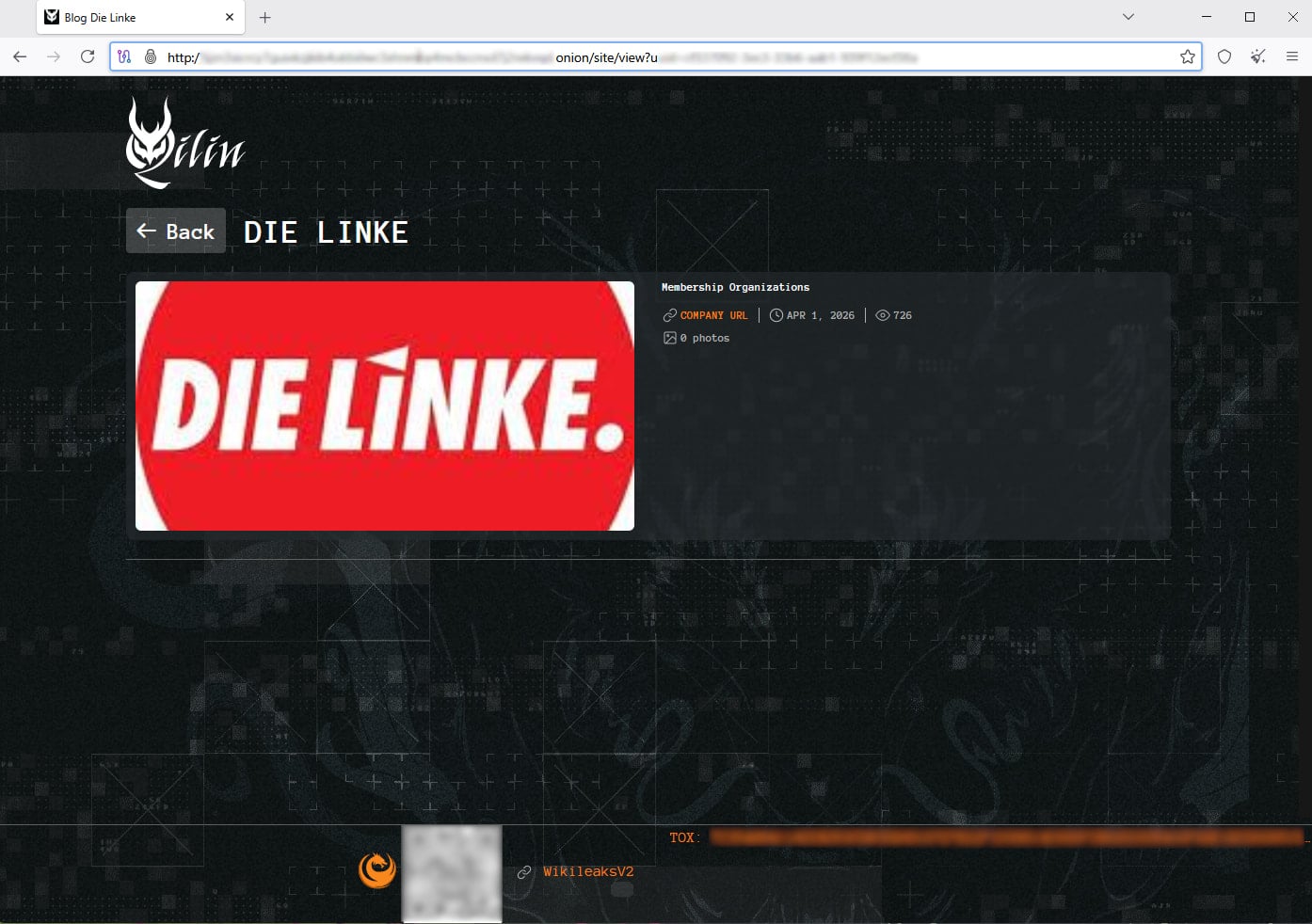
Source: BleepingComputer.com
Threatening to expose stolen data is a common tactic used by ransomware groups to pressure victims into paying a ransom.
Die Linke has taken immediate action by notifying German authorities and filing a criminal complaint with the police. The party is also collaborating with independent IT experts to secure their systems and mitigate the impact of the attack.
Notably, political parties in Germany have been targeted by Russia-linked threat actors in the past. In 2024, APT29 launched a campaign against CDU, a major political party in the country, using a backdoor named WineLoader.

Automated pentesting proves the path exists. BAS proves whether your controls stop it. Most teams run one without the other.
This whitepaper maps six validation surfaces, shows where coverage ends, and provides practitioners with three diagnostic questions for any tool evaluation.








Unleashing Power: The Mercedes-AMG GT 63 Pro Hits Malaysian Roads at RM 2.09 million

Revised Game++: Conquering Bugs and Keeping Pants Intact

Power Players: Europe’s Top AI Influencers

Beware: The Secret iOS 27 Setting That’s Sapping Your Battery Life

Concept Smartphones that are better than Real Smartphones

Unwrapping the Power: A Digital Look at BMW’s Electric M3 Body Wrap

Shadow Ops: Covert Extraction

Mastering the Fundamentals of Business Auditing

Apple Unveils Stunning Images Captured with ‘iPhone Duo’ Camera

EU Takes Action Against Instagram and Facebook for Violating Illegal Content Rules

Warning: Facebook Creators Face Monetization Loss for Stealing and Reposting Videos

Facebook’s New Look: A Blend of Instagram’s Style

Facebook Compliance: ICE-tracking Page Removed After US Government Intervention

Facebook and Instagram to Reduce Personalized Ads for European Users

InstaDub: Meta’s AI Translation Tool for Instagram Videos

Reclaim Your Account: Facebook and Instagram Launch New Hub for Account Recovery

Meta discontinues Messenger apps for Windows and macOS

Breaking Updates: Meta Connect 2025 Unveils Latest Developments
Concept Smartphones that are better than Real Smartphones

Samsung Galaxy SII Unboxing!

The SECRET to Maximise Smartphone Battery Life?

We Designed the Ultimate Gaming Smartphone of 2018!

Using the Cheapest Smartphone in the World.

Samsung Galaxy S9+ Unboxing! (Clone)

Unboxing the First Ever Samsung Galaxy S!!

Huawei P Smart – Huawei’s new Killer Budget Smartphone!

MYSTERY Package from Xiaomi – HUGE UNBOXING!
-
 Facebook11 months ago
EU Takes Action Against Instagram and Facebook for Violating Illegal Content Rules
-
 Facebook12 months ago
Warning: Facebook Creators Face Monetization Loss for Stealing and Reposting Videos
-
 Facebook10 months ago
Facebook’s New Look: A Blend of Instagram’s Style
-
 Facebook12 months ago
Facebook Compliance: ICE-tracking Page Removed After US Government Intervention
-
 Facebook10 months ago
Facebook and Instagram to Reduce Personalized Ads for European Users
-
 Facebook12 months ago
InstaDub: Meta’s AI Translation Tool for Instagram Videos
-
 Facebook10 months ago
Reclaim Your Account: Facebook and Instagram Launch New Hub for Account Recovery
-
 Apple12 months ago
Meta discontinues Messenger apps for Windows and macOS
