
Startups
Boosting Indian Aviation: Lachy Groom Supports Startup’s Mission to Sustain Aircraft in the Sky

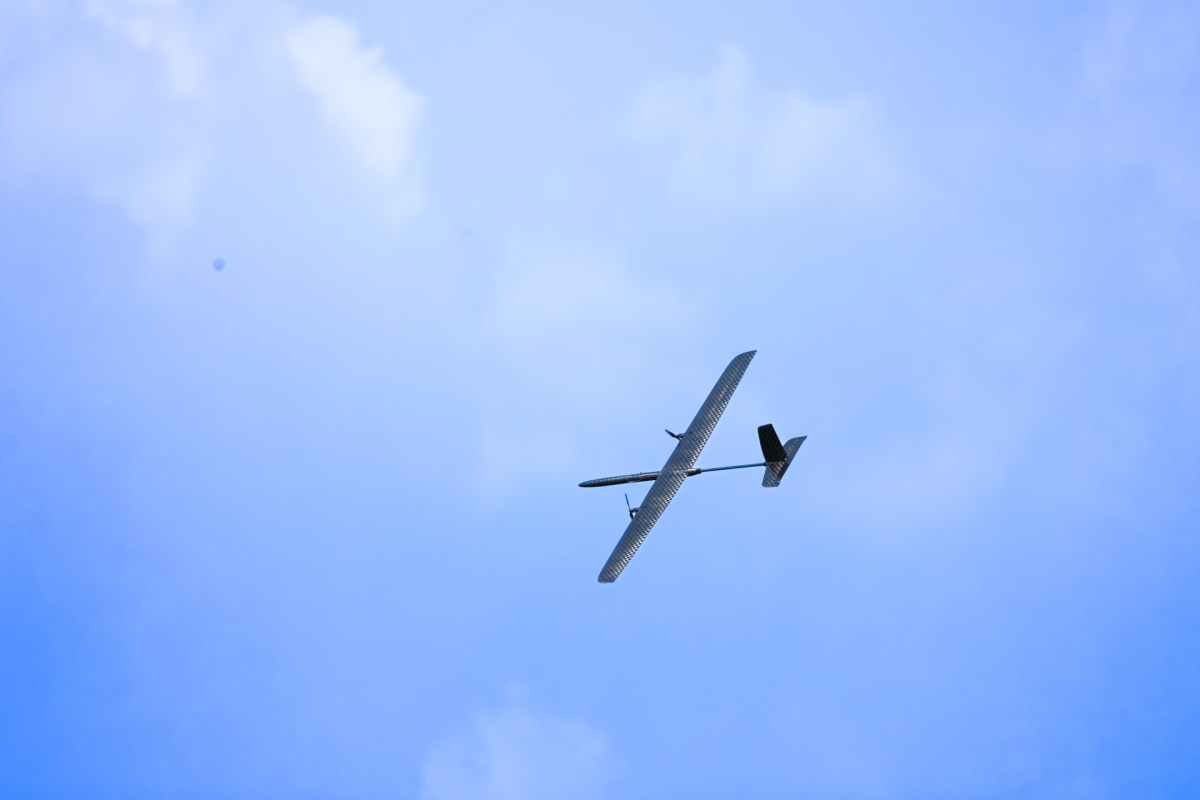
Prominent Solo Investor Backs Bengaluru Startup with Ambitious Goal
Renowned solo investor Lachy Groom has thrown his support behind a startup in Bengaluru that is aiming to achieve a remarkable feat: keeping an aircraft airborne for over a year by harnessing energy from ocean winds.
The startup, named Alteon and founded by 20-year-old Samay Sanghvi, recently announced a successful pre-seed funding round of $2.5 million. This round was led by Groom and saw participation from Together Fund. The company’s focus is on developing autonomous aircraft inspired by dynamic soaring, a technique utilized by albatrosses to extract energy from the wind. Sanghvi mentioned that Groom was impressed and decided to invest within just 30 minutes of their initial meeting.
Breaking Conventional Limits in Aircraft Design
Unlike traditional aircraft that rely on carrying fuel or battery power for flights, Alteon is pushing boundaries by designing small, fixed-wing autonomous aircraft capable of extracting energy from wind shear above the ocean through dynamic soaring. This maneuver involves the aircraft moving between layers of air with varying speeds to gain energy from the wind.
Sanghvi expressed his excitement about the possibilities that arise once aircraft can stay airborne for extended periods. Initially, Alteon plans to use these aircraft for maritime surveillance, providing governments with real-time visibility into activities in their waters.
The company’s current plan involves constructing an aircraft with a three-meter wingspan that will fly near the ocean’s surface, ascend, maneuver through faster-moving air, and repeat the cycle to capture energy from the wind. Eventually, Alteon intends to utilize its propellers as turbines to convert some of the harvested energy into electricity to recharge onboard batteries.
While Alteon has not yet demonstrated sustained flight using energy harvested through dynamic soaring, it recently completed a successful test of its autonomous flight system over the Bay of Bengal. During this test, the aircraft autonomously completed seven O-shaped cycles at speeds exceeding 62 miles per hour, flying within one meter of the water’s surface.
Alteon’s next significant milestone is achieving “energy-neutral dynamic soaring,” allowing the aircraft to fly continuously with its propulsion turned off, relying solely on wind energy to remain airborne.
Challenges and Acknowledgments
Dr. Gabriel Bousquet, a Silicon Valley-based aerospace and robotics engineer, commended Alteon’s low-altitude flight over water as a promising initial result. However, he highlighted the challenge of proving the aircraft’s ability to extract sufficient energy from real-world winds to sustain flight for extended periods.
Dr. Bharath Swaminathan, an expert in the stability of dynamic soaring, praised Alteon’s efforts and acknowledged the significant achievement of keeping an aircraft airborne for several days using dynamic soaring. He emphasized the complexities of harvesting wind energy safely, especially in the face of varying local wind shear and turbulence.
Groom recognized the technical risks involved in the venture but expressed confidence in Sanghvi and the Alteon team’s ability to overcome challenges. He emphasized the importance of tackling ambitious problems despite inherent risks.
From Prototype to Production
Sanghvi’s journey with Alteon began right after high school in 2023, where he honed his aircraft-building skills by creating and testing radio-controlled models. Formalizing the company in 2025, Sanghvi received early support from Emergent Ventures and 1517.
Currently, Alteon operates with a team of 20 in Bengaluru from a 10,000-square-foot facility. The startup is actively building and testing four to five aircraft per week, having conducted over 200 test flights in the past month.
When you purchase through links in our articles, we may earn a small commission. This doesn’t affect our editorial independence.












Exclusive: Apple Website Leak Reveals iPad mini 8 Release

Unleashing Potential: Overcoming Limitations

Uncovering the Bystander Problem: Insights from a Former AWS Security Engineer on Amazon’s Bee AI Devices

Arizona Sunshine: Unleashing the Doggy Co-op Mode in January

International Collaboration: Surrey, Sheffield, and Melbourne Join Forces on £3.2m Project to Create Provably Secure Sandbox for AI Agents

Tech Advisor Announces Samsung Galaxy Phones Now Available on Google Play Store

Exploring the Boundaries of Physical AI: Insights from an Nvidia Veteran Turned Investor

The Latest Updates on Apple’s iPhone Duo

Google Unveils Revolutionary ‘Universal’ Online Shopping Cart for Seamless Shopping Experience

EU Takes Action Against Instagram and Facebook for Violating Illegal Content Rules

Warning: Facebook Creators Face Monetization Loss for Stealing and Reposting Videos

Facebook’s New Look: A Blend of Instagram’s Style

Facebook Compliance: ICE-tracking Page Removed After US Government Intervention

Facebook and Instagram to Reduce Personalized Ads for European Users

InstaDub: Meta’s AI Translation Tool for Instagram Videos

Reclaim Your Account: Facebook and Instagram Launch New Hub for Account Recovery

Meta discontinues Messenger apps for Windows and macOS

Breaking Updates: Meta Connect 2025 Unveils Latest Developments

Finally Fixing my Wi-Fi – Zyxel Multy X!

$25,000 Gaming Setup – EVOLUTION!

The Maze Alpha X is HERE!

Cool Tech under $100 – December!

MYSTERY UNBOXING FROM GOOGLE!

TOP 6 Smartphones from Companies you NEVER Expected!

A Surprise Smartphone from EE!

DOOGEE MIX 2 VS DOOGEE MIX 1!

INCREDIBLE Smartphone Gadgets on Amazon!
-
 Facebook12 months ago
EU Takes Action Against Instagram and Facebook for Violating Illegal Content Rules
-
 Facebook1 year ago
Warning: Facebook Creators Face Monetization Loss for Stealing and Reposting Videos
-
 Facebook10 months ago
Facebook’s New Look: A Blend of Instagram’s Style
-
 Facebook1 year ago
Facebook Compliance: ICE-tracking Page Removed After US Government Intervention
-
 Facebook10 months ago
Facebook and Instagram to Reduce Personalized Ads for European Users
-
 Facebook1 year ago
InstaDub: Meta’s AI Translation Tool for Instagram Videos
-
 Facebook11 months ago
Reclaim Your Account: Facebook and Instagram Launch New Hub for Account Recovery
-
 Apple12 months ago
Meta discontinues Messenger apps for Windows and macOS
