Nintendo Discloses Third-Party Data Breach
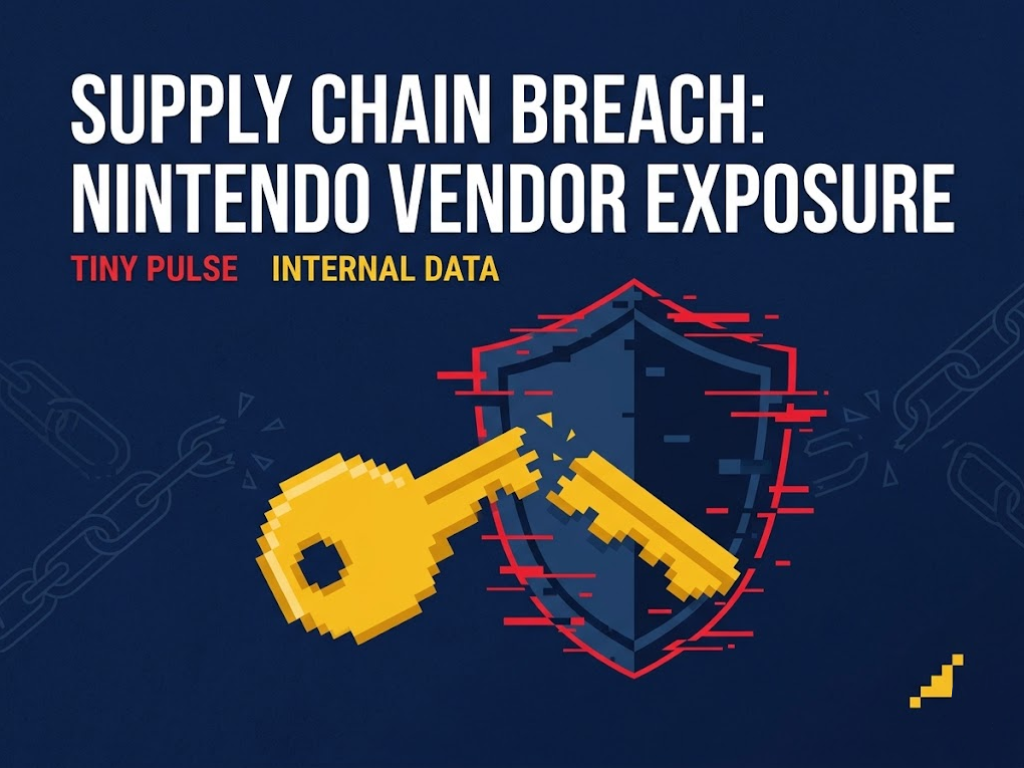
In a recent statement, Nintendo of America revealed that they had experienced a data breach through one of their third-party software providers, TinyPulse. The breach, which was made public on June 13, 2026, was orchestrated by a group known as “Shadowbyt3$”, who claimed to have extracted one terabyte of internal data from TinyPulse.
The group demanded a ransom of $2 million from Nintendo, threatening to release the private files if the payment was not made within 48 hours. Instead of complying with the demands, Nintendo focused on investigating the extent of the breach.
Scope of the Data Exposure
On June 18, 2026, Nintendo clarified that their systems were not compromised, and no personal or financial customer data was accessed. The data that was compromised consisted of internal survey responses from a small group of employees, most of which were several years old.
Nintendo emphasized that the breach was limited to past survey answers and did not involve core financial systems or personal customer information.
Protective Measures Implemented
This incident highlights the importance of monitoring the data shared with third-party analytics solutions to safeguard against breaches. Organizations should ensure that outdated data is promptly removed and set strict data retention policies.
Security teams should also review the permissions granted to third-party apps, enforce least privilege access, and monitor vendor access tokens for any suspicious activity to prevent unauthorized access to sensitive information.
Future Threat Landscape
As cyber threats evolve, attackers may increasingly target peripheral SaaS applications to infiltrate major corporations. Verifying the security posture of vendors will become a key compliance focus to mitigate the risks associated with third-party services.
Organizations must adopt a zero-trust model for third-party networks to enhance security and prevent potential breaches through third-party platforms.
About the Author
Carmen Estela, a Cybersecurity Research Analyst at Cyber Defense Magazine and a Women in Cybersecurity Award Candidate, recently graduated with a Master’s degree in Science from the University of Central Florida. With a background in Criminology and certifications in Data Analytics and AI Fundamentals, Carmen is dedicated to advancing cybersecurity standards and governance. She brings a wealth of experience as an adult protective investigator, police dispatcher, and legal intern, contributing investigative skills across various sectors.
Contact Carmen at [email protected]