
Mobile Tech
Apple Devices Approved for NATO Classified Data Handling

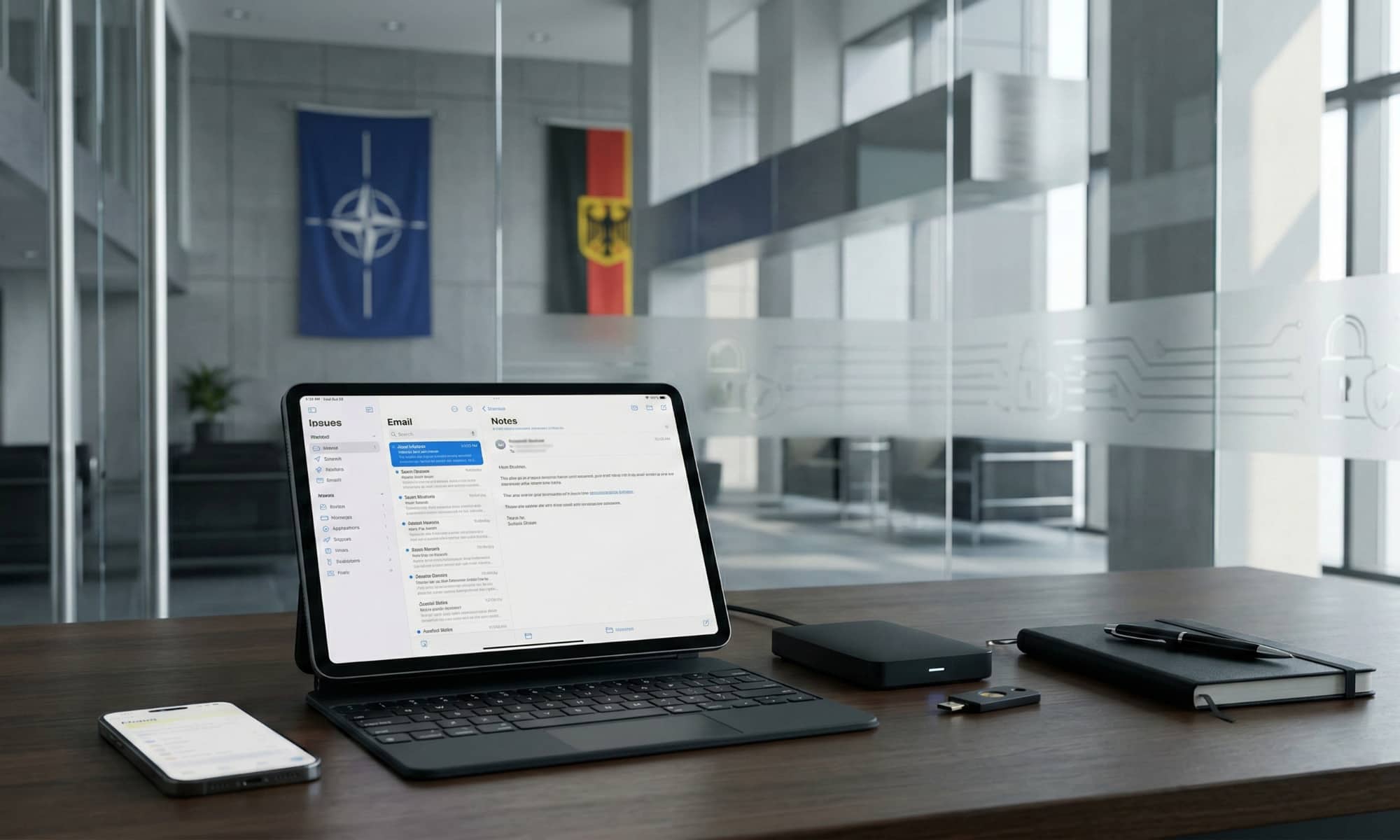
Many have pointed out that Apple isn’t always the first to add new features to the iPhone, as the company tends to be more concerned about delivering the best features than beating its rivals to the punch. However, the iPhone and iPad have become the first to cross a pretty significant milestone for anyone concerned about security and privacy.
Today, Apple announced that the iPhone and iPad have been formally approved to handle classified NATO information, “following rigorous security testing and extensive evaluation by the German government.”
This makes them the first and — so far — the only consumer devices to meet the stringent regulatory requirements for handling any level of sensitive NATO data. Most importantly, this can be accomplished without requiring any special software or settings. While specialized platforms like Samsung Knox have historically chased government certifications, Apple has become the first to get an unmodified consumer device through the NATO gauntlet without extra specialized hardware.
To be clear, the iPhone and iPad are only permitted to be used with relatively low-level classified information. Apple says “classified information up to the NATO restricted level,” but that’s a bit of a marketing spin as NATO restricted is the very lowest level; anything below that is “NATO Unclassified,” which is more of a copyright mark than a security level.
Still, the fact that there are three levels above NATO Restricted — NATO Confidential, NATO Secret, and COSMIC Top Secret — goes to show how serious this level of certification is, as the iPhone and iPad are the first and only consumer devices to reach the lowest rung on this ladder, despite being one of the most securely designed consumer smartphones on the market today. It also casts quite a bit of shade on the top-secret chatter that made headlines last year — communications that were three tiers above the level for which the iPhone has only now been cleared.
Apple naturally took this opportunity to point out how it “designs security into all of its products from the start,” but it’s also not wrong to do so. Over the years, Apple has come up with some very clever hardware and software-based solutions to protect user privacy — to the point of frustrating law enforcement. However, Apple has frequently argued that protecting the privacy of the innocent is more important.
For instance, Apple began fully encrypting the data on every iPhone starting with the release of iOS 4 in 2010. That encryption is invisible to most users, as it’s handled at a hardware level and tied to your passcode — which is why a strong passcode is important; it’s fundamentally impossible with today’s technology to get at the data on an iPhone without knowing the passcode, which is why forensics experts are left with no choice but to guess or “brute force” passcodes to access iPhones that are under investigation. iPads don’t make the news nearly as often, but they use the same security architecture.
This makes it relatively unsurprising that these devices have been cleared for handling government-level secrets. While only iOS 26 and iPadOS 26 have received certification, it’s significant that no special settings are required (other than a passcode, we assume). In other words, this isn’t only for iPhones in Lockdown Mode, but those that are being used in much the same way you and I use our iPhones every day.
This achievement recognizes that Apple has transformed how security is traditionally delivered. Prior to iPhone, secure devices were only available to sophisticated government and enterprise organizations after a massive investment in bespoke security solutions. Instead, Apple has built the most secure devices in the world for all its users, and those same protections are now uniquely certified under assurance requirements for NATO nations — unlike any other device in the industry.
Ivan Krsti?, Apple’s vice president of Security Engineering and Architecture
The evaluation of the iPhone and iPad for processing classified information was undertaken by Germany’s Federal Office for Information Security (Bundesamt für Sicherheit in der Informationstechnik, or BSI), which “conducted exhaustive technical assessments, comprehensive testing, and deep security analysis.” This first resulted in approval to handle classified German government data, and was later extended to NATO, which generally parallels the security requirements and classifications of member nations.
“Secure digital transformation is only successful if information security is considered from the beginning in the development of mobile products,” said Claudia Plattner, BSI’s president. “Expanding on BSI’s rigorous audit of iOS and iPadOS platform and device security for use in classified German information environments, we are pleased to confirm the compliance under NATO nations’ assurance requirements.”
A NATO bulletin outlines the certification, and while it notes that they must be in “Indigo configuration,” this is just a fancy way of saying a standard iPhone or iPad must be connected to an enterprise-style mobile device management service, or MDM — a configuration common to most company-issued devices.
MDM is deployed by many corporate and government organizations to manage and supervise devices, but it doesn’t add any extra security over what’s already built into iOS — it basically just enforces that security by doing things like setting a passcode requirement, while adding the ability to remotely locate and wipe lost devices from a central administrative point.
Security experts have often been impressed by Apple’s hardware designs, and NATO points to features like Apple’s Secure Enclave, a dedicated co-processor that’s used to handle hardware-level encryption and security enforcement, plus features like Touch ID and Face ID which improve security by making it possible to use more complex passcodes, and Apple’s Memory Integrity Enforcement (MIE) that defends the iPhone and iPad against malicious apps accessing and allocating memory that doesn’t belong to them.
if($category === ‘Apple History’) {
// Insert YouTube video
?>







![Apple releases fourth iOS 27.2 developer beta for iPhone [U: Public]](https://bennetttechinnovation.com/wp-content/uploads/2026/10/Apple-unveils-latest-iOS-272-developer-beta-for-iPhone-Now-400x240.jpg)
![Apple releases fourth iOS 27.2 developer beta for iPhone [U: Public]](https://bennetttechinnovation.com/wp-content/uploads/2026/10/Apple-unveils-latest-iOS-272-developer-beta-for-iPhone-Now-80x80.jpg)


Arizona Sunshine: Unleashing the Doggy Co-op Mode in January

International Collaboration: Surrey, Sheffield, and Melbourne Join Forces on £3.2m Project to Create Provably Secure Sandbox for AI Agents

Tech Advisor Announces Samsung Galaxy Phones Now Available on Google Play Store

Exploring the Boundaries of Physical AI: Insights from an Nvidia Veteran Turned Investor

The Latest Updates on Apple’s iPhone Duo

Google Unveils Revolutionary ‘Universal’ Online Shopping Cart for Seamless Shopping Experience

Upgrade Alert: HomePod Mini 2 and HomePod 2 Set to Become Default Mac Speakers

Finally Fixing my Wi-Fi – Zyxel Multy X!

Lost in the Living Maze: Unraveling Hidden Terrain Magic Through Copy-Paste

EU Takes Action Against Instagram and Facebook for Violating Illegal Content Rules

Warning: Facebook Creators Face Monetization Loss for Stealing and Reposting Videos

Facebook’s New Look: A Blend of Instagram’s Style

Facebook Compliance: ICE-tracking Page Removed After US Government Intervention

Facebook and Instagram to Reduce Personalized Ads for European Users

InstaDub: Meta’s AI Translation Tool for Instagram Videos

Reclaim Your Account: Facebook and Instagram Launch New Hub for Account Recovery

Meta discontinues Messenger apps for Windows and macOS

Breaking Updates: Meta Connect 2025 Unveils Latest Developments
Finally Fixing my Wi-Fi – Zyxel Multy X!

$25,000 Gaming Setup – EVOLUTION!

The Maze Alpha X is HERE!

Cool Tech under $100 – December!

MYSTERY UNBOXING FROM GOOGLE!

TOP 6 Smartphones from Companies you NEVER Expected!

A Surprise Smartphone from EE!

DOOGEE MIX 2 VS DOOGEE MIX 1!

INCREDIBLE Smartphone Gadgets on Amazon!
-
 Facebook12 months ago
EU Takes Action Against Instagram and Facebook for Violating Illegal Content Rules
-
 Facebook1 year ago
Warning: Facebook Creators Face Monetization Loss for Stealing and Reposting Videos
-
 Facebook10 months ago
Facebook’s New Look: A Blend of Instagram’s Style
-
 Facebook1 year ago
Facebook Compliance: ICE-tracking Page Removed After US Government Intervention
-
 Facebook10 months ago
Facebook and Instagram to Reduce Personalized Ads for European Users
-
 Facebook1 year ago
InstaDub: Meta’s AI Translation Tool for Instagram Videos
-
 Facebook11 months ago
Reclaim Your Account: Facebook and Instagram Launch New Hub for Account Recovery
-
 Apple12 months ago
Meta discontinues Messenger apps for Windows and macOS
