
Revolutionizing YouTube: The Future of AI Labeling in Video Content

YouTube Enhances AI Labeling Efforts for Videos
Following Google’s recent expansion of AI verification initiatives at I/O, YouTube has announced significant improvements to its AI labeling practices. The platform is now placing a stronger emphasis on identifying and labeling AI-generated content to provide users with more transparency.
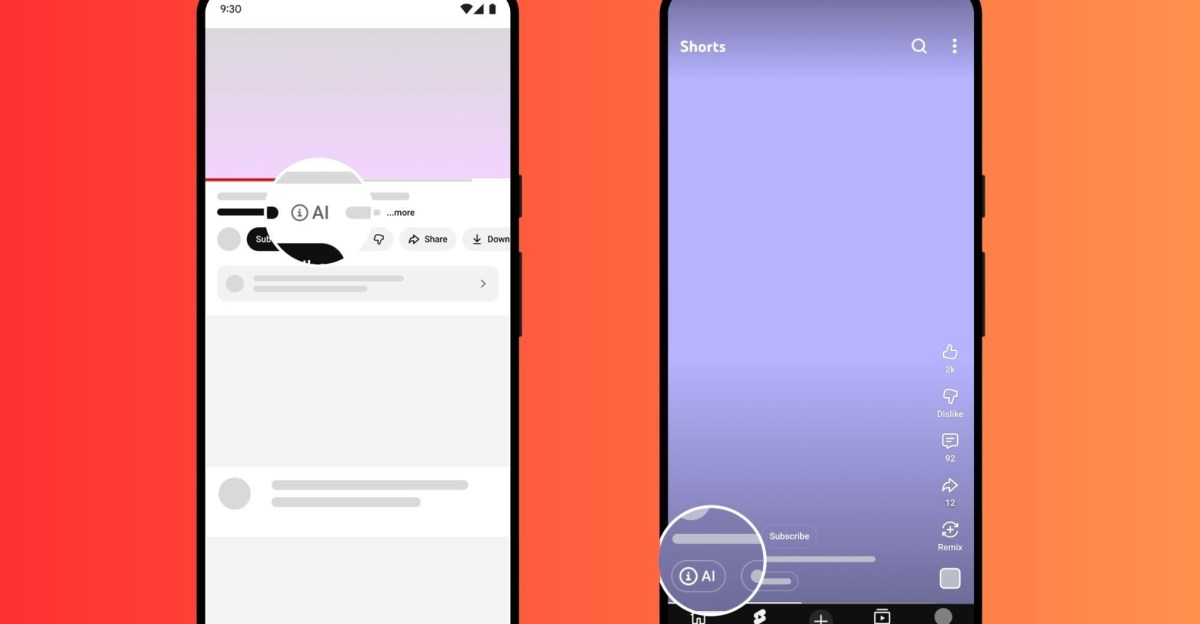
For regular YouTube videos, an “AI” label accompanied by a recognizable information symbol will now be prominently displayed below the video player, above the description. This move aims to make it easier for viewers to identify AI-generated content without the need to delve into the video description.
In the case of YouTube Shorts, the same AI label will be overlaid on the video itself. This labeling approach has been in testing for some time and was previously used to flag videos containing altered or synthetic content.
YouTube acknowledges that its AI labeling practices have been inconsistent in the past and hopes that these updates will establish a more reliable system for the platform to follow.
According to YouTube’s announcement, the main goal of these labeling changes is to provide viewers with essential context at a glance. The platform will now use a single label format for all photorealistic and meaningfully AI-altered or generated content, while content that is unrealistic or slightly altered will have disclosure information in the expanded description.
Furthermore, YouTube is expanding its AI labeling efforts by introducing new internal signals to automatically identify AI-generated videos. Creators will still be required to disclose the use of photorealistic AI, but if they fail to do so, YouTube’s systems will apply an AI label if significant photorealistic AI use is detected.
Creators who believe their video content has been incorrectly flagged can update the disclosure status in YouTube Studio. However, if AI tools like Veo or Dream Screen were used, or if the content contains C2PA metadata indicating full AI generation, the AI disclosures will be permanent.
YouTube already utilizes automated systems to detect AI-generated and synthetically altered content through markers like C2PA and Google’s SynthID. These recent enhancements aim to improve the identification of AI videos attempting to replicate realistic humans and environments, ensuring that creators and viewers have access to accurate information.
YouTube emphasizes that these labeling changes are designed to enhance transparency and provide users with the necessary information, without impacting monetization or recommendation algorithms.













International Collaboration: Surrey, Sheffield, and Melbourne Join Forces on £3.2m Project to Create Provably Secure Sandbox for AI Agents

Tech Advisor Announces Samsung Galaxy Phones Now Available on Google Play Store

Exploring the Boundaries of Physical AI: Insights from an Nvidia Veteran Turned Investor

The Latest Updates on Apple’s iPhone Duo

Google Unveils Revolutionary ‘Universal’ Online Shopping Cart for Seamless Shopping Experience

Upgrade Alert: HomePod Mini 2 and HomePod 2 Set to Become Default Mac Speakers

Finally Fixing my Wi-Fi – Zyxel Multy X!

Lost in the Living Maze: Unraveling Hidden Terrain Magic Through Copy-Paste

Samsung Unveils Exclusive Galaxy Z Fold 8 BTS Edition

EU Takes Action Against Instagram and Facebook for Violating Illegal Content Rules

Warning: Facebook Creators Face Monetization Loss for Stealing and Reposting Videos

Facebook’s New Look: A Blend of Instagram’s Style

Facebook Compliance: ICE-tracking Page Removed After US Government Intervention

Facebook and Instagram to Reduce Personalized Ads for European Users

InstaDub: Meta’s AI Translation Tool for Instagram Videos

Reclaim Your Account: Facebook and Instagram Launch New Hub for Account Recovery

Meta discontinues Messenger apps for Windows and macOS

Breaking Updates: Meta Connect 2025 Unveils Latest Developments
Finally Fixing my Wi-Fi – Zyxel Multy X!

$25,000 Gaming Setup – EVOLUTION!

The Maze Alpha X is HERE!

Cool Tech under $100 – December!

MYSTERY UNBOXING FROM GOOGLE!

TOP 6 Smartphones from Companies you NEVER Expected!

A Surprise Smartphone from EE!

DOOGEE MIX 2 VS DOOGEE MIX 1!

INCREDIBLE Smartphone Gadgets on Amazon!
-
 Facebook12 months ago
EU Takes Action Against Instagram and Facebook for Violating Illegal Content Rules
-
 Facebook1 year ago
Warning: Facebook Creators Face Monetization Loss for Stealing and Reposting Videos
-
 Facebook10 months ago
Facebook’s New Look: A Blend of Instagram’s Style
-
 Facebook1 year ago
Facebook Compliance: ICE-tracking Page Removed After US Government Intervention
-
 Facebook10 months ago
Facebook and Instagram to Reduce Personalized Ads for European Users
-
 Facebook1 year ago
InstaDub: Meta’s AI Translation Tool for Instagram Videos
-
 Facebook11 months ago
Reclaim Your Account: Facebook and Instagram Launch New Hub for Account Recovery
-
 Apple12 months ago
Meta discontinues Messenger apps for Windows and macOS
