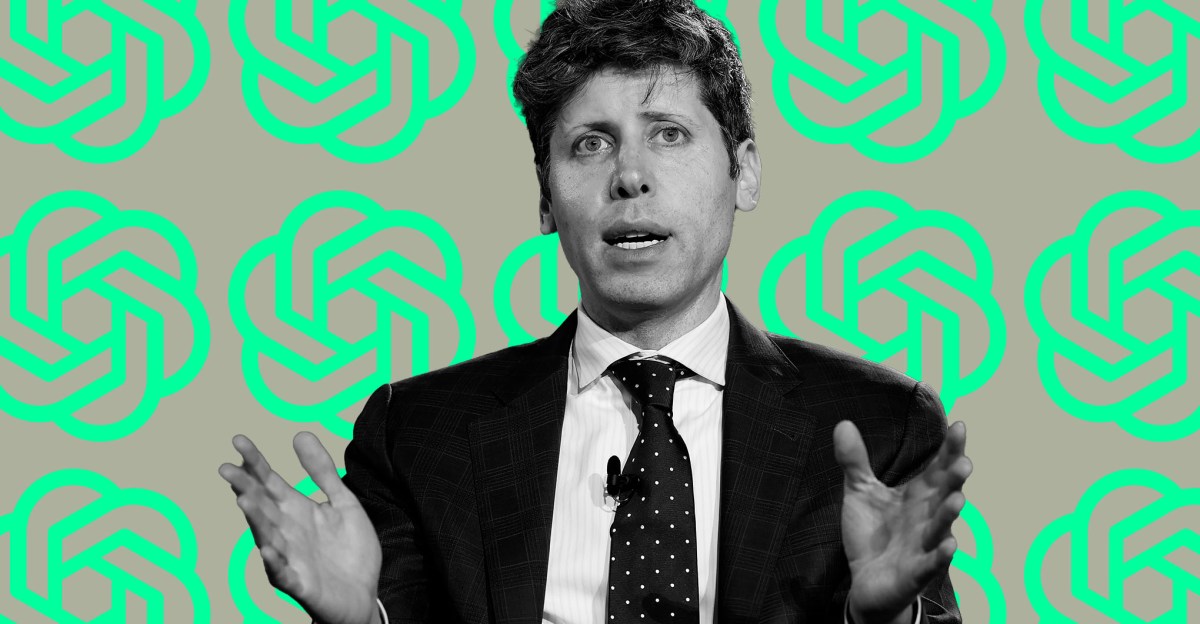
OpenAI has spent the better part of the year involved in lawsuit after lawsuit, including one from the world’s richest man. But last Friday, the company was hit with one of the highest-profile legal actions yet — from Apple. OpenAI’s expensive hardware bet is what’s on the line.
Apple’s lawsuit against OpenAI, filed in Northern California federal court, accused former Apple employees of “stealing Apple’s trade secrets for the benefit of OpenAI.” The 41-page complaint states that Apple keeps its “product development, manufacturing, supply chain, technology research, and other innovations confidential” and that “the trade secrets spanning Apple’s hardware operations collectively constitute one of the most valuable intellectual assets in all of American business.”
The allegations referenced three former Apple employees: Tang Tan, former VP of Apple Watch, who spent 24 years at Apple before becoming chief hardware officer of OpenAI (after OpenAI bought Jony Ive’s hardware company, io); Chang Liu, former systems electrical engineer for iPhone, who spent eight years at Apple before departing for OpenAI; and Yu-Ting “Alyssa” Peng, another former Apple employee who also left for OpenAI. (Less is known about Peng’s Apple tenure.) The lawsuit makes a lot of wild claims, including Tan allegedly requesting prospective employees to bring Apple hardware outside the office for “show and tell” during their OpenAI interviews and coaching Apple employees about how to avoid the company’s offboarding security procedures. (It’s unclear which, if any, of Apple’s hardware-related trade secrets may have made it into OpenAI’s device, as it does not yet have a publicly shown product.)
Avery Williams, cochair of the trade secret practice area at McKool Smith and author of the firm’s AI Litigation Tracker, told The Verge that he thinks OpenAI’s legal troubles are far from over. “They’ve gotten sued a lot. [But] OpenAI is not going to be out of the woods until we get a ruling from a higher court on the fair use question for AI training. It’s a trillion-dollar question.”
The lawsuit is yet another obstacle for OpenAI, which has had a rollercoaster six months full of drama with rivals over US military red lines, protests over contract with the US government, a drawn-out legal battle with former OpenAI co-founder Elon Musk, and a race with Anthropic over which frontier lab would be first to IPO — not to mention a laundry list of lawsuits, a few of which came from Musk himself. Another still ongoing lawsuit was brought by the family of Adam Raine, a 16-year-old who died by suicide after confiding in ChatGPT. And then there’s the long-running suit brought by The New York Times and other publishers against OpenAI, alleging copyright infringement.
The timing of Apple’s lawsuit is also far from ideal for OpenAI: The company is gearing up to go public, having confidentially submitted a Form S-1 last month with the SEC; it’s facing investor pressure to turn a profit; and it’s cut out a bunch of “side quests” in order to focus on key revenue drivers like enterprise and coding. Perhaps most significantly, though, it’s getting ready to release a much-hyped hardware device in 2027, after paying nearly $6.5 billion to buy famed Apple designer Jony Ive’s hardware startup, io (and handling yet another lawsuit from a company called Iyo). Apple may have a reputation for falling behind in AI, but it’s always had a head start in hardware, and OpenAI has the opposite reputation. A common industry refrain states that “hardware is hard”; for evidence, just take a look at the graveyard of erstwhile overhyped AI devices, like the Humane AI pin.
“The next frontier is going to be AI hardware, more than just chips … Robotics and other types of physical AI is the next area that is ripe for disruption,” said Charlyn Ho, CEO and founder of Rikka Law Group, a law firm focusing on tech, privacy, and cybersecurity law. “It’s kind of interesting to see OpenAI … going into that play, because maybe they’re seeing [that] just the pure software play is not profitable.” She added, “They’re a frontier lab. They’re spending more money than they’re making at the moment.”
It makes sense that OpenAI would want to hire to fill in those hardware gaps and speed up its hardware progress. But now, it’s led to what will likely be a costly legal battle.
“It’s never fantastic to get sued by Apple when you’re trying to IPO,” said McKool Smith’s Williams. “Apple is a tenacious litigant … They do not tend to back down.”
OpenAI did not respond to a request for comment.
Over the weekend, one X user wrote, “Sam Altman wasn’t afraid of Elon but he is terrified of Apple. You can tell by all his posting today.” Altman replied, “i am not afraid of apple, but i have tremendous respect for them. s-tier company.”
Apple and OpenAI have in the past had a relatively positive public relationship; the two in 2024 entered into an agreement to integrate ChatGPT into Apple devices. This lawsuit represents a significant departure. “Apple and OpenAI have been on the same side … As the industry gets more and more competitive, you’re starting to see these alliances fracture,” said Rikka Law Group’s Ho.
In today’s hyper-competitive AI industry, public accusations or lawsuits over trade secrets, corporate espionage, and illicit information harvesting are incredibly common. Point to any AI leader and chances are they’ve got at least one lawsuit or accusation to their name.
In the realm of trade secrets, there are several accusations being made. Scale AI is accusing an employee who left for Mercor, xAI is accusing employees who left for OpenAI, and Tesla is accusing an employee who allegedly transferred data about an AI supercomputer to his personal laptop (along with another employee related to robotics-related trade secrets). Additionally, there are accusations of distillation and improper information harvesting, such as Anthropic’s accusations against Chinese AI companies and xAI’s alleged distillation of OpenAI’s models.
The lawsuit between Apple and OpenAI made headlines, with experts noting that the allegations were not particularly unusual in themselves, but rather intriguing due to the involvement of two major players. Trade secrets lawsuits can be difficult to prove in court, as they do not involve direct comparisons like copyright or trademark lawsuits. The allegations in Apple’s case were described as “run-of-the-mill trade secrets misappropriations claims” by experts.
The accusations in Apple’s lawsuit involved hiring-stage extraction, interview-based solicitation, and internal collusion, which are common tactics in insider threat scenarios. The lawsuit was seen as significant due to the multiple layers of allegations it contained.
The AI industry, which heavily relies on data, is known for being litigious when it comes to the misuse or misappropriation of information. The industry is small and interconnected, with many key players having worked closely with their rivals at some point in their careers.
Apple suggested that there were more former employees who left for OpenAI with key information than were named in the lawsuit. The company claimed that OpenAI had been stealing Apple’s trade secrets and confidential information at various levels within the organization.
The legal battle between Apple and OpenAI is expected to be lengthy and contentious, potentially lasting for years. The case is likely to involve extensive discovery processes due to the nature of the allegations.
While the software side of the AI industry has been filled with hype, competition, and controversy, companies are now turning their focus towards conquering the hardware aspect of AI technology. As AI devices have not undergone extensive testing on a large scale yet, it will require time to determine what success in this field will entail. This is especially true considering the potential for a lengthy legal dispute between Apple and OpenAI.
For more content like this, follow topics and authors from this article to receive updates in your personalized homepage feed and via email.
1. Follow Hayden Field: Stay informed with posts from this author in your daily email digest and homepage feed.
2. Follow AI: Receive updates on posts related to AI in your daily email digest and homepage feed.
3. Follow Apple: Stay up to date with posts related to Apple in your daily email digest and homepage feed.
4. Follow OpenAI: Get the latest updates on posts related to OpenAI in your daily email digest and homepage feed.
5. Follow Report: Stay informed with posts related to reports in your daily email digest and homepage feed.
6. Follow Tech: Receive updates on posts related to tech in your daily email digest and homepage feed.
By following these topics and authors, you can stay informed on the latest developments in AI, Apple, OpenAI, reports, and the tech industry. Transform the following sentence into a question:
The cat is sleeping peacefully on the windowsill.
Is the cat sleeping peacefully on the windowsill? Transform the following sentence:
“The cat is sleeping on the couch.”
into a question.
“Is the cat sleeping on the couch?”