
Inovation
US Government Invests $874 Million to Bolster Semiconductor Supply Chain

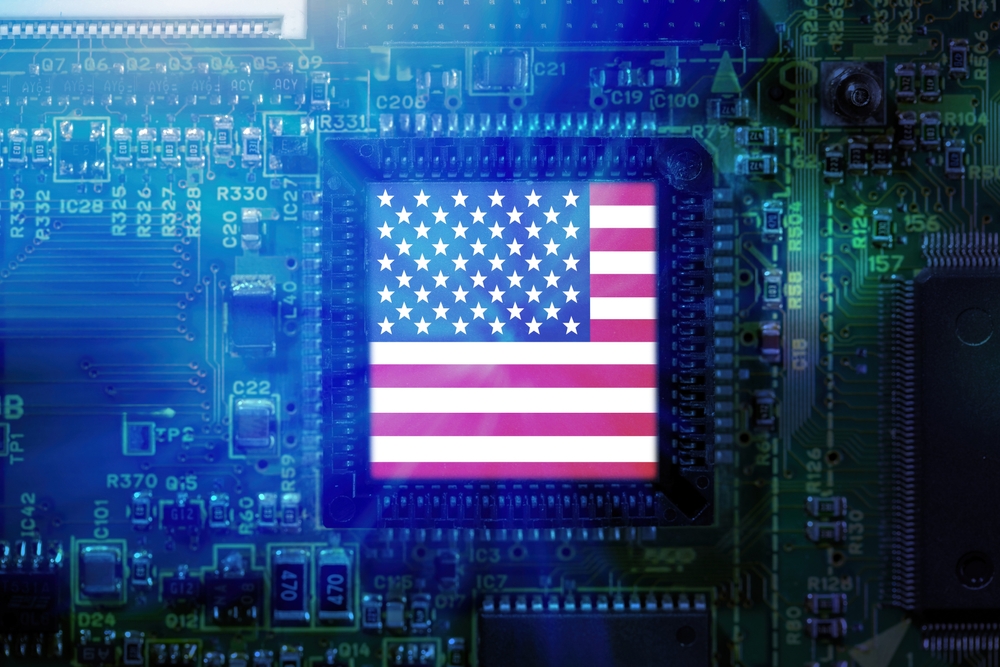
The US Department of Commerce has revealed plans to allocate up to $874 million in federal funding to seven technology companies as part of the CHIPS and Science Act. This initiative aims to expedite research on next-generation semiconductors and fortify the semiconductor supply chain.
The proposed funding, detailed in signed letters of intent, will bolster research and development efforts in advanced computing technologies such as integrated photonics, AI memory, advanced packaging, semiconductor materials, and secure electronics. However, these awards are contingent upon due diligence and final government approval.
Government officials anticipate that this financial support will foster domestic innovation, diminish reliance on foreign technologies, and solidify the United States’ standing in the global semiconductor supply chain. Additionally, it is expected to drive progress in AI, defense, healthcare, robotics, and industrial manufacturing.
Focus on Critical Semiconductor Technologies
The seven earmarked awards concentrate on technologies deemed vital for future AI infrastructure and high-performance computing.
The largest portion, up to $300 million, is designated for GlobalFoundries to expedite research on co-packaged optics. This technology integrates photonics directly with AI processors, enhancing data transfer speeds while reducing energy consumption. The Department of Commerce believes this investment could accelerate commercial deployment by two to three years.
Kepler is poised to receive up to $245 million to develop a new era of high-performance AI memory utilizing three-dimensional and ferroelectric technologies. Enhancing memory performance is crucial for handling increasingly intricate AI workloads.
Concurrently, Multibeam Corporation has been chosen for up to $140 million to advance semiconductor packaging technologies that stack multiple chips into a single system. Advanced packaging is gaining importance as manufacturers seek heightened computing performance without solely relying on smaller transistor sizes.
Advancing the Future of AI Infrastructure
Several smaller awards are centered on technologies designed to enhance efficiency, connectivity, and security within the semiconductor supply chain.
Extropic is slated to receive up to $75 million to develop thermodynamic sampling units, a computing architecture that leverages natural thermal fluctuations to address complex optimization, simulation, and AI challenges while consuming significantly less energy than traditional processors.
Thintronics has been selected for up to $50 million to pioneer ultra-low-loss dielectric materials used in advanced semiconductor interconnects and advanced packaging for AI and networking systems.
OBSIDIA Semiconductors is anticipated to receive up to $34 million to develop technologies capable of identifying counterfeit or malicious semiconductor components without causing harm to devices. This technology aims to enhance traceability and bolster security across increasingly intricate supply chains.
Lastly, Aeluma will be granted up to $30 million to advance indium-phosphide-free semiconductor substrate technology for photodetectors and lasers used in AI-enabled photonic interconnects.
Enhancing the Semiconductor Supply Chain
Beyond supporting individual technologies, these investments form part of a broader strategy to enhance domestic resilience across the semiconductor supply chain.
By expanding research capabilities within the United States, the Department of Commerce seeks to mitigate vulnerabilities associated with overseas production while promoting the commercialization of emerging semiconductor technologies.
Many of the funded projects address areas widely recognized as bottlenecks for future AI systems, including packaging, memory performance, photonic communications, and secure component verification.
Furthermore, the Department will acquire a minority, non-controlling equity stake in each funded company. Officials assert that this approach aims to generate a financial return for US taxpayers while enabling companies to maintain independent operations.
Continued CHIPS Act Program
These recent announcements are part of the ongoing efforts of the CHIPS Research and Development Office to expedite innovation within the US semiconductor sector.
The office remains open to proposals for research, prototyping, and commercial projects that advance domestic microelectronics technologies through its current funding program.
Eligible organizations are encouraged to submit applications for projects supporting the next wave of semiconductor innovation.
With AI fueling unprecedented demand for advanced computing hardware, these new investments are poised to hasten critical technologies and reinforce the long-term resilience and competitiveness of the US semiconductor supply chain.












Twitch CEO Teases GTA 6 Online Multiplayer Launch for Next Year, PC Port Release Date Uncertain

Race Against Time: Achieving Success at Disrupt 2026

The AirTag Crime Wave: Stalking, Robbery, and a Multi-Million Dollar Scam

Revving Up: The Design Evolution of V8 Power with a Release Date

The Rise of Ballbylon: A New Chapter in Ball x Pit’s Adventure

Arcos Secures €5.5 Million Funding to Expand Civil Safety Infrastructure Operations in Europe

Beware: iOS 27 Gesture Prank Can Freeze Your iPhone – Here’s What You Need to Know

HOW GOOD can a $250 Smartphone Camera be!?

Putting Continental’s CrossContact A/T2 Tyre to the Test: An All-Terrain Adventure

EU Takes Action Against Instagram and Facebook for Violating Illegal Content Rules

Warning: Facebook Creators Face Monetization Loss for Stealing and Reposting Videos

Facebook’s New Look: A Blend of Instagram’s Style

Facebook Compliance: ICE-tracking Page Removed After US Government Intervention

Facebook and Instagram to Reduce Personalized Ads for European Users

InstaDub: Meta’s AI Translation Tool for Instagram Videos

Reclaim Your Account: Facebook and Instagram Launch New Hub for Account Recovery

Meta discontinues Messenger apps for Windows and macOS

Breaking Updates: Meta Connect 2025 Unveils Latest Developments
HOW GOOD can a $250 Smartphone Camera be!?

10 Android Apps you NEED to try in 2018

They could not believe how cheap this Phone is

A $50,000 Smartphone for $400?

Huawei P20 Pro Unboxing!

Huawei P20 Pro vs Samsung S9 Plus!

Huawei P20 vs P20 Pro vs iPhone 8 Plus vs S9 Battery Drain Test!

10 Android Mods that Change Everything

I used the first Android Phone in the World.
-
 Facebook11 months ago
EU Takes Action Against Instagram and Facebook for Violating Illegal Content Rules
-
 Facebook11 months ago
Warning: Facebook Creators Face Monetization Loss for Stealing and Reposting Videos
-
 Facebook10 months ago
Facebook’s New Look: A Blend of Instagram’s Style
-
 Facebook11 months ago
Facebook Compliance: ICE-tracking Page Removed After US Government Intervention
-
 Facebook10 months ago
Facebook and Instagram to Reduce Personalized Ads for European Users
-
 Facebook11 months ago
InstaDub: Meta’s AI Translation Tool for Instagram Videos
-
 Facebook10 months ago
Reclaim Your Account: Facebook and Instagram Launch New Hub for Account Recovery
-
 Apple11 months ago
Meta discontinues Messenger apps for Windows and macOS
