
Security
Power Hog Alert: Identifying Android Apps Draining Your Battery on the Play Store


Google Play to Crack Down on Android Apps with High Battery Drain
Google has announced that it will be implementing new measures on the Google Play store to address Android apps that exhibit high background activity and cause excessive battery drain on devices.
Apps that surpass a certain threshold for “bad behavior” will be flagged on Google Play, potentially affecting their visibility and performance within the Android ecosystem.
Developers have until March 1, 2026, to update their apps to comply with a new core Android Vitals metric known as “excessive partial wake locks.”
The algorithm, which has been in beta since April 14, was developed by Google in collaboration with Samsung.
According to Google, this new metric is the first of many designed to provide developers with deeper insights into their app’s resource utilization, ultimately enhancing user experience across the Android ecosystem.
Apps that exceed the threshold for excessive wake locks may be labeled as battery drainers on Google Play and could face exclusion from prominent discovery surfaces.
Metrics Tracked by Google
Google Play’s Android vitals system will monitor partial wake locks, which refer to the total time an app spends on background tasks while the screen is off, preventing the device from entering sleep mode.
The measurement will be conducted per user session and across all sessions within a 28-day period, only counting non-exempt wake locks, such as those not system-held, related to audio playback, or initiated by the user.
An app will be deemed to exhibit excessive behavior if a single user session accumulates over two hours of non-exempt wake locks within 24 hours.
Google has set the bad-behavior threshold at 5% of an app’s user sessions over the past 28 days.
Developers exceeding this threshold will receive alerts on their Android vitals overview page.
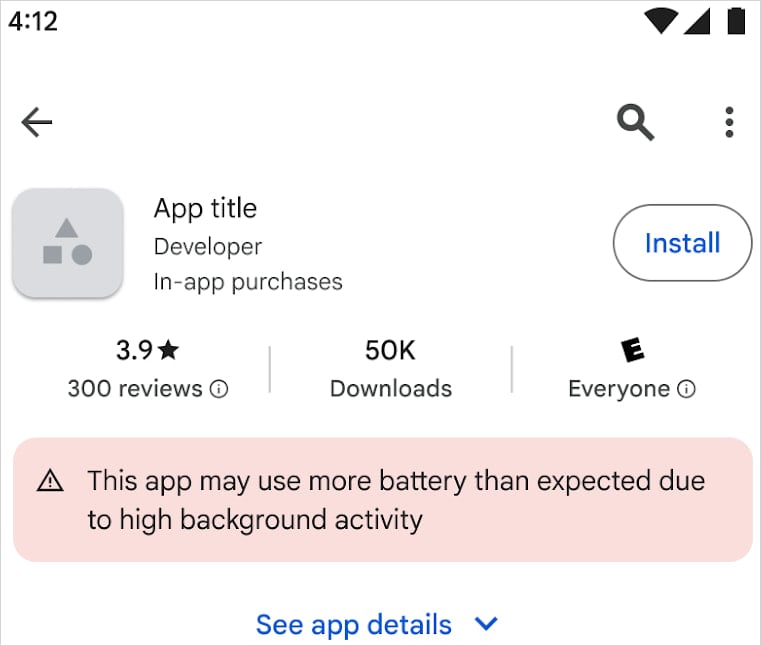
Source: Google
This policy change aims to encourage developers to optimize their app’s behavior, reduce unnecessary wake locks, and pay close attention to wake locks initiated by external libraries and SDKs.
When asked about using this feature to detect spyware, adware, and malware that prevent devices from sleeping to maintain network connections, Google clarified that the metric primarily focuses on improving battery performance and technical quality rather than targeting malicious apps.
Google emphasized that the metric is intended to identify apps that excessively consume system resources without offering value to users, rather than specifically targeting malware.

It’s budget season! Over 300 CISOs and security leaders have shared insights on their planning, spending, and priorities for the year ahead. This report compiles their strategies, trends, and priorities for 2026.
Discover how top leaders are translating investments into measurable impact.











Apple TV 4K: A Vintage First-Gen Retrospective

Unbeatable Deals on Australia’s Most Affordable Seven-Seat Diesel SUV

Forza Horizon 6: Revving Up for a 2027 Release on PS5

Embracing Success: A Geek’s Guide to Conquering the Stereotypes of Villainy

Uncovering the Bronze Age Influence in Paradox’s Afterworld: A Deeper Dive Beyond the Top Five Reference Points

iPhone Duo: The Future of Mobile Dominance

Tech Advisor: The Delayed Android 17 QPR1 Update for Pixel 11

Venture Capital Firm Monte Carlo Capital Secures €13 Million for Fund II to Back Early-Stage DeepTech, AI, and SpaceTech Startups

The Battle Over iPhone Driver’s Licenses: Florida and Rhode Island Stand Firm

EU Takes Action Against Instagram and Facebook for Violating Illegal Content Rules

Warning: Facebook Creators Face Monetization Loss for Stealing and Reposting Videos

Facebook’s New Look: A Blend of Instagram’s Style

Facebook Compliance: ICE-tracking Page Removed After US Government Intervention

Facebook and Instagram to Reduce Personalized Ads for European Users

InstaDub: Meta’s AI Translation Tool for Instagram Videos

Reclaim Your Account: Facebook and Instagram Launch New Hub for Account Recovery

Meta discontinues Messenger apps for Windows and macOS

Breaking Updates: Meta Connect 2025 Unveils Latest Developments

How Smart is the AI-Powered Huawei Mate 10 – with EMUI 8.0?

I used a 2012 Smartphone in 2018 – Here’s what happened.

How to send ANY file Anywhere!

NEW Oneplus 5T Sandstone White Unboxing – The Ultimate Oneplus 5T?

HUAWEI P20 – THE SMARTPHONE REVOLUTION IS HERE?

How OnePlus succeeded when they should have failed.

Samsung sent us THIS! #AD

Ulefone Power 3 – Quad Camera Smartphone that last 2 weeks!

EPIC Smartphone FAILS that people will never forget.
-
 Facebook12 months ago
EU Takes Action Against Instagram and Facebook for Violating Illegal Content Rules
-
 Facebook12 months ago
Warning: Facebook Creators Face Monetization Loss for Stealing and Reposting Videos
-
 Facebook10 months ago
Facebook’s New Look: A Blend of Instagram’s Style
-
 Facebook12 months ago
Facebook Compliance: ICE-tracking Page Removed After US Government Intervention
-
 Facebook10 months ago
Facebook and Instagram to Reduce Personalized Ads for European Users
-
 Facebook12 months ago
InstaDub: Meta’s AI Translation Tool for Instagram Videos
-
 Facebook10 months ago
Reclaim Your Account: Facebook and Instagram Launch New Hub for Account Recovery
-
 Apple12 months ago
Meta discontinues Messenger apps for Windows and macOS
