Threat Actors Exploit ChatGPT’s Content-Sharing Feature to Distribute Malware
Recently, threat actors have been leveraging ChatGPT’s content-sharing feature to deceive users into downloading malware disguised as the ChatGPT desktop application.
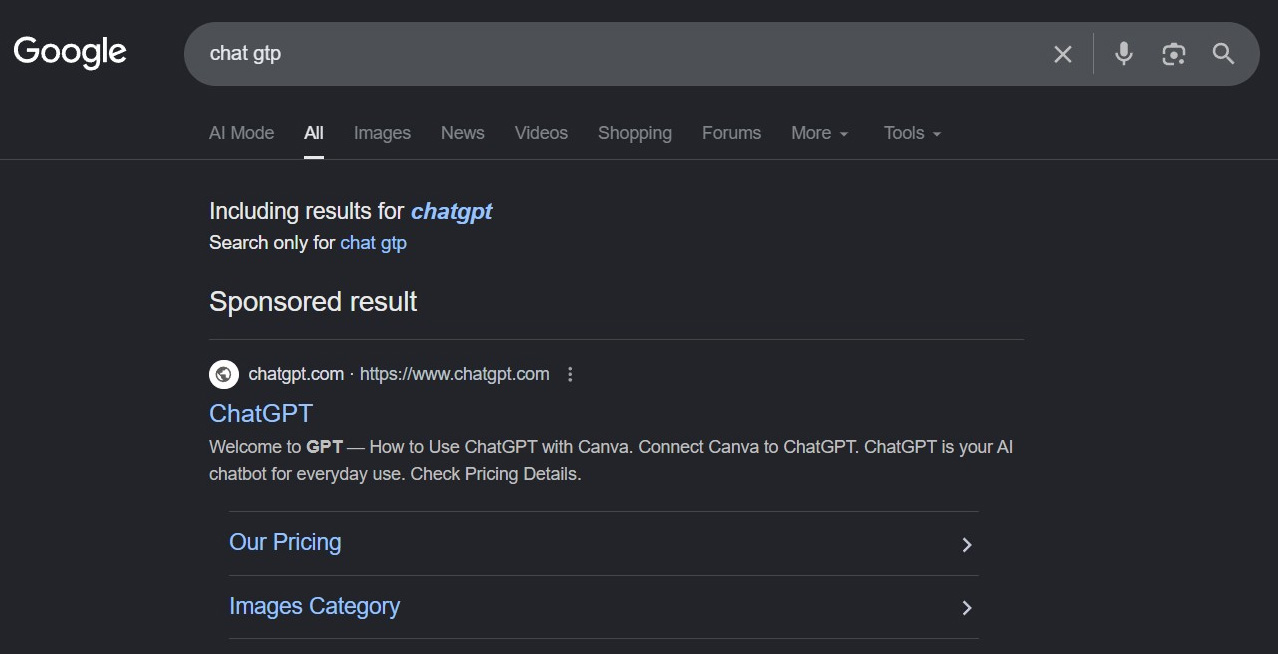
Unveiled by Push Security, the “LLMShare” campaign utilizes Google ads to redirect individuals searching for ChatGPT to a malicious shared ChatGPT page housed on chatgpt.com, exploiting a legitimate OpenAI domain for their attack.
Fake sponsored ChatGPT advertisement
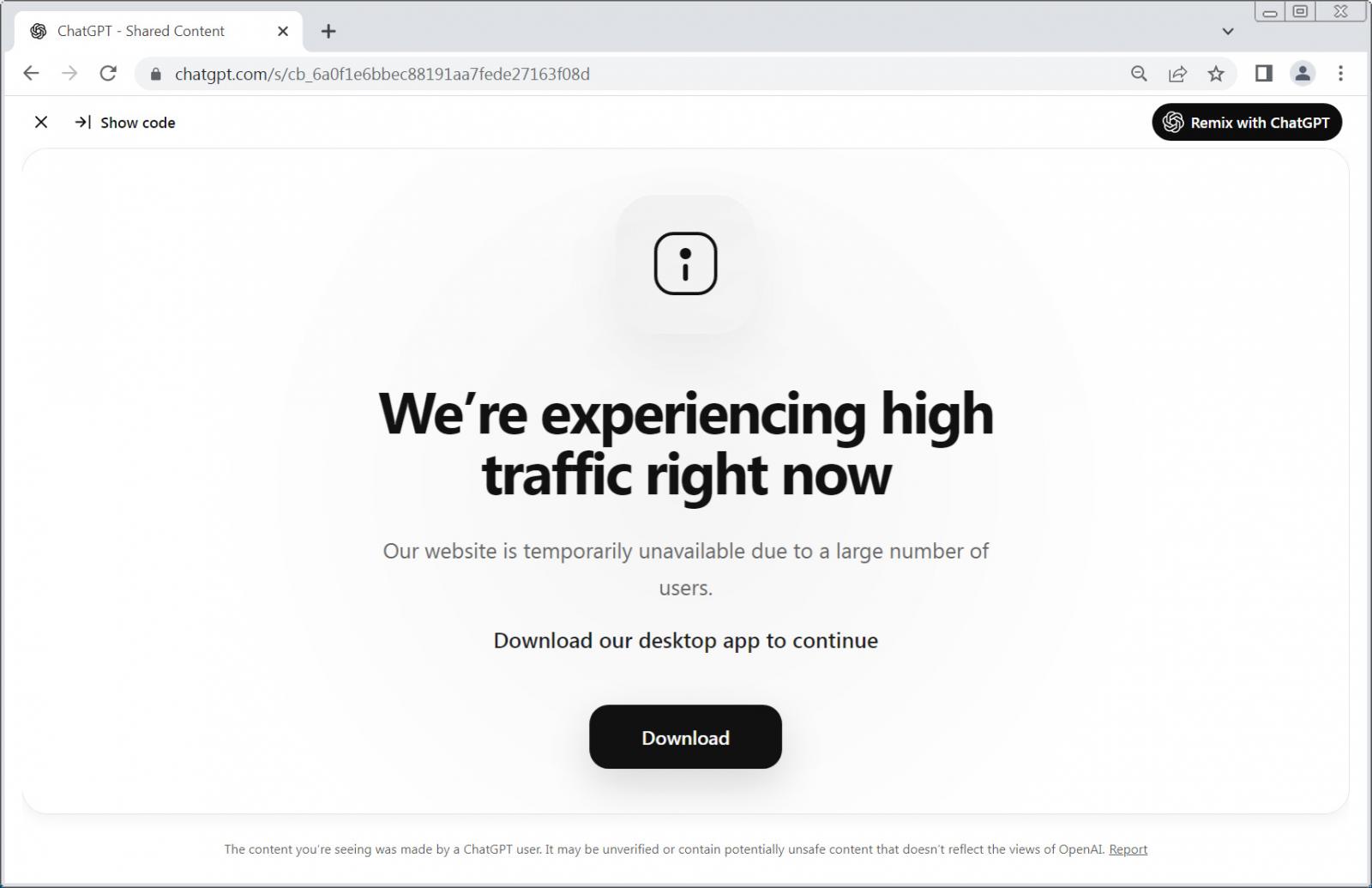
Upon clicking the advertisement, users are directed to what seems like a genuine ChatGPT shared page. However, instead of a chat interface, they are greeted with a fabricated outage notification urging them to download the desktop application.
The fraudulent message claims, “We’re experiencing high traffic right now,” and prompts users to download the desktop app due to alleged website unavailability.
Fake outage message
Unlike conventional phishing schemes hosted on attacker-controlled platforms, this fake outage notice is generated through ChatGPT itself.
The attackers devised a custom HTML page using ChatGPT’s rendering functions and shared it through a chatgpt.com/s/ link, allowing the phony outage notice to be displayed from a legitimate ChatGPT URL.
Push Security highlighted the presence of “Show code” and “Remix with ChatGPT” options on the page, indicating that the fake outage message is constructed using custom HTML and CSS rendered via a ChatGPT prompt.
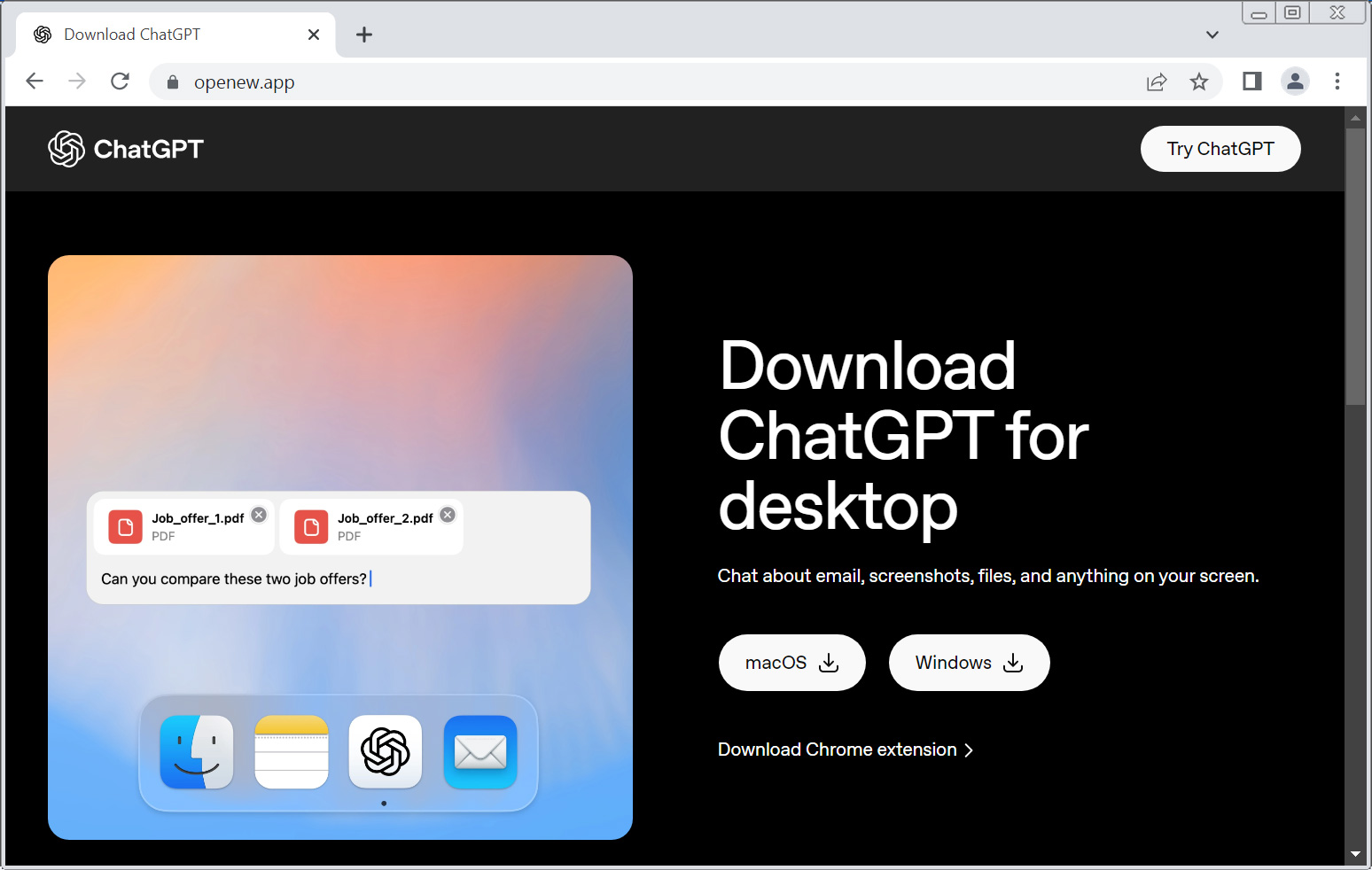
Should a visitor proceed to click the download button, they are redirected to openew[.]app, a website impersonating OpenAI’s desktop application download platform.
Fake ChatGPT download site
Reportedly, the site deploys cloaking techniques to exhibit content solely to targeted victims. When security tools like URLScan visited the URL, they were presented with a harmless AR/VR company website instead.
The deceptive website offers downloads for both macOS and Windows, potentially installing malware on devices. While the exact payloads remain undisclosed, previous campaigns exploiting AI platform sharing functionalities have disseminated infostealers.
Testing the Windows variant on Any.Run, BleepingComputer discovered that it executes diverse commands to determine the device’s legitimacy.
Furthermore, Push Security observed attacks utilizing Claude Artifacts, Anthropic’s feature for sharing rendered content, to host ClickFix-style traps that manipulated users into executing malicious commands.
Notably, malevolent actors have previously misused AI platforms’ sharing capabilities to propagate malware among unsuspecting victims.
In an earlier incident, threat actors employed Google ads to direct users seeking Claude downloads to shared Claude conversations containing malicious installation instructions.
Similarly, other campaigns abused shared ChatGPT and Grok conversations to conduct ClickFix attacks by posing as software installation guides, instructing victims to run commands that facilitated malware installation.
Enhancing Cybersecurity Measures in Response to Emerging Threats
Automated pentesting tools serve a critical purpose, assessing the network’s vulnerability to unauthorized access. However, they do not validate the efficacy of your security controls, detection mechanisms, or cloud configurations.
Explore this comprehensive guide outlining the six essential areas you need to verify to bolster your cybersecurity defenses.