
Tech News
Exploring the Practical Applications and Models of Real-Life Examples

AI/ML
Transforming Industries: The Power of Multimodal AI
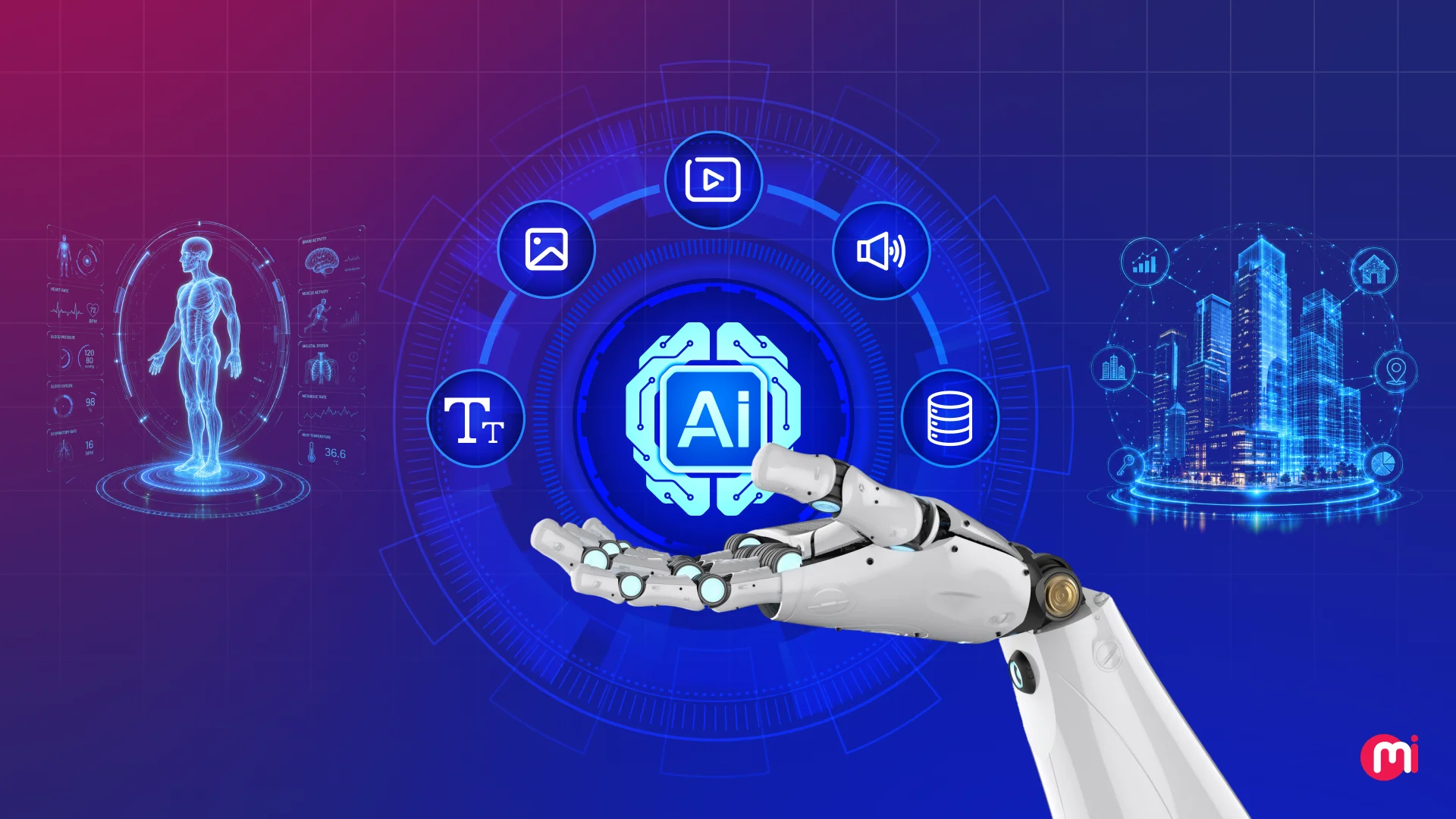
In the fast-paced world of technology, the integration of Artificial Intelligence (AI) and Machine Learning (ML) has become pivotal for businesses to stay competitive. Multimodal AI, a cutting-edge technology, is redefining how machines understand and interact with the world by combining various data types, such as text, images, audio, and video, into a unified system. This transformative approach enables machines to process richer context, leading to more accurate insights and natural interactions.
Unlike traditional AI models that operate on a single modality, multimodal systems have the capability to reason across multiple modalities simultaneously. This unique feature makes them ideal for real-world applications across industries, ranging from visual search in e-commerce to autonomous driving and intelligent virtual assistants. Companies like Amazon, Tesla, and Google are leveraging the power of multimodal AI to enhance user experience, improve decision-making, and drive innovation at scale.
In this blog post, we will delve deeper into the key applications of multimodal AI, exploring real-life examples that showcase how this groundbreaking technology is revolutionizing industries and shaping the future of intelligent systems.
What Is Multimodal AI?
Multimodal AI refers to artificial intelligence systems powered by machine learning models that can process, understand, and generate information across multiple data types, including text, images, audio, video, and structured data. These advanced models can even handle sensor data, depth maps, and biological sequences, making them versatile and adaptable to diverse tasks.
The term “multimodal” stems from the combination of “multi” (many) and “modality” (mode or channel of communication), signifying an AI system that goes beyond traditional single-mode processing. Multimodal AI mimics human-like cross-channel thinking, where inputs from different modalities are integrated to facilitate seamless reasoning and decision-making.
How Does Multimodal AI Work?
At the core of multimodal AI lies the process of encoding various inputs into a shared representation space. This shared space serves as a common language that enables the model to reason across modalities, facilitating a holistic understanding of complex data sets.
The process of multimodal AI can be simplified into three key stages:
1. Input Processing: Specialized encoders handle each modality for input processing, converting raw input into numerical representations known as embeddings.
2. Fusion: The embeddings from different modalities are merged, allowing the model to reason across all inputs simultaneously. Various fusion strategies, such as early fusion, late fusion, and cross-attention fusion, enable effective integration of multiple data types.
3. Reasoning & Output: Once fused, the model utilizes transformer-based architectures or large language models for reasoning, generating a response that may be text, an image, audio, or a combination of these modalities.
Differences Between Multimodal AI, Generative AI, and Unimodal AI
Multimodal AI stands out from traditional unimodal AI and generative AI in several aspects, as highlighted in the table below:
Features Multimodal AI Generative AI Unimodal AI
Definition Processes and reasons across multiple data types simultaneously Creates new content (text, images, audio, video) from learned patterns Operates on a single type of data input/output
Training Data Paired multimodal datasets (image-text pairs, audio transcripts, video captions) Large text corpora, image datasets, or audio datasets Domain-specific single-modality datasets
Primary Input Text + Images + Audio + Video + Sensors Usually text prompts (sometimes images) One modality only (text OR image)
Primary Output Text, images, audio, or combinations Generated content (writing, art, code, music) Single-type output matching input modality
Core Strength Cross-modal reasoning and understanding Creative content generation Deep specialization in one domain
Model Examples GPT-4o, Gemini 1.5 Pro, Claude 3, PaLM-EChat GPT, DALL·E 3, Sora, MidJourney BERT (text), ResNet (images), Whisper (audio)
Key Benefits Mirrors human perception; handles complex real-world tasks Automates creative and writing workflows High accuracy and efficiency in narrow tasks
Key Limitations Computationally expensive; harder to align modalities Can hallucinate; lacks true world understanding Cannot reason across different types of data
Business Use Case Medical diagnosis, autonomous vehicles, multimodal chatbots Content creation, coding assistance, design Spam detection, image classification, transcription
Multimodal AI Use Cases for Businesses
Multimodal AI offers a wide array of use cases across various industries, each demonstrating the transformative potential of this technology. Some key applications of multimodal AI include:
1. Healthcare & Medical Imaging: Multimodal AI is revolutionizing medical imaging by analyzing X-rays, MRI scans, and pathology slides alongside patient health records. This enables clinicians to detect anomalies faster and with greater efficiency, leading to improved patient outcomes.
2. Education & Accessibility: AI tutors powered by multimodal AI are enhancing the learning experience by providing students with personalized, multimodal explanations. This technology is making education more inclusive by offering features like live captioning, sign language interpretation, and image descriptions for students with disabilities.
3. Retail & E-Commerce: Multimodal AI is transforming the retail industry by enabling visual search tools that allow shoppers to find products instantly using images. Retailers are leveraging AI to deliver hyper-personalized recommendations based on customer browsing history and product image analysis.
4. Content Creation & Media: From generating images from text descriptions to turning scripts into cinematic videos, multimodal AI is accelerating content production across various sectors. Newsrooms are using AI to auto-summarize video footage and generate written reports efficiently.
5. Automotive & Robotics: Self-driving vehicles are a prominent application of multimodal AI, combining camera feeds, LiDAR point clouds, radar signals, and GPS data for real-time driving decisions. In warehouses, robots use vision and language models to interpret instructions and navigate physical environments.
6. Customer Service & Virtual Assistants: Modern customer service AI is evolving beyond text chatbots to agents that can process multiple input types, such as screenshots, voice recordings, and text descriptions. This technology is enhancing customer interactions and improving response accuracy.
7. Manufacturing & Industrial Automation: Multimodal AI is optimizing industrial processes by combining visual inspection cameras with sensor telemetry and maintenance logs to predict equipment failures. This proactive approach minimizes downtime and increases operational efficiency.
8. Security & Surveillance: Security systems powered by multimodal AI can detect threats by correlating video footage, audio anomalies, and access log data. Document verification systems use multimodal AI to verify IDs and detect forgeries in real-time.
9. Finance & Banking: Banks and fintech companies are leveraging multimodal AI to streamline KYC processes by analyzing identity documents visually and cross-referencing text-based records. Fraud detection systems monitor transaction data alongside behavioral signals for enhanced security.
Popular Examples of Multimodal AI Models
The realm of multimodal AI is enriched by a diverse range of models that cater to different use cases and industries. Some popular examples of multimodal AI models include:
1. Google Gemini 1.5 Pro: A groundbreaking model that processes text, images, audio, video, and code with a focus on long-document and long-video analysis.
2. GPT-4o (OpenAI): An “omni” model that processes text, vision, and audio in real time, enabling natural voice conversations with visual awareness.
3. Claude 3 (Anthropic): Excels at nuanced document analysis, chart interpretation, and image reasoning, with a strong emphasis on safety and accuracy.
4. PaLM-E (Google): Designed for embodied AI tasks, connecting language understanding with robotic perception and control.
These models showcase the versatility and innovation that multimodal AI brings to the table, offering solutions for complex real-world challenges.
Real-Life Examples of the Uses of Multimodal AI
Businesses worldwide are embracing multimodal AI to drive innovation and efficiency across various sectors. Two compelling real-world examples highlight the practical applications of this technology:
1. Google’s DeepMind & NHS: Multimodal AI in Eye Disease Detection
Google DeepMind collaborated with Moorfields Eye Hospital to develop an AI system that analyzes 3D retinal scans (OCT images) alongside patient health records and clinical notes. This multimodal diagnostic pipeline accurately identifies over 50 eye diseases and recommends referral decisions with expert-level accuracy. The system enables faster triage, reduced wait times, and early intervention for conditions like age-related macular degeneration and diabetic retinopathy.
Business Impact: Reduced diagnostic time, improved referral accuracy, and scalable specialist-level screening without scaling specialist headcount.
2. Walmart: Multimodal AI for Shelf Intelligence and Inventory Management
Walmart utilizes multimodal AI in its store operations to monitor shelves in real-time using a network of cameras and sensors. The AI system detects out-of-stock or misplaced products, cross-references visual data with inventory records, and generates restocking alerts for store associates. This technology optimizes shelf management, reduces out-of-stock incidents, and enhances customer satisfaction.
Business Impact: Significant reduction in out-of-stock incidents, lower labor costs for shelf auditing, and improved product availability for customers.
Challenges and Solutions of Multimodal AI
Despite its numerous benefits, multimodal AI comes with its set of challenges that need to be addressed for seamless implementation. Some common challenges and their solutions include:
1. Data Alignment and Synchronization: Ensuring accurate matching of data across modalities through contrastive learning techniques and timestamp-based synchronization.
2. Computational Intensity and Cost: Managing the computational resources required for multimodal AI by implementing model compression, quantization, and cloud-based APIs.
3. Data Fusion and Representation: Developing robust fusion architectures that preserve inter-modal relationships and avoid information loss.
4. Missing Modalities & Noisy Data: Training models on incomplete datasets and augmenting data to handle missing modalities and noisy inputs effectively.
5. Ethical and Bias Issues: Ensuring diversity in training datasets, conducting fairness audits, and red-teaming exercises to detect and address cross-modal biases.
6. Evaluation Difficulty: Utilizing emerging multimodal benchmarks designed to evaluate cross-modal reasoning across diverse tasks accurately.
7. Operational Challenges: Streamlining model pipelines, version dependencies, and latency requirements across modalities for efficient deployment in production environments.
Conclusion
Multimodal AI is a game-changer for businesses, offering unprecedented capabilities to process, understand, and generate information across diverse data types. From healthcare to retail, education to finance, the applications of multimodal AI are reshaping industries and driving innovation at scale. Businesses that embrace this transformative technology early on will gain a significant competitive advantage and pave the way for a future of intelligent systems.
Now that you have a deeper understanding of the power of multimodal AI, consider leveraging AI development services to implement multimodal AI solutions and unlock the full potential of your business initiatives.
FAQs on Multimodal AI
1. What are the components of multimodal AI?
The core components of multimodal AI include modality-specific encoders, a fusion mechanism, a reasoning engine, and a decoder for generating outputs.
2. How is multimodal AI different from traditional AI?
Multimodal AI processes multiple data types simultaneously, unlike traditional AI that operates on a single modality. This enables richer context-aware reasoning and decision-making.
3. Why is multimodal AI important for businesses?
Multimodal AI allows businesses to automate complex tasks, improve accuracy, speed, and customer experience by understanding multiple types of information.
4. Which industries benefit the most from multimodal AI?
Industries such as healthcare, retail, automotive, education, finance, and manufacturing currently see significant benefits from multimodal AI.
5. Is multimodal AI expensive to implement?
While building multimodal AI from scratch can be costly, API-based access through providers like OpenAI and Google makes it more affordable for businesses of all sizes.
6. How does multimodal AI improve user experience?
Multimodal AI enhances user experience by responding to natural, mixed-input interactions, creating more intuitive and human-like experiences.
7. Can small businesses use multimodal AI?
Yes, small businesses can integrate multimodal AI through cloud APIs and pre-built tools to access its capabilities without building their own models.
8. What is the future of multimodal AI?
The future of multimodal AI points towards real-time multimodal agents, personalized AI companions, and deeper integration across digital touchpoints for enhanced user experiences.
9. How does multimodal AI handle missing data?
Multimodal AI handles missing data through modality dropout training and robust fusion architectures, ensuring accurate predictions even with partial inputs.
10. Is multimodal AI safe and trustworthy?
Safety for multimodal AI is an ongoing area of research. Responsible deployment requires human oversight, clear governance policies, and continuous monitoring for biases and ethical issues.













Samsung Galaxy S9 Plus vs iPhone X

BYD Ignites Price Battle in Australia Despite Chinese Government Caution

Chaos Unleashed: The Xbox Reset Disaster

AI Security Threats: Search Poisoning, Coding Tool Leaks, and Code Execution Risks

LOVE alt delete: A Y2K Nightmare of Virtual Romance

Motorola Signature 27: Revolutionizing the Smartphone Industry in 2026

Nexterity Revolutionizes Pipefitting with Automated Solutions

Seamless Tab Sharing: Google Chrome’s Latest Feature for Continuity Across Devices

Enter to Win a Cutting-Edge Apple MacBook Neo in Our Giveaway!

EU Takes Action Against Instagram and Facebook for Violating Illegal Content Rules

Warning: Facebook Creators Face Monetization Loss for Stealing and Reposting Videos

Facebook’s New Look: A Blend of Instagram’s Style

Facebook Compliance: ICE-tracking Page Removed After US Government Intervention

Facebook and Instagram to Reduce Personalized Ads for European Users

InstaDub: Meta’s AI Translation Tool for Instagram Videos

Reclaim Your Account: Facebook and Instagram Launch New Hub for Account Recovery

Meta discontinues Messenger apps for Windows and macOS

Breaking Updates: Meta Connect 2025 Unveils Latest Developments
Samsung Galaxy S9 Plus vs iPhone X

The BEST $300 Phone (2018) ft. MKBHD, Technical Guruji, iJustine + More

Samsung Galaxy S9 Plus Gaming Review! (vs OnePlus 5T)

THE BEST PHONE HTC EVER MADE?

The Truth about Google?

Samsung S9/ S9+ vs iPhone X vs Galaxy Note 8 Battery Life DRAIN TEST

Samsung S9 / S9+ vs Mate 10 Pro vs iPhone X Charging SPEED Test

The BEST APPS in 2018 – ft. MKBHD, UrAvgConsumer, iJustine + More

The ULTIMATE Smartphone Unboxing!!
-
 Facebook11 months ago
EU Takes Action Against Instagram and Facebook for Violating Illegal Content Rules
-
 Facebook11 months ago
Warning: Facebook Creators Face Monetization Loss for Stealing and Reposting Videos
-
 Facebook10 months ago
Facebook’s New Look: A Blend of Instagram’s Style
-
 Facebook12 months ago
Facebook Compliance: ICE-tracking Page Removed After US Government Intervention
-
 Facebook10 months ago
Facebook and Instagram to Reduce Personalized Ads for European Users
-
 Facebook12 months ago
InstaDub: Meta’s AI Translation Tool for Instagram Videos
-
 Facebook10 months ago
Reclaim Your Account: Facebook and Instagram Launch New Hub for Account Recovery
-
 Apple11 months ago
Meta discontinues Messenger apps for Windows and macOS
