
Mobile Tech
Siri Turns 15: Still Refusing to Aid in Body Disposal

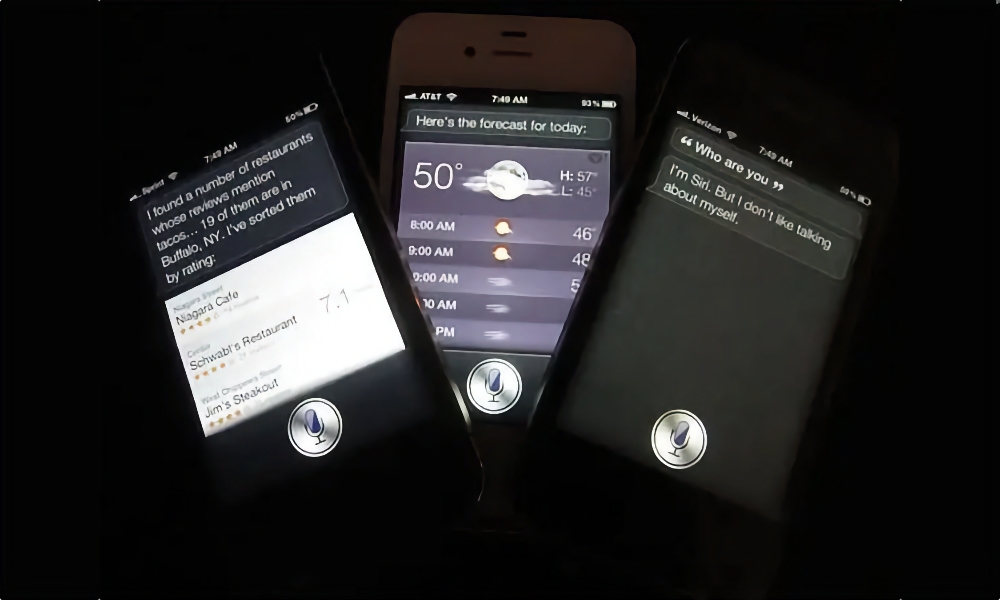
The iPhone 4S went on sale 15 years ago today, which means it’s also effectively the 15th anniversary of Apple’s virtual assistant. The iPhone 4S was the first to include the built-in Siri tool we all still rely on today, and while Apple unveiled it during a special event on October 4, 2011, it wasn’t until October 14 that iPhone users were able to experience Siri for the first time.
While Siri still may not be the tool we all wish for, it’s proven to be useful for me in many ways over the years (although I remain a bit upset that Siri no longer offers to help you hide a body).
The iPhone 4S hit store shelves on October 14, 2011, in the United States, Australia, Canada, France, Germany, Japan, and the United Kingdom. While maintaining much of the design of its 2010 predecessor, the new device brought some substantial internal upgrades.
The new model was powered by Apple’s dual-core A5 chip, which the company said provided double the CPU performance and seven times the graphics performance of the chips used in the iPhone 4. Its rear camera jumped from five megapixels to eight, and delivered an f/2.4 aperture with support for high-definition 1080p video recording. It also offered a revised antenna system, and maximum supported HSDPA download speeds doubled to 14.4 Mbps (which was considered fast back then).
In addition to those internal improvements, the iPhone 4S shipped with iOS 5 installed, which included several features taken for granted today, such as iCloud, Notification Center, iMessage, Reminders, and over-the-air software updates and in-device setup.
The new handset was available in two colors, white and black. The iPhone 4S was available in three memory configurations for the first time, offering 16 GB, 32 GB, and a new 64 GB configuration.
The three configurations were available in the US for $199, $299, and $399, respectively. Apple sold over four million iPhone 4S units during the first three days of availability — more than double what the iPhone 4 had accomplished the prior year.
Anyone who was following the iPhone scene in 2011 knows that the headline feature of the iPhone 4S was the personal assistant hidden in the silicon. Siri could help users send messages, make calls, create reminders, schedule appointments, and ask questions using (close to) natural language.
The initial version of Siri had the ability to interpret requests in context. For example, asking “What is the weather going to be like?” generated a response such as “The weather is going to be cloudy and rainy and 48 degrees today.”
As Apple often does, even though Siri was available to all iPhone 4S users, Apple claimed it was still in beta, and it was localized for only a limited number of countries and languages, including the United States, United Kingdom, and Australia, alongside French and German.
The assistant was also exclusive to the iPhone 4S, so owners of older iPhones could not access it simply by installing iOS 5.
While Siri is connected at the hip to the iPhone in users’ minds today, it was not initially developed by Apple. Instead, it was a standalone iPhone app, available in the App Store from a company called Siri.
The app initially launched in February 2010 and immediately became popular among iPhone users. Apple took notice, acquiring the company in April that year, and began working behind the scenes to integrate the technology directly into iOS. Soon after the unveiling of the iPhone 4S, Apple removed the standalone Siri app from the App Store, then informed existing users that the standalone service would cease working on October 15, 2011.
Siri became more capable over the ensuing years, becoming smarter, but never quite reaching the level of being a true artificial intelligence. It wasn’t until this year’s release of iOS 27 that Apple finally took it to the next level, with Siri AI using Apple’s own Apple Intelligence models.
While Siri still has a way to go before it can compete head-to-head with the AI functionality of Google’s Gemini or OpenAI’s ChatGPT, its capabilities have finally stepped out of the “novelty” arena to make it a truly useful tool for daily activities and tasks.
But what about that mention above of Siri helping you hide a body? In the early days, Siri had a number of hilarious Easter eggs hidden inside. In one famous example, if you asked it, “Where can I hide a body?” it would offer a range of alarmingly helpful options, including water, swamps, metal foundries, and city dumps.
While these were always intended as tongue-in-cheek jokes — telling Siri you’re horny would pull up a list of escort services, and asking it where to get drugs would direct you to an addiction research center — it seems some people may have taken them a bit too literally.
Apple eventually removed those options from Siri’s repertoire, and today’s Siri AI has even more guardrails built in than rivals like Gemini and ChatGPT.
However, in those early days, Apple didn’t act quickly enough to prevent an actual murderer from allegedly asking for “dumping” advice.
In 2012, Florida resident Pedro Bravo was accused of murdering a friend, University of Florida student Christian Aguilar, then dumping his body in the woods. News reports from the 2014 trial initially suggested that Bravo had asked Siri for advice, telling it “I need to hide my roommate,” with Siri replying by asking, “What kind of place are you looking for?” and then suggesting “swamps, reservoirs, metal foundries, and dumps” as options.
Investigators later clarified they’d only found a screenshot in the cache on Bravo’s iPhone that appeared to have come from Facebook.
There was no evidence that Bravo had actually requested Siri’s help, and it’s important to note that Bravo and Aguilar were not living together. Despite this, Aguilar’s body was discovered in a shallow grave in the forest. Bravo was convicted of the crime in August 2014 and passed away in prison in March 2025.
global $wp;
. ‘/’;
?>













Siri Turns 15: Still Refusing to Aid in Body Disposal

10 Years of Excellence: A Comprehensive Review of the 2027 GWM Ora 5 Ultra

Ubisoft to Close the Trials of RedLynx

Google’s Enhanced TV Streaming Device Poised to Challenge Apple TV 4K

Kingston University London spearheads UK’s groundbreaking Waste and Recycling Robotics Hub

Samsung’s Lucky Escape: How the Delayed Googlebook Saved the Day

Breaking China’s Hold: Scimplify Secures $25M to Revolutionize Critical Materials with AI

Mind Robotics Welcomes Doug Field as President to Drive Innovation at Rivian Partner
![Apple releases fourth iOS 27.2 developer beta for iPhone [U: Public]](https://bennetttechinnovation.com/wp-content/uploads/2026/10/Apple-unveils-latest-iOS-272-developer-beta-for-iPhone-Now-80x80.jpg)
Apple unveils latest iOS 27.2 developer beta for iPhone: Now available to the public

EU Takes Action Against Instagram and Facebook for Violating Illegal Content Rules

Warning: Facebook Creators Face Monetization Loss for Stealing and Reposting Videos

Facebook’s New Look: A Blend of Instagram’s Style

Facebook Compliance: ICE-tracking Page Removed After US Government Intervention

Facebook and Instagram to Reduce Personalized Ads for European Users

InstaDub: Meta’s AI Translation Tool for Instagram Videos

Reclaim Your Account: Facebook and Instagram Launch New Hub for Account Recovery

Meta discontinues Messenger apps for Windows and macOS

Breaking Updates: Meta Connect 2025 Unveils Latest Developments

TOP 6 Smartphones from Companies you NEVER Expected!

A Surprise Smartphone from EE!

DOOGEE MIX 2 VS DOOGEE MIX 1!

INCREDIBLE Smartphone Gadgets on Amazon!

10 Android Apps you NEED to try in 2017 / 2018

The Most Bizarre Smartphone we’ve seen all year.

Best Tech under $2000 – December 2017 / January 2018!

This could be your next Smartphone.

Top 10 most INSANE Limited Edition Smartphones!
-
 Facebook12 months ago
EU Takes Action Against Instagram and Facebook for Violating Illegal Content Rules
-
 Facebook12 months ago
Warning: Facebook Creators Face Monetization Loss for Stealing and Reposting Videos
-
 Facebook10 months ago
Facebook’s New Look: A Blend of Instagram’s Style
-
 Facebook12 months ago
Facebook Compliance: ICE-tracking Page Removed After US Government Intervention
-
 Facebook10 months ago
Facebook and Instagram to Reduce Personalized Ads for European Users
-
 Facebook12 months ago
InstaDub: Meta’s AI Translation Tool for Instagram Videos
-
 Facebook10 months ago
Reclaim Your Account: Facebook and Instagram Launch New Hub for Account Recovery
-
 Apple12 months ago
Meta discontinues Messenger apps for Windows and macOS
