
Tech News
Navigating the Complexities of Business Intelligence in Healthcare: A Comprehensive Overview

Introduction
In today’s healthcare landscape, the volume of data generated by organizations is at an all-time high. From patient records to imaging systems, wearables, claims platforms, and more, the amount of data being produced is staggering. However, despite this wealth of information, many healthcare leaders are still operating with limited visibility into their organization’s operations.
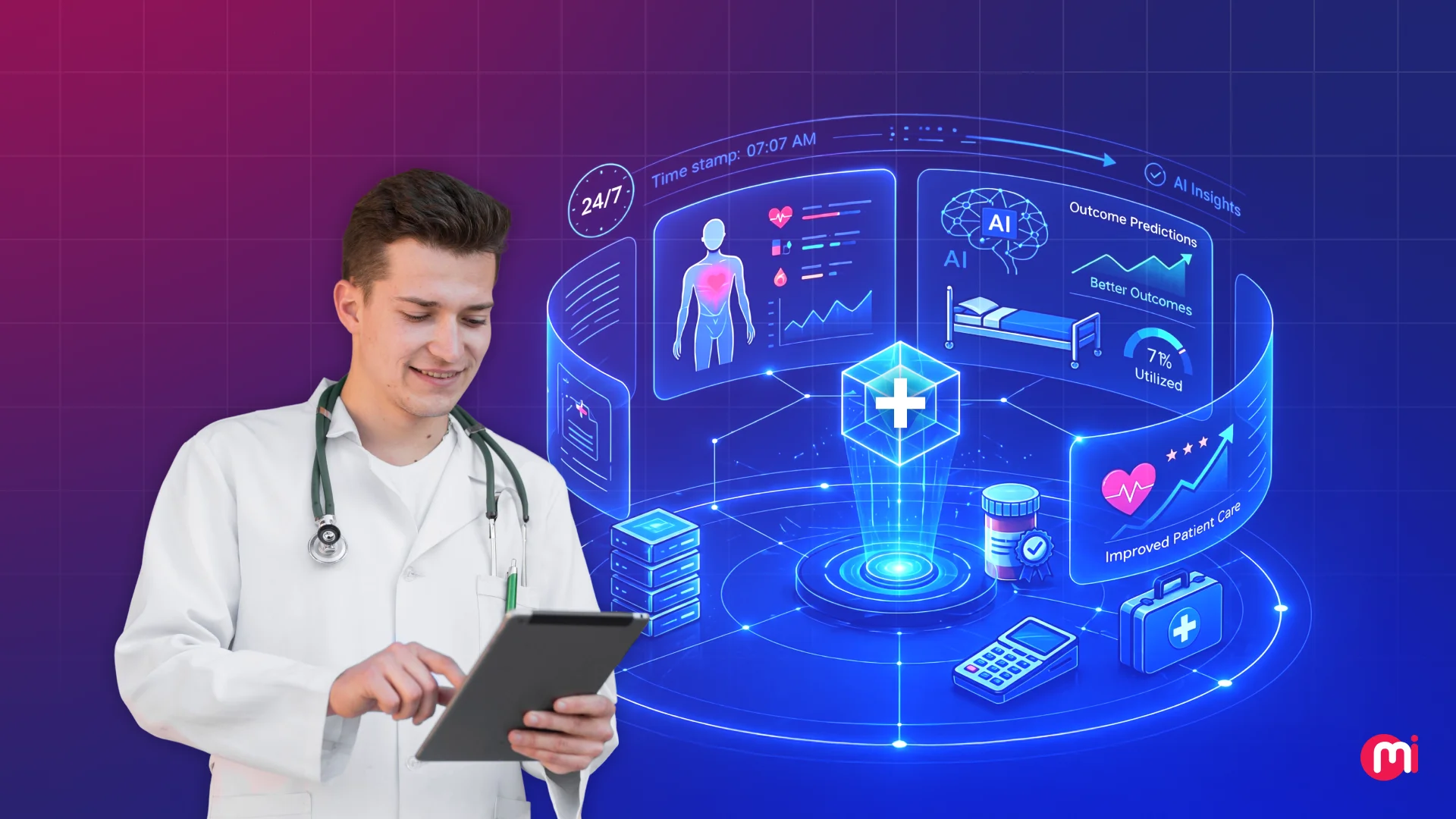
This is where Business Intelligence (BI) in healthcare becomes essential. Healthcare BI allows organizations to connect data from various systems and transform it into actionable insights. By doing so, it enables better clinical decisions, more efficient operations, improved financial control, and ultimately, more predictable outcomes.
Key Takeaways
- Healthcare organizations generate massive volumes of data, but Business Intelligence turns fragmented datasets into connected decision visibility across clinical, operational, and financial systems.
- Healthcare BI supports faster clinical decisions, stronger operational planning, and improved revenue performance through unified real-time insights.
- Leadership teams across hospitals, health systems, and digital health platforms rely on BI dashboards to monitor performance, risks, and outcomes more proactively.
- A modern Healthcare BI ecosystem includes data integration layers, analytics engines, interoperability standards, and visualization tools working together as a decision intelligence framework.
- Business Intelligence plays a critical role in supporting value-based care models, population health strategies, and regulatory reporting accuracy.
- Predictive analytics and AI are transforming Healthcare BI from retrospective reporting into a forward-looking decision support infrastructure.
- Healthcare leaders who improve data visibility today are better positioned to control outcomes, costs, and care quality tomorrow.
What is Business Intelligence in Healthcare?
Business Intelligence in healthcare refers to the process of collecting, connecting, analyzing, and visualizing healthcare data to support better decision-making. It helps organizations turn raw data into useful insights, enabling leaders to access real-time performance visibility across clinical, operational, and financial areas.
Healthcare BI typically brings together data from billing and claims platforms, hospital operations systems, connected medical devices, and external population health datasets. This integrated view helps organizations understand what is happening across the care ecosystem and respond more effectively.
For example, clinical teams can identify high-risk patients earlier, operations teams can improve patient flow, finance leaders can detect reimbursement issues sooner, and executives can monitor performance across departments from a single dashboard.
Healthcare BI goes beyond just dashboards; it’s about creating visibility across the organization to help leaders make informed decisions confidently. As healthcare systems become more complex and data-driven, Business Intelligence is evolving into a core capability rather than an optional analytics layer.
Why Business Intelligence Matters More Than Ever in Healthcare Today
Healthcare organizations are entering a data-driven era where clinical systems are becoming digital, patients are more informed, regulations are stricter, and operations are more complex. Despite this, the volume of healthcare data is growing faster than most organizations can manage.
According to WifiTalents Report 2026, the healthcare industry now generates around 30% of the world’s total data, yet up to 97% of hospital-generated data remains unused for decision-making. This gap between data generation and utilization is where Business Intelligence creates value.
Healthcare BI helps organizations convert scattered information into structured visibility across departments, workflows, and leadership decisions. Several major industry shifts are accelerating the need for Business Intelligence adoption:
1. Explosion of Healthcare Data
Healthcare data is growing from multiple sources simultaneously, including Electronic Health Records, medical imaging systems, connected devices, wearables, remote monitoring platforms, and genomics data. Business Intelligence helps unify these data streams into a single decision environment.
2. Shift Toward Value-Based Care
Healthcare systems are transitioning from volume-based models to outcome-based care models, requiring organizations to track patient outcomes, treatment effectiveness, readmission rates, and care quality indicators. Business Intelligence platforms make these metrics visible across departments, supporting stronger alignment with value-based care strategies.
3. Rising Operational Complexity
Modern hospitals manage numerous moving parts daily, including bed capacity, staff scheduling, patient flow, surgical utilization, and equipment availability. Healthcare BI dashboards help leadership teams monitor operations continuously and respond earlier to disruptions.
4. Consumerization of Healthcare
Patients expect healthcare experiences similar to digital-first industries, including shorter wait times, transparent communication, personalized care journeys, and digital access to records. Business Intelligence helps organizations analyze patient behavior patterns and improve service delivery to meet these expectations.
5. Regulatory Compliance Pressure
Healthcare organizations operate under strict reporting requirements, including clinical quality indicators, safety benchmarks, performance standards, and documentation accuracy. Business Intelligence automates compliance monitoring, improves reporting reliability, and strengthens audit readiness.
Who Uses Healthcare BI and How?
Healthcare Business Intelligence is used by a variety of stakeholders in healthcare organizations, including hospital executives, clinical leaders, finance teams, operations managers, and digital health decision-makers. By providing shared visibility across clinical, operational, and financial data, Healthcare BI helps stakeholders make faster, more informed decisions and coordinate actions across departments.
| Stakeholder | How They Use Healthcare BI |
| Hospital Executives (CEO, COO, CIO) | Monitor enterprise KPIs, service performance, utilization trends, and strategic planning indicators |
| Clinical Leaders (CMO, department heads) | Track treatment outcomes, safety metrics, and clinical quality benchmarks |
| Finance Leaders (CFO, revenue cycle leaders) | Analyze reimbursement trends, claim denials, and revenue performance patterns |
| Compliance & Quality Leaders | Monitor regulatory benchmarks and strengthen audit readiness through structured reporting visibility |
| Healthtech Companies & Product Leaders | Track product adoption, engagement trends, and real-world clinical usage insights |
| Healthcare Investors & Strategy Leaders | Evaluate performance maturity, scalability signals, and data readiness across healthcare organizations |
Healthcare investors & strategy leaders evaluate performance maturity, scalability signals, and data readiness across healthcare organizations. Healthcare BI helps these stakeholders move from fragmented reporting environments to connected decision intelligence across the organization.
Healthcare BI helps organizations centralize patient data, streamline workflows, and improve coordination across clinical and administrative teams. This alignment is crucial as healthcare systems scale digital infrastructure and transition toward value-based care models.
Healthcare BI Ecosystem Framework
Healthcare Business Intelligence operates through multiple connected layers that help organizations move from raw healthcare data to decision-ready insights. These layers form a structured BI ecosystem that supports clinical intelligence, operational visibility, and strategic planning across healthcare organizations.
Below is a simplified framework that explains how Healthcare BI systems typically function.
Layer 1: Data Acquisition Layer (Sources)
The first step in any Healthcare BI system is collecting data from multiple internal and external sources. Healthcare organizations generate data across clinical systems, connected devices, administrative workflows, and external healthcare networks. Business Intelligence platforms bring these sources together into a unified analytics environment.
Electronic Health Records (EHRs)
EHR systems provide insights into patient history, diagnoses, medications, treatment plans, and lab results. This data helps clinical leaders monitor treatment effectiveness and care quality trends.
Internet of Medical Things (IoMT)
Connected medical devices continuously generate real-time patient data, such as remote monitoring devices, wearable sensors, and smart diagnostic equipment. Healthc…













Revving Up: Tractor Battle Adventure RPG Expands with Mod Support on Steam Workshop

Troubleshooting Guide: Unable to Access 192.168.0.1

Choosing the Right AI: Ensuring Trust in Multi-Model Translation Systems

Friday Night Baseball Madness: iPhone 18 Pro Edition

Partnership Potential: JAC & Huawei in Talks to Produce Electric Maserati Vehicles

Grand Theft Auto VI: The Soundtrack – Limited Edition Physical Release

The Never-Ending Battle of the Galaxy S27 Ultra Camera: A Tech Advisor’s Perspective

Motorola Signature 27: Unveiled Specs and Vibrant Colour Options – Tech Advisor

Angle Health Soars to $2.7B Valuation: Y Combinator Insurance Tech Alum Makes Waves in Health Industry

EU Takes Action Against Instagram and Facebook for Violating Illegal Content Rules

Warning: Facebook Creators Face Monetization Loss for Stealing and Reposting Videos

Facebook’s New Look: A Blend of Instagram’s Style

Facebook Compliance: ICE-tracking Page Removed After US Government Intervention

Facebook and Instagram to Reduce Personalized Ads for European Users

InstaDub: Meta’s AI Translation Tool for Instagram Videos

Reclaim Your Account: Facebook and Instagram Launch New Hub for Account Recovery

Meta discontinues Messenger apps for Windows and macOS

Breaking Updates: Meta Connect 2025 Unveils Latest Developments

Huawei P20 Pro Unboxing!

Huawei P20 Pro vs Samsung S9 Plus!

Huawei P20 vs P20 Pro vs iPhone 8 Plus vs S9 Battery Drain Test!

10 Android Mods that Change Everything

I used the first Android Phone in the World.

DOOGEE MIX 4 UNBOXING (PROTOTYPE)!

MYSTERY UNBOXING FROM SAMSUNG!

The Truth about Huawei P20 Pro – REAL Review

How to Love your Android Phone again.
-
 Facebook11 months ago
EU Takes Action Against Instagram and Facebook for Violating Illegal Content Rules
-
 Facebook11 months ago
Warning: Facebook Creators Face Monetization Loss for Stealing and Reposting Videos
-
 Facebook9 months ago
Facebook’s New Look: A Blend of Instagram’s Style
-
 Facebook11 months ago
Facebook Compliance: ICE-tracking Page Removed After US Government Intervention
-
 Facebook9 months ago
Facebook and Instagram to Reduce Personalized Ads for European Users
-
 Facebook11 months ago
InstaDub: Meta’s AI Translation Tool for Instagram Videos
-
 Facebook10 months ago
Reclaim Your Account: Facebook and Instagram Launch New Hub for Account Recovery
-
 Apple11 months ago
Meta discontinues Messenger apps for Windows and macOS
