In the not-so-distant past, data sovereignty was often overlooked as a minor technical detail, handled behind the scenes by compliance teams and revisited only when regulations changed. While it was important, it didn’t significantly influence how organizations approached innovation, resilience, or competitive advantage.
However, the landscape has shifted dramatically.
Today, cyber sovereignty is taking center stage in enterprise strategy, not just because regulations require it, but because the very nature of data has evolved. This transformation is particularly evident in Europe, where changing regulatory frameworks and geopolitical factors have elevated sovereignty to a top priority at the board level. Yet, the implications extend globally. Data no longer remains confined within set boundaries. It flows continuously across various clouds, regions, and systems designed to replicate, analyze, and act on it in real-time. As data moves, so do the associated risks, obligations, and questions about true control.
At its essence, cyber sovereignty is not solely about the physical location of data. It’s about organizations being able to assert and demonstrate control over their data when it is most critical.
Rethinking Perceived Control
For many businesses, the transition to cloud services was primarily driven by the desire for agility and scalability. Infrastructure became more adaptable, applications more dispersed, and data more accessible. However, in the process, there was a subtle shift where control became more abstract.
Data might be housed in a specific region, but replication policies, backup strategies, and platform operations often extend beyond the organization’s direct oversight. Encryption measures may be in place, but ownership of encryption keys is not always straightforward. While recovery processes exist, few organizations have stress-tested them under real-world conditions.
This creates a false sense of control that is exposed when faced with disruptions.
Instances like ransomware attacks, regulatory probes, and geopolitical tensions tend to quickly reveal these gaps. In those critical moments, the focus shifts from whether data is theoretically protected to whether it can be trusted in practicality. Can it be swiftly recovered? Can its integrity be verified? Can access be controlled without ambiguity?
Cyber sovereignty arises from this disparity between assumption and assurance.
Redefining Resilience
Traditionally, cybersecurity strategies have emphasized prevention. The focus has been on keeping threats at bay, detecting anomalies, and fortifying perimeters. While these investments remain crucial, they are no longer adequate on their own.
Equally important now is how organizations respond post-incident.
Resilience is increasingly measured by recoverability. Organizations require the capability to restore systems and data to a known, trusted state without hesitation or uncertainty. This is where sovereignty plays a vital role. Without clear data ownership, immutable copies, and jurisdictional clarity, recovery becomes complex and, in some cases, unreliable.
Businesses are beginning to realize that resilience is not solely dependent on security tools but is deeply linked to control.
Rebalancing Cloud Strategies
These shifts do not signal a retreat from cloud services but rather reflect a more mature understanding of the demands of cloud adoption.
The initial allure of the cloud was founded on abstraction, eliminating the need to directly manage infrastructure. However, as data grows in importance and regulation, abstraction alone is insufficient. Organizations now require transparency and enforceable boundaries. They must comprehend not only where their data is stored but also how it is managed, who can access it, and under what conditions it can be recovered.
This shift in focus has led to discussions around hybrid and sovereign architectures. These models do not reject the cloud; instead, they refine it. By segregating data domains, aligning storage with jurisdictional requirements, and ensuring critical controls remain with the organization rather than the provider, these architectures prioritize control as the bedrock of trust in cloud services.
Looking Beyond Geography
One prevalent misconception about sovereignty is that it can be resolved solely through geographic boundaries. The assumption is that keeping data within a specific region resolves the issue. In reality, the situation is more intricate.
Data can physically reside in one location while still being subject to external access, foreign jurisdiction, or dependencies at the provider level. Backups may be duplicated across borders, encryption keys managed outside the organization’s jurisdiction, and failover processes introducing unintended exposure.
True sovereignty extends beyond geographical confines. It encompasses legal authority, operational governance, and technical enforcement. Organizations must adopt a holistic approach to how data is stored, accessed, protected, and recovered.
AI’s Impact on Sovereignty
The emergence of AI introduces a new layer of urgency. AI systems not only store data but also learn from it, transform it, and integrate it into decision-making processes. As organizations expand their use of AI, they extend the reach and influence of their data.
This expansion raises new queries. Where was the data sourced? Under which jurisdiction does it fall? Can its usage be audited? Can it be deleted or rectified if needed?
Without sovereignty, answering these questions becomes challenging. Lack of clear responses escalates the risks associated with AI adoption significantly. Thus, sovereignty is not merely a data concern but also an AI concern.
Designing for Trustworthiness
A new paradigm in infrastructure design is taking shape. In this model, sovereignty is viewed as a fundamental principle rather than an afterthought.
Data is not just shielded; it is inherently trustworthy. It is stored in a manner that prevents tampering, governed by policies aligned with jurisdictional realities, and secured through mechanisms ensuring organizations retain control. Recovery is not an ad hoc process but an integral part of the system from the outset.
This approach not only mitigates risks but also cultivates confidence within the organization, among regulators, and with customers.
A Pivotal Shift
Cyber sovereignty mirrors a broader shift in how organizations define success in the digital age.
Merely moving swiftly or scaling efficiently is no longer sufficient. Enterprises are now expected to operate with transparency, accountability, and resilience even in the face of disruptions. They must demonstrate, not assume, that their data is secure, their systems are recoverable, and their operations can withstand external pressures. This is not a concern for the distant future but a current expectation.
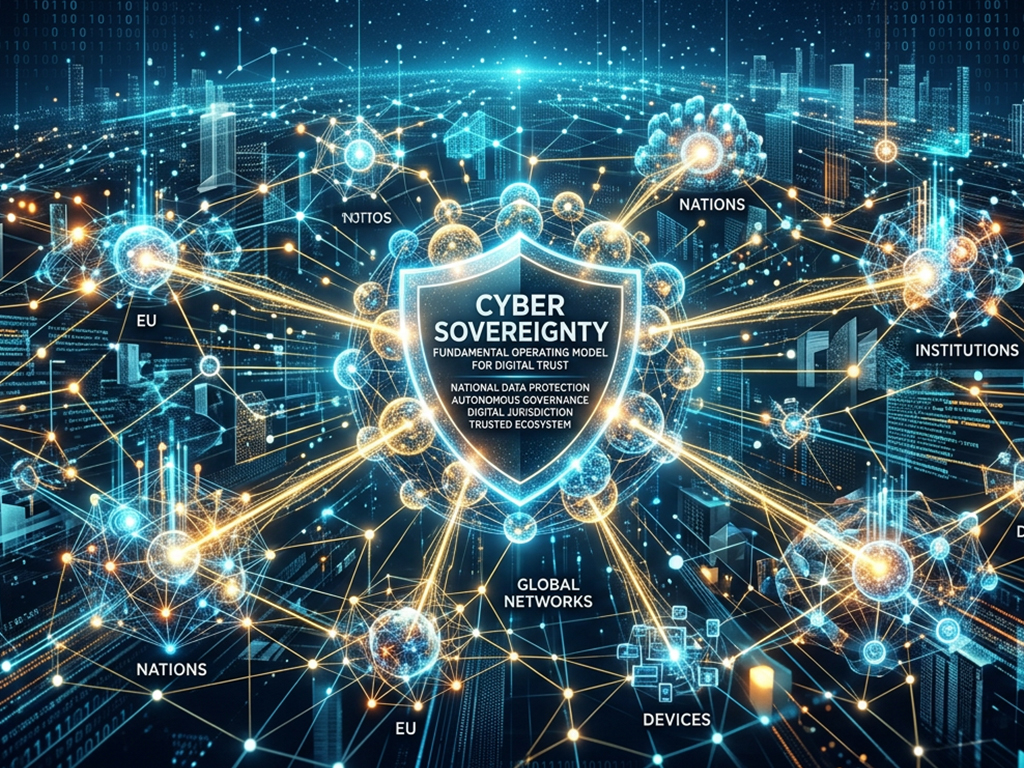
Cyber sovereignty is not a passing trend or a prediction to validate; it is an operational framework that will shape how trust is established, maintained, and measured in a world where data is indispensable yet vulnerable.
Giorgio Regni, the founder and chief technology officer of Scality, spearheads the company’s long-term technology vision and innovation strategy. With extensive experience in distributed systems, object storage, and cloud infrastructure, Regni established Scality in 2009 with a mission to address the challenges of storing and managing vast amounts of unstructured data at scale. Today, his guidance continues to shape Scality’s RING and ARTESCA product lines, trusted by major enterprises, service providers, and public sector organizations worldwide.
Regni is a proponent of open standards, high-performance computing, and crafting software architectures that endure. He holds a Master’s degree in Computer Science from École Centrale Paris.
Connect with Giorgio online via LinkedIn: https://www.linkedin.com/in/giorgioregni/ and visit the Scality website at https://www.scality.com.