
Gadgets
Unleashing the Power: A Comprehensive Review of the AFERIY Nomad1800 Pro Portable Power Station

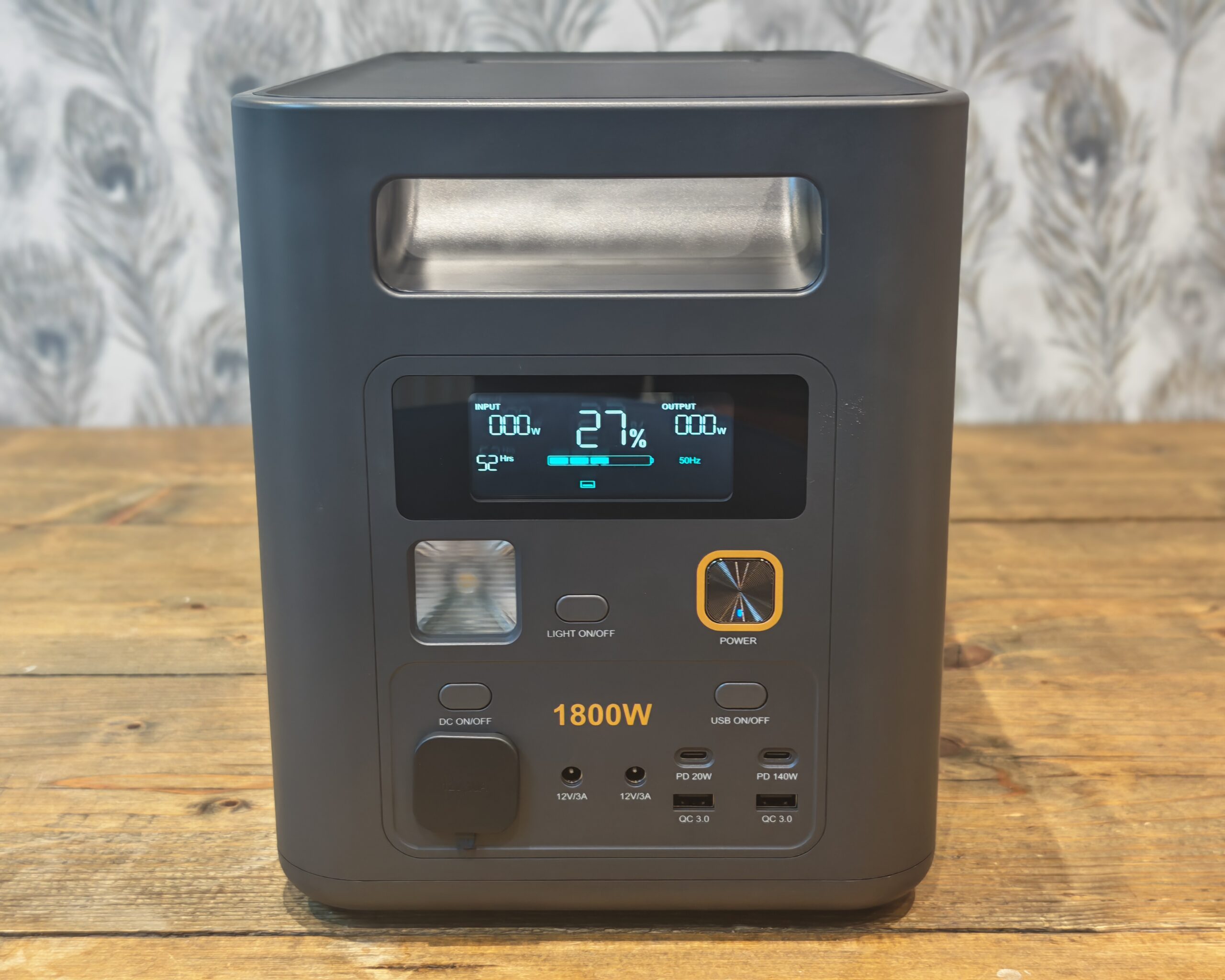
In the realm of portable power stations, it has been a while since I delved into reviewing one. However, the demand for solar power and batteries has skyrocketed in recent years due to rising living costs and the popularity of plug-in solar solutions. EcoFlow seems to be focusing on plug-in solar options like the EcoFlow Stream Microinverter and whole-home battery solutions.
While portable power stations may not be everyone’s first choice for addressing home living cost concerns, they remain incredibly handy and popular, especially for those living alternative lifestyles such as van lifers or narrowboaters. Many of these power stations also offer UPS functionality, making them ideal backup solutions for crucial electronics like servers, routers, and other networking equipment.
Aferiy is a new name to me, but they offer a wide range of battery solutions, including portable power stations, plug-in solar batteries, and a 5kWh all-in-one whole-home battery with a built-in 120A MPPT solar charge controller.
Recently, the company sent me the Nomad1800 Pro (also known as the P180 Pro) to review. This 1024Wh power station boasts an 1800W output and is priced at just £419, undercutting more established brands like EcoFlow, Jackery, and Bluetti.
Specification
- Battery
- Capacity: 1,024 Wh, expandable to 5,120 Wh
- Battery type: LiFePO4 (Lithium Iron Phosphate)
- Cycle life: 4,000+ cycles to 80% capacity
- Management system: MPPT controller, advanced BMS protection system
- Inverter type: Pure sine wave
- UPS function: Under 10 ms seamless switching
- General
- Dimensions: 35 x 22 x 26.3 cm
- Weight: 11.64 kg
- Operating temperature: -10C to 40C
- Eco mode: Yes
- LED light: Steady / Flash / SOS
- Outputs
- AC output: 2 x ports, 220-240 V, 50/60 Hz, 1,800 W
- USB-A: 2 x ports, QC 3.0, 18 W
- USB-C: 1 x port, PD 20 W
- USB-C fast charge: 1 x port, PD 140 W
- Car socket: 12 V / 10 A
- DC5521: 2 x ports, 12 V / 3 A
- Inputs and Charging
- AC input: Up to 1,000 W
- Solar input (XT60): Up to 500 W, 11.5-55 V
- Car input: 12 V / 8 A
- Maximum combined input: 1,500 W (AC + solar)
- Charging Times
- AC charging (1,000 W): Approx. 1.5 hours
- Solar charging (500 W): Approx. 2 hours
- Car charging (96 W): Approx. 12 hours
- AC + solar charging: Approx. 1.3 hours
- Other
- Certifications: UL, CE, FCC, PSE, RoHS, TELEC
- Warranty: Up to 7 years
- In the box: Power station, AC cable, MC4-to-XT60 cable, user manual, warranty card
The warranty for the Nomad1800 Pro is listed as up to 7 years, consisting of a standard 2-year warranty with an additional 5 years if you register the unit on Aferiy’s website. Given that Aferiy is relatively new to this market, availing of the extended cover by registering is a wise decision.
Expandability
You have the option to increase the battery capacity with either the P180 Pro-B Expansion Battery, which offers a 1024Wh capacity at £359, or the P280-B Expansion Battery, which provides a 2048Wh capacity at £649.
You can add up to four expansion batteries to the base unit, increasing the total capacity to 5120Wh. Some reviewers who have tested the expansion battery have noted that the connecting cable requires a fair amount of clearance behind the units when placed side by side, something to consider if you plan to store the unit in a tight space like a cupboard or van locker.
Design
The Nomad1800 Pro sports a more utilitarian and boxy look compared to the sleeker designs of EcoFlow and Anker. One side features orange-trimmed vents with twin cooling fans, along with the embossed Aferiy logo. The opposite side houses a color information display, a floodlight with steady, flash, and SOS modes, and a physical power button that lacks the satisfying click found in some competing units.
Measuring at 35 x 22 x 26.3 cm and weighing 11.64 kg, the footprint is similar to other 1kWh-class power stations. However, the boxy shape might not be as comfortable to carry with the single top handle compared to the rounder designs from EcoFlow and Jackery. The build quality is functional, suitable for everyday use, but lacks the premium feel found in pricier alternatives.
Ports / Outputs
The nine outputs are split between the front and rear panels and can be toggled independently using the DC ON/OFF and USB ON/OFF buttons, allowing you to conserve battery when using only one type of output.
The front panel houses the 12V/10A car socket, two 12V/3A DC5521 barrel ports, the 20W and 140W USB-C ports, and two 18W USB-A ports, alongside the display, floodlight, and power button.
On the rear panel, you will find the two UK three-pin AC sockets, rated at a combined 1800W, an overload protection reset switch, and a manual AC Input Regulator switch that limits mains charging to either 500W or 1000W. Beneath a small flap are the XT60 solar input, an expansion battery port, and a standard IEC C13 mains input, ensuring you are not restricted to a proprietary cable in case the one provided is lost.
Charging
Solar charging was briefly tested with a 460W panel, yielding around 100W of input due to late afternoon and overcast conditions. A full charge is estimated to take around 2 hours with a genuine 500W of sunlight, as per Aferiy’s own figures.
Mains charging was more conclusive, reaching the full 1000W within a minute when plugged in with the included IEC C13 cable. Aferiy states a full charge at 1000W takes about 1.5 hours, while combining AC and solar input (up to a maximum of 1500W) reduces this to around 1.3 hours. Other reviewers have recorded similar results, with one noting a 30 to 100 percent charge in 38 to 40 minutes on mains power, and another timing a full charge from empty in about 70 minutes.
The physical AC Input Regulator switch on the unit’s rear allows you to cap mains charging at 500W or 1000W without needing to use the app. This feature is useful when charging from a limited supply, such as a campsite hook-up or a shared household circuit, where tripping a breaker is a concern.
Performance / Output
One of the two USB-C ports is capable of delivering up to 140W of Power Delivery, a valuable feature for a power station in this price range. Testing with a device that accepts up to 125W, the Nomad1800 Pro successfully provided the required power. The unit’s ability to regulate the output voltage allows it to power higher-rated appliances, albeit at a slower pace than usual. This safety feature is akin to EcoFlow’s X-Boost, providing flexibility for devices with varying power requirements.
During testing with a 3000W-rated Breville kettle, the Nomad1800 Pro displayed an output of 1804W on the screen, allowing the kettle to operate, albeit at a slower pace than when connected to a mains socket. This feature, akin to EcoFlow’s X-Boost, ensures that higher-rated appliances can draw power as needed, rather than shutting down completely. While not all appliances will run at full speed, this safety net is beneficial for users who may overlook an appliance’s power rating before plugging it in.
Companion App
The Aferiy app, known as AF-P180PRO in my testing, provides Bluetooth and Wi-Fi control over the power station, enabling separate toggles for AC, USB, and DC output, floodlight modes, and a live diagram indicating active inputs and outputs. The Energy Management section allows you to set discharge and charging limits, useful for maintaining a reserve for backup power or using the unit as a UPS.
Additionally, the Charging Limit menu covers various charging options like silent charging, scheduled charging, DC input types, and maximum current settings. While functional, the app lacks the polish of competitors like EcoFlow and Anker, with some reviewers noting subpar navigation and layout issues. While basic, the app performs reliably for monitoring charge levels and toggling outputs.
UPS Functionality
The UPS functionality is one of the more practical features of the Nomad1800 Pro for my intended use, as I am not an avid camper or outdoor enthusiast. With my networking equipment consuming about 1kWh per day, I plan to utilize the Nomad1800 Pro for load shifting, charging the battery during off-peak hours and using it to power the equipment during peak hours, with the added benefit of UPS protection during power outages.
Aferiy claims the Nomad1800 Pro can switch to battery power in under 10 milliseconds. While suitable for most electronics, sensitive computer equipment may require a transfer time of no more than 5 milliseconds. During initial tests with my desktop PC, router, and CityFibre ONT, all devices remained online without any interruptions or reboots, showcasing promising UPS functionality, albeit requiring long-term testing during an actual outage for a comprehensive assessment.
Price and Alternative Options
The Aferiy Nomad1800 Pro is priced at £699 RRP but currently discounted to £419, with an additional £10 off available at the time of writing. Adding a 1024Wh expansion battery raises the price to £798, while expanding to 5120Wh would cost £1,875 in total. Comparatively, EcoFlow offers the DELTA 3 at £649 and the DELTA 2 at £549, with a 1024Wh expansion battery for the DELTA 3 priced at £549.
Anker’s Solix C1000 Gen 2 is available for £599, with no expansion battery option at present. Bluetti’s Elite 100 V2 Portable Power Station is priced at £469, without an expansion battery choice. Jackery offers the Explorer 1000 Plus at £549, with a 1264.64Wh expansion battery for £399, and the newer Explorer 1000 v2 at £899.
In terms of pricing, the Nomad1800 Pro undercuts all these options, sometimes significantly. It matches the 140W USB-C charging speed of pricier competitors like the EcoFlow DELTA 3 Plus, while offering features like the AC Input Regulator switch not found in other models. However, where it lacks is in brand recognition and app refinement. Aferiy’s status as a newer player in a market dominated by established brands like EcoFlow, Jackery, Bluetti, and Anker may raise concerns about long-term support and firmware updates. However, the option to extend the warranty to 7 years by registering on the official site partly mitigates this risk.
Overall
The Aferiy Nomad1800 Pro presents a compelling value proposition. With a 1024Wh capacity, 1800W output, a 140W USB-C port, a genuine IEC C13 mains input, an AC Input Regulator switch, and UPS functionality, all for £419, it outshines established competitors in terms of price. While the unit has its minor flaws, such as a basic app and less premium build quality, these are not deal-breakers individually. When considering the overall package, the Nomad1800 Pro offers excellent value for those seeking a well-equipped power station for camping, van life, or home UPS applications, without the need for a more polished brand experience. For users already invested in EcoFlow or Jackery ecosystems, or those prioritizing a sleek app interface, pricier alternatives may be more suitable. Nonetheless, the Nomad1800 Pro stands out as one of the best value options in its category.













Finally Fixing my Wi-Fi – Zyxel Multy X!

Lost in the Living Maze: Unraveling Hidden Terrain Magic Through Copy-Paste

Samsung Unveils Exclusive Galaxy Z Fold 8 BTS Edition

Navigating the Digital World: Expert Tech Advice for Everyman

OMass Therapeutics Secures €275 Million Funding to Advance Innovative Small-Molecule Therapies

The Evolution of Apple’s Smart Home Strategy: A Closer Look at Their Own Devices

Unveiling the Imposter: The Truth Behind the Fake WhatsApp Clone on the Play Store

Digital Protection: How a 1988 Law Could Safeguard Your Online Viewing Experience

BMW Unlocks Greater Range for i7 Model Through Innovative Technology

EU Takes Action Against Instagram and Facebook for Violating Illegal Content Rules

Warning: Facebook Creators Face Monetization Loss for Stealing and Reposting Videos

Facebook’s New Look: A Blend of Instagram’s Style

Facebook Compliance: ICE-tracking Page Removed After US Government Intervention

Facebook and Instagram to Reduce Personalized Ads for European Users

InstaDub: Meta’s AI Translation Tool for Instagram Videos

Reclaim Your Account: Facebook and Instagram Launch New Hub for Account Recovery

Meta discontinues Messenger apps for Windows and macOS

Breaking Updates: Meta Connect 2025 Unveils Latest Developments
Finally Fixing my Wi-Fi – Zyxel Multy X!

$25,000 Gaming Setup – EVOLUTION!

The Maze Alpha X is HERE!

Cool Tech under $100 – December!

MYSTERY UNBOXING FROM GOOGLE!

TOP 6 Smartphones from Companies you NEVER Expected!

A Surprise Smartphone from EE!

DOOGEE MIX 2 VS DOOGEE MIX 1!

INCREDIBLE Smartphone Gadgets on Amazon!
-
 Facebook12 months ago
EU Takes Action Against Instagram and Facebook for Violating Illegal Content Rules
-
 Facebook1 year ago
Warning: Facebook Creators Face Monetization Loss for Stealing and Reposting Videos
-
 Facebook10 months ago
Facebook’s New Look: A Blend of Instagram’s Style
-
 Facebook1 year ago
Facebook Compliance: ICE-tracking Page Removed After US Government Intervention
-
 Facebook10 months ago
Facebook and Instagram to Reduce Personalized Ads for European Users
-
 Facebook1 year ago
InstaDub: Meta’s AI Translation Tool for Instagram Videos
-
 Facebook11 months ago
Reclaim Your Account: Facebook and Instagram Launch New Hub for Account Recovery
-
 Apple12 months ago
Meta discontinues Messenger apps for Windows and macOS
