
Startups
Riding the Wave: The Growing Ecosystem of AI Companies Going Public

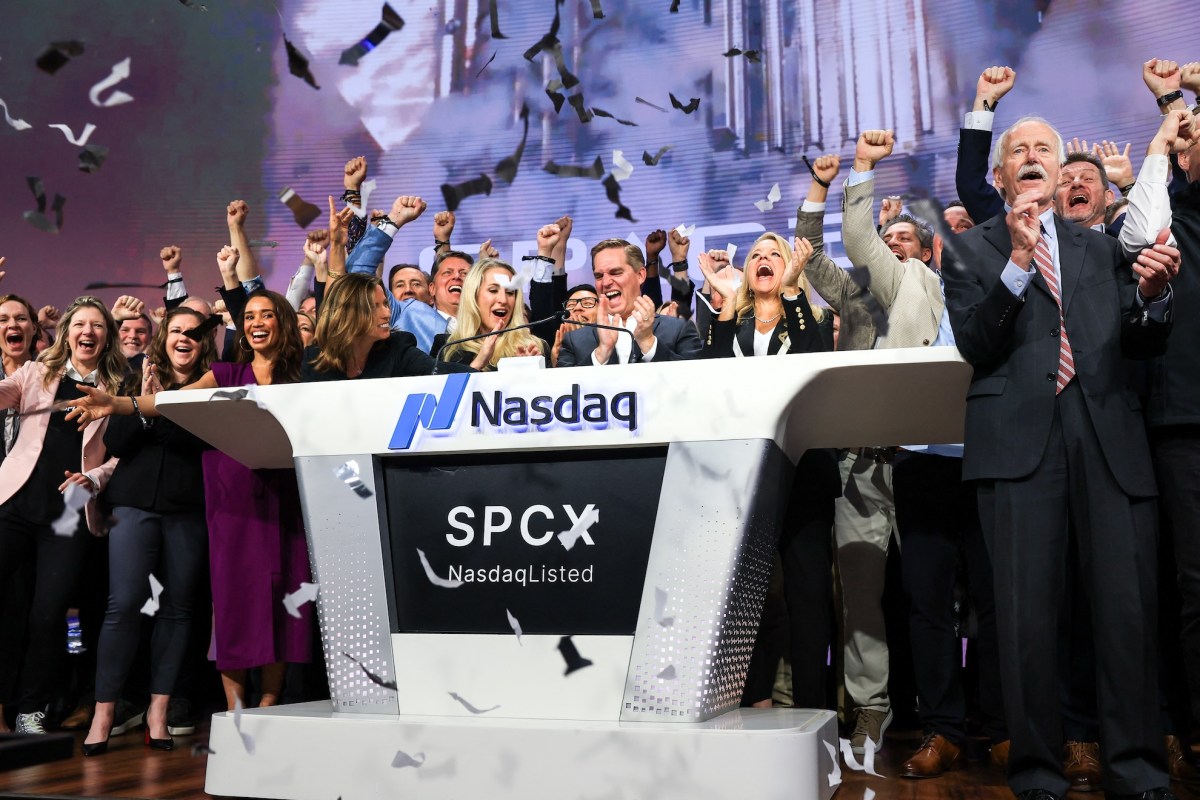
SpaceX went public this week in the largest IPO ever, making CEO Elon Musk the world’s first trillionaire.
Despite its name, SpaceX has been emphasizing the potential of its costly AI business, and competitors OpenAI and Anthropic may soon follow with their own public market debuts. So on the latest episode of TechCrunch’s Equity podcast, Kirsten Korosec, Sean O’Kane, and I discussed what’s looking like a hot IPO summer.
“We have SpaceX not only sucking up just a huge chunk of the money that’s available on public markets, but also really stress testing the limits of what a public company can be and how much it can be controlled by one single person,” Sean said. “My eye is really on these other tech companies that will go public and how much they will try to emulate.”
Kirsten also noted that there are other startups trying to “ride that SpaceX IPO wave,” for example by raising money for orbital data centers after SpaceX helped to popularize the concept.
“So there’s a ripple effect that’s happening throughout the market that I think is probably even more interesting than just the headline, ‘SpaceX makes Elon a trillionaire,’” she said.
Keep reading for a preview of our conversation, edited for length and clarity.
Anthony Ha: I want to zoom out a little bit from just the SpaceX IPO, because beyond the Elon Musk of it all, it’s the beginning of what could be a [series] of different IPOs for different AI companies. We’ve talked about Anthropic confidentially filing to go public, and now OpenAI has done the same. How excited are either of you about this?
Kirsten Korosec: I want to start off by saying that I love Julie Bort’s story, which I think sums it up pretty nicely. It’s a great headline, so I’m gonna read it here: “It’s not FAANG anymore, it’s MANGOS.” FAANG being Facebook, which is now Meta; Amazon; Apple; Netflix; Google, now Alphabet.
Now it’s shifted, and we’ve got Meta, Anthropic, NVIDIA, Google, OpenAI, SpaceX. [We’ve still got] massive tech companies, surely, but there is a shift here, right? First of all, we’ve got a bunch of AI labs in there, and that’s very different. Netflix gets booted out of there, a giant streaming service. And so to me, it’s an interesting shift in terms of public markets and the vast amount of money and capital available in the public markets shifting away from consumer [and] social networks and towards, specifically, AI labs and other, more innovative deeptech, such as SpaceX.
So I think that’s the most interesting thing — aside from the fact that this summer is going to keep us all very busy as reporters, more than probably any other summer in a while.
Sean O’Kane: You know, once upon a time I wanted to be a lawyer, and one of the reasons I didn’t was because I hated the paperwork that was going to be involved. And here I am looking forward to reading hundreds more pages of SEC filings this summer — talk about a beach read.
It’s a moment we’ve been anticipating for a while. We’ve spent the last few years really wondering if the IPO market was going to quote-unquote “open back up” after a lot of consternation about private markets, and mockery about people reaching their like Series [whatever] fundraising round. This is a good stress test — I mean, “good,” take that word however you want — a good stress test of public markets in general.
We have SpaceX not only sucking up just a huge chunk of the money that’s available on public markets, but also really stress testing the limits of what a public company can be and how much it can be controlled by one single person. My eye is really on these other tech companies that will go public and how much they will try to emulate.
A thing that I keep saying and thinking about with SpaceX is, they’re really trying to take some of the most extreme aspects of Google and Meta’s original IPOs back in the early 2000s and mashing it up with that “We’ll lose money forever” with Amazon. And I’m curious how much Anthropic and OpenAI will try to do the same. Will they remake themselves in the image of SpaceX? Or will they try to put themselves in a different light?
Anthony: One aspect that really got driven home as I was reading about the OpenAI IPO is also the extent to which some of this is also a bit of a race in terms of timing. I think we can confidently say at this point, SpaceX is first out the gate, which probably has some advantages and disadvantages. It’s also a bit of a different company because it’s billing itself as an AI company, but obviously has a bunch of other stuff going on, too.
But there is a sense in which, at least according to some analysts, OpenAI and Anthropic may both want to go before the other one, because there’s only a finite amount of capital, a finite amount of interest. At some point some of these valuations have to start coming back down to Earth, and so they may both be scrambling to be first.
Kirsten: I mean, there’s very much a race between Anthropic and OpenAI. You’re even seeing OpenAI talk about slashing prices, and they’re certainly going to be competing on the IPO calendar. But that is very short-term thinking. If they’re smart, they should be much more concerned about the long-term play here.
To me, what’s really interesting is while Anthropic, OpenAI, and SpaceX all prepare for these moments, there are a host of other companies out there that are raising money on the backs of the success of companies like SpaceX, or going into SPACs.
SpaceX’s success with its IPO has sparked a ripple effect in the market, with companies like Quantum Space trying to capitalize on the space industry boom. While some startups may not go public, they are leveraging SpaceX’s potential success in space data centers to raise funds and build their businesses.
AI is already reshaping the economy, not just through its use but also through the way companies are racing to develop it. This rush to public markets by various startups and established companies like Ford and General Motors pivoting towards energy provision for data centers shows how the economy is evolving rapidly.
Despite the push to emulate Elon Musk’s business strategies, automakers and other companies should be cautious about chasing after Tesla’s success. Attempting to model their businesses after Tesla or SpaceX may not always yield positive results, and they should consider alternative paths for growth.
It’s essential for companies to assess their own strengths and weaknesses before diving into new ventures, rather than blindly following trends set by industry giants. While it may be tempting to replicate successful business models, it’s crucial to remember that each company has its unique strengths and challenges.
In conclusion, the evolving economy presents both opportunities and challenges for companies looking to capitalize on emerging trends like space data centers and AI. By carefully evaluating their own capabilities and market potential, businesses can navigate these changes successfully without falling into the trap of imitation.











Exploring the Exciting Updates of iOS 27: A Look Beyond Artificial Intelligence

A $50,000 Smartphone for $400?

Ram Trucks Australia Braces for Price Increases Due to Emissions Regulations

Revving Up: Tractor Battle Adventure RPG Expands with Mod Support on Steam Workshop

Troubleshooting Guide: Unable to Access 192.168.0.1

Choosing the Right AI: Ensuring Trust in Multi-Model Translation Systems

Friday Night Baseball Madness: iPhone 18 Pro Edition

Partnership Potential: JAC & Huawei in Talks to Produce Electric Maserati Vehicles

Grand Theft Auto VI: The Soundtrack – Limited Edition Physical Release

EU Takes Action Against Instagram and Facebook for Violating Illegal Content Rules

Warning: Facebook Creators Face Monetization Loss for Stealing and Reposting Videos

Facebook’s New Look: A Blend of Instagram’s Style

Facebook Compliance: ICE-tracking Page Removed After US Government Intervention

Facebook and Instagram to Reduce Personalized Ads for European Users

InstaDub: Meta’s AI Translation Tool for Instagram Videos

Reclaim Your Account: Facebook and Instagram Launch New Hub for Account Recovery

Meta discontinues Messenger apps for Windows and macOS

Breaking Updates: Meta Connect 2025 Unveils Latest Developments
A $50,000 Smartphone for $400?

Huawei P20 Pro Unboxing!

Huawei P20 Pro vs Samsung S9 Plus!

Huawei P20 vs P20 Pro vs iPhone 8 Plus vs S9 Battery Drain Test!

10 Android Mods that Change Everything

I used the first Android Phone in the World.

DOOGEE MIX 4 UNBOXING (PROTOTYPE)!

MYSTERY UNBOXING FROM SAMSUNG!

The Truth about Huawei P20 Pro – REAL Review
-
 Facebook11 months ago
EU Takes Action Against Instagram and Facebook for Violating Illegal Content Rules
-
 Facebook11 months ago
Warning: Facebook Creators Face Monetization Loss for Stealing and Reposting Videos
-
 Facebook9 months ago
Facebook’s New Look: A Blend of Instagram’s Style
-
 Facebook11 months ago
Facebook Compliance: ICE-tracking Page Removed After US Government Intervention
-
 Facebook9 months ago
Facebook and Instagram to Reduce Personalized Ads for European Users
-
 Facebook11 months ago
InstaDub: Meta’s AI Translation Tool for Instagram Videos
-
 Facebook10 months ago
Reclaim Your Account: Facebook and Instagram Launch New Hub for Account Recovery
-
 Apple11 months ago
Meta discontinues Messenger apps for Windows and macOS
