
Microsoft
Microsoft Azure’s Record AI Spending Leads to $100B in Annual Revenue Growth

Microsoft Azure Cloud Business Surpasses $100 Billion in Annual Revenue
Microsoft’s Azure cloud business experienced a remarkable 43% growth in the last quarter, surpassing the company’s own projections and achieving over $100 billion in annual revenue for the first time. This significant milestone highlights the potential of artificial intelligence to drive new growth opportunities for the tech giant.
However, this growth came at a cost, with capital spending reaching a record $41 billion to support Microsoft’s AI expansion. Despite a substantial 18% increase in operating profits, free cash flow decreased by 23%.
In a surprising turn of events, Microsoft’s shares surged more than 5% in after-hours trading, a departure from the previous trend where strong results led to sell-offs that pushed the stock to near a one-year low.
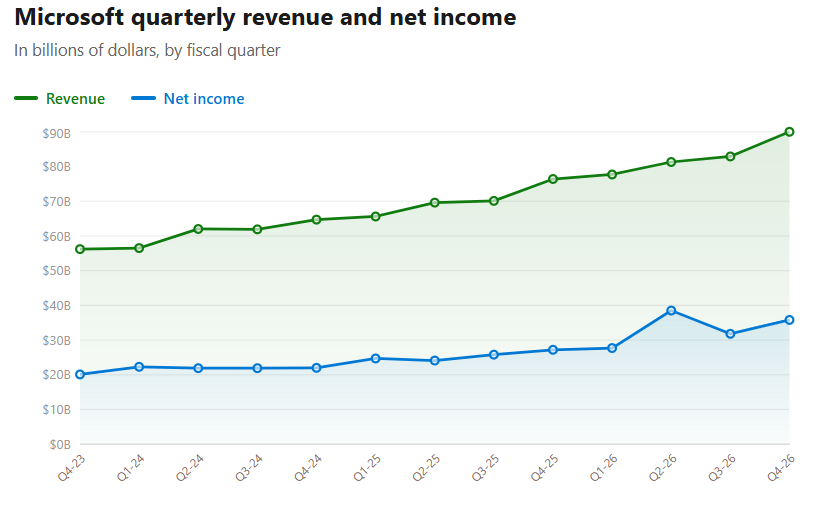
Companywide Performance: Microsoft reported a revenue of $90 billion for the quarter, marking an 18% increase from the previous year, with net income reaching $35.8 billion, up by 31%. Analysts’ expectations of $87.7 billion in revenue were exceeded, already at the top end of Microsoft’s own guidance range.
Microsoft’s adjusted earnings of $4.74 per share outperformed analysts’ estimates, with a $3.2 billion gain from the company’s investment in Anthropic contributing to a 27-cent benefit from one-time items. Even excluding these items, Microsoft surpassed expectations across revenue, operating income, and earnings per share.
Microsoft 365 Copilot saw a growth to over 30 million paid seats, up from 20 million in the previous quarter. Despite this increase, it represents less than 7% of the approximately 450 million commercial Microsoft 365 seats, a discrepancy that has attracted investor doubt throughout the year.
Microsoft’s backlog experienced an 84% increase, reaching $678 billion. This backlog, known as remaining performance obligation (RPO), represents the value of contracts signed by customers but not yet fulfilled by Microsoft, essentially the business that Microsoft has secured but has yet to recognize as revenue.
Concerns have arisen over the past year regarding a significant portion of the backlog attributed to a single customer, OpenAI. Microsoft clarified that the $51 billion increase from the previous quarter came from customers other than major AI model companies. Even excluding OpenAI, the backlog still grew by 25%.
Windows OEM and Devices revenue declined by 7%, impacted by sluggish PC demand and a challenging comparison with the previous year’s Windows 10 upgrade cycle. The decline would have been steeper if not for PC manufacturers increasing production to preempt rising memory prices, with Microsoft receiving its Windows fee upon PC assembly rather than upon sale.
Xbox content and services revenue saw a 10% decrease, while Xbox hardware revenue dropped by 13%. Additionally, Microsoft recorded a write-down of unspecified Xbox assets. This charge, combined with severance costs and lower-than-expected expenses from its retirement program, resulted in a net $500 million reduction in operating income. Microsoft did not disclose the specific portion attributed to Xbox or the nature of the write-down.











Advancing GWM’s ADAS Technology for the Australian Market

Tokyo Drift: Crazy Taxi Takes on Japan in World Tour Expansion

Exciting News: Samsung Galaxy Phones Set to Receive One UI 9 Update

From Concept to Creation: The Power of Rapid Prototyping in Product Development

Empowering Agents: Fulcra’s Universal Multiplayer Experience

Apple Unveils Groundbreaking iOS 27.2 Developer Beta for iPhone

Huawei P20 Pro vs Samsung S9 Plus!

McLaren P34 to Replace Artura in 2028: A New Era Begins

Microsoft AI CEO Warns of Real AI Threats: Anthropic’s Role in Escalating Danger

EU Takes Action Against Instagram and Facebook for Violating Illegal Content Rules

Warning: Facebook Creators Face Monetization Loss for Stealing and Reposting Videos

Facebook Compliance: ICE-tracking Page Removed After US Government Intervention

Facebook’s New Look: A Blend of Instagram’s Style

Facebook and Instagram to Reduce Personalized Ads for European Users

InstaDub: Meta’s AI Translation Tool for Instagram Videos

Reclaim Your Account: Facebook and Instagram Launch New Hub for Account Recovery

Meta discontinues Messenger apps for Windows and macOS

Breaking Updates: Meta Connect 2025 Unveils Latest Developments
Huawei P20 Pro vs Samsung S9 Plus!

Huawei P20 vs P20 Pro vs iPhone 8 Plus vs S9 Battery Drain Test!

10 Android Mods that Change Everything

I used the first Android Phone in the World.

DOOGEE MIX 4 UNBOXING (PROTOTYPE)!

MYSTERY UNBOXING FROM SAMSUNG!

The Truth about Huawei P20 Pro – REAL Review

How to Love your Android Phone again.

The LG G7 has a Big Problem.
-
 Facebook11 months ago
EU Takes Action Against Instagram and Facebook for Violating Illegal Content Rules
-
 Facebook11 months ago
Warning: Facebook Creators Face Monetization Loss for Stealing and Reposting Videos
-
 Facebook11 months ago
Facebook Compliance: ICE-tracking Page Removed After US Government Intervention
-
 Facebook9 months ago
Facebook’s New Look: A Blend of Instagram’s Style
-
 Facebook9 months ago
Facebook and Instagram to Reduce Personalized Ads for European Users
-
 Facebook11 months ago
InstaDub: Meta’s AI Translation Tool for Instagram Videos
-
 Facebook10 months ago
Reclaim Your Account: Facebook and Instagram Launch New Hub for Account Recovery
-
 Apple11 months ago
Meta discontinues Messenger apps for Windows and macOS
