
Gadgets
Illuminate Your Yard: Nanoleaf’s 2026 Solar Garden Lights Shine with New Colour Scenes

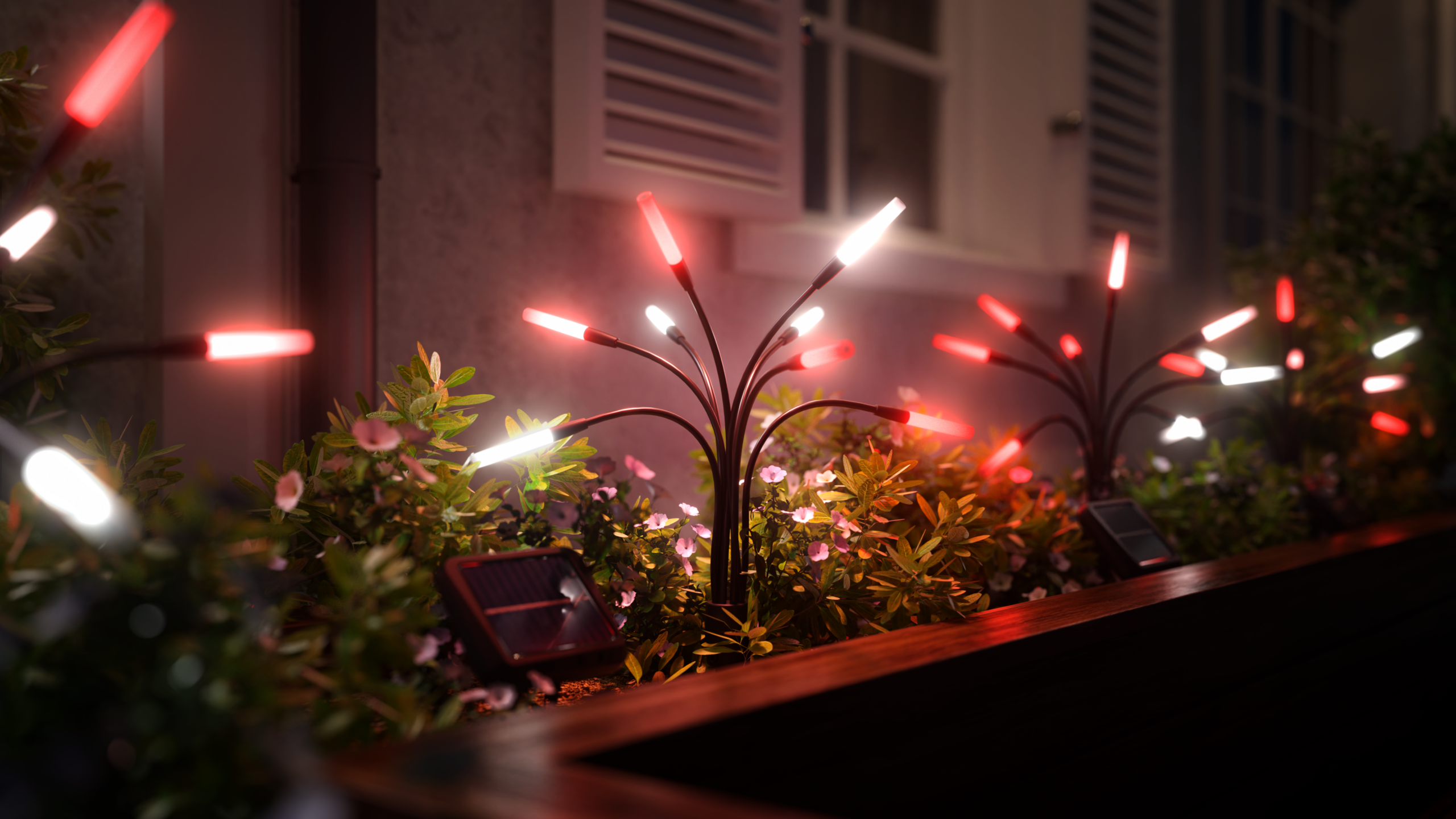
Nanoleaf recently unveiled an updated version of its solar-powered garden lights for the year 2026, introducing new animated color scenes and expanded white tuning options to enhance the existing product line. The announcement of the refreshed lights took place in Paris on April 8, 2026, building upon the success of the original solar garden lights released by the company previously.
The 2026 edition represents a refinement rather than a complete redesign of the product. The physical hardware remains largely unchanged, featuring the stake-based form factor with an integrated solar panel and eight LED bulbs per fixture. The major changes come in the form of lighting software upgrades, with Nanoleaf incorporating 10 new animated multicolor scenes, a selection of eight RGB colors, and a full range of tunable warm and cool whites.
Key Features and Specifications

Each fixture is equipped with eight LED bulbs and boasts an IP65 weatherproof rating, ensuring protection against low-pressure water jets from any direction. This level of protection should suffice for typical British weather conditions, although it’s important to note that IP65 does not cover full submersion, so placing the lights in areas prone to standing water or flooding is not recommended.
The primary source of power for the lights is the built-in solar panel, which charges an internal battery during daylight hours. An integrated daylight sensor automates the process, turning the lights on at sunset and off at sunrise without requiring manual intervention. For users seeking more control, auto-off timers can be set at four, six, or eight-hour intervals. Additionally, Nanoleaf has included USB-C charging as a backup option, acknowledging the limited winter sunlight hours in the UK and ensuring the battery remains charged even in challenging conditions.
The 2026 edition offers eight RGB colors, 10 animated multicolor scenes, and a range of tunable white options from warm to cool temperatures. This represents a significant improvement over the original version in terms of variety. However, without hands-on testing, it’s challenging to determine the vividness and consistency of the colors in real-world usage. Solar-powered lights have historically faced challenges in delivering the same brightness and color accuracy as mains-powered alternatives, making it interesting to see how Nanoleaf’s implementation fares.
Control and Connectivity


Control of the lights is exclusively managed through an included remote, capable of handling up to 24 light fixtures simultaneously. The remote enables users to adjust brightness, cycle through colors, and select lighting scenes. While this approach simplifies usage by avoiding the complexity of app-based control, it does come with a significant limitation.
Nanoleaf has clarified that the solar garden lights are not compatible with the Nanoleaf mobile or desktop app. This omission is notable for users already invested in the Nanoleaf ecosystem, as it means the garden lights cannot be integrated into existing smart home routines, grouped with indoor Nanoleaf products, or controlled via voice assistants through the Nanoleaf app. For individuals utilizing smart home platforms like Home Assistant or Apple HomeKit, the absence of app connectivity implies that these lights will function as a standalone system without integration options.
This stands as one of the primary drawbacks of the product. Nanoleaf has established its reputation on app-connected, smart lighting solutions, and introducing a product line that operates independently of that ecosystem appears to miss an opportunity. While a remote control suffices for basic operation, consumers attracted to the Nanoleaf brand would anticipate some level of smart home integration.
Installation and Placement
The lights feature a straightforward stake design, facilitating installation by simply pushing them into soft ground wherever needed. Nanoleaf recommends their suitability for pathways, garden beds, patios, and as standalone accent lighting. To ensure effective charging, the solar panel requires adequate sunlight exposure, necessitating thoughtful placement – positioning the lights under dense tree cover or in perpetually shaded areas may diminish charging performance, resulting in shorter run times or reduced brightness.
With the capability to control up to 24 fixtures from a single remote, there is reasonable coverage for a medium-sized garden. However, Nanoleaf has not specified the wireless range of the remote, which could be a consideration for larger outdoor spaces.
Solar Garden Lights and the UK Market
The popularity of solar garden lighting has surged in the UK, fueled by escalating energy expenses and a growing interest in low-maintenance outdoor illumination. The advantages are evident – no wiring, minimal installation effort, and no ongoing costs. Nevertheless, the UK’s climate poses challenges for solar products, particularly during autumn and winter when daylight hours are limited, and overcast conditions prevail.
The inclusion of USB-C charging partially mitigates this issue, providing users with a means to manually recharge the battery during extended periods of inclement weather. This pragmatic addition acknowledges the realities of solar-powered products in northern climates, addressing a common shortfall observed in many inexpensive solar lights available in the market.
The wider solar garden light market boasts budget options from brands like Ring, Philips, and various own-brand offerings from retailers such as Amazon. Nanoleaf must differentiate itself based on build quality, color accuracy, and scene variety to justify what is likely to be a premium price point, although specific pricing for the UK market has yet to be confirmed.
Availability and Pricing
Nanoleaf has not disclosed specific pricing or availability details for the 2026 edition of the solar garden lights in the UK. The announcement was made in Paris on April 8, 2026, hinting at a European launch timeframe, with retail specifics pending confirmation. The original solar garden lights were accessible through Nanoleaf’s website and select retailers, indicating a similar distribution strategy for the updated model.
Interested individuals are advised to monitor the Nanoleaf website for UK-specific pricing and shipping updates as they become available.











Forza Horizon 6: Revving Up for a 2027 Release on PS5

Embracing Success: A Geek’s Guide to Conquering the Stereotypes of Villainy

Uncovering the Bronze Age Influence in Paradox’s Afterworld: A Deeper Dive Beyond the Top Five Reference Points

iPhone Duo: The Future of Mobile Dominance

Tech Advisor: The Delayed Android 17 QPR1 Update for Pixel 11

Venture Capital Firm Monte Carlo Capital Secures €13 Million for Fund II to Back Early-Stage DeepTech, AI, and SpaceTech Startups

The Battle Over iPhone Driver’s Licenses: Florida and Rhode Island Stand Firm

How Smart is the AI-Powered Huawei Mate 10 – with EMUI 8.0?

Reviving the Legacy: Porsche Mission S Unveils Carrera GT-Inspired Gauge Cluster

EU Takes Action Against Instagram and Facebook for Violating Illegal Content Rules

Warning: Facebook Creators Face Monetization Loss for Stealing and Reposting Videos

Facebook’s New Look: A Blend of Instagram’s Style

Facebook Compliance: ICE-tracking Page Removed After US Government Intervention

Facebook and Instagram to Reduce Personalized Ads for European Users

InstaDub: Meta’s AI Translation Tool for Instagram Videos

Reclaim Your Account: Facebook and Instagram Launch New Hub for Account Recovery

Meta discontinues Messenger apps for Windows and macOS

Breaking Updates: Meta Connect 2025 Unveils Latest Developments
How Smart is the AI-Powered Huawei Mate 10 – with EMUI 8.0?

I used a 2012 Smartphone in 2018 – Here’s what happened.

How to send ANY file Anywhere!

NEW Oneplus 5T Sandstone White Unboxing – The Ultimate Oneplus 5T?

HUAWEI P20 – THE SMARTPHONE REVOLUTION IS HERE?

How OnePlus succeeded when they should have failed.

Samsung sent us THIS! #AD

Ulefone Power 3 – Quad Camera Smartphone that last 2 weeks!

EPIC Smartphone FAILS that people will never forget.
-
 Facebook12 months ago
EU Takes Action Against Instagram and Facebook for Violating Illegal Content Rules
-
 Facebook12 months ago
Warning: Facebook Creators Face Monetization Loss for Stealing and Reposting Videos
-
 Facebook10 months ago
Facebook’s New Look: A Blend of Instagram’s Style
-
 Facebook12 months ago
Facebook Compliance: ICE-tracking Page Removed After US Government Intervention
-
 Facebook10 months ago
Facebook and Instagram to Reduce Personalized Ads for European Users
-
 Facebook12 months ago
InstaDub: Meta’s AI Translation Tool for Instagram Videos
-
 Facebook10 months ago
Reclaim Your Account: Facebook and Instagram Launch New Hub for Account Recovery
-
 Apple12 months ago
Meta discontinues Messenger apps for Windows and macOS
