
AI
The Critical Role of Biological Data in Advancing AI Drug Discovery


GSK and Relation Therapeutics Collaborate in AI-Assisted Drug Discovery
GSK has partnered with British biotechnology company Relation Therapeutics in a research collaboration valued at up to $110 million. This collaboration expands on their existing work in AI-assisted drug discovery.
Relation will be responsible for generating large-scale datasets to measure how human cells respond to genetic changes and drug interventions. These datasets will be utilized to train AI models that aim to identify potential drug targets, including those within Relation’s MORGAN platform.
The agreement emphasizes the integration of biological data generation with AI model development. Relation’s research methodology combines computational analysis with experimental data generation on human cells.
This collaboration builds upon previous agreements between GSK and Relation that focused on fibrotic diseases and osteoarthritis. These projects involved observational studies to create functional disease datasets for analysis using Relation’s Lab-in-the-Loop platform.
Prior work involved a combination of human genetics, single-cell multi-omics data from human tissue, functional assays, and machine learning to identify and validate potential disease targets.
Relation’s Approach to Biological Data Generation
Relation employs a Lab-in-the-Loop approach, which combines laboratory experiments and computational analysis. This includes tissue profiling, single-cell and spatial transcriptomics, sequencing, target validation, and the use of machine learning for target identification, prioritization, validation, and experimental design.
The company also conducts perturbation experiments to understand how genetic changes impact cellular characteristics associated with disease. Results from these experiments are analyzed alongside genetic and patient-derived biological data.
While public repositories such as CZ CELLxGENE, the Human Cell Atlas, and NCBI Gene Expression Omnibus offer vast amounts of single-cell data, combining information from various studies can pose technical challenges.
Assembling a high-quality, non-redundant dataset is crucial for building robust single-cell foundation models, as highlighted in a review published in Experimental & Molecular Medicine.
Challenges in Building Biological Models
Recent research in Nature Methods explored the impact of dataset size and diversity on single-cell foundation models. The study revealed that increasing training data did not consistently improve model performance, stressing the need to balance model capacity, dataset size, and computational resources.
Another study published in Genome Biology evaluated the performance of Geneformer and scGPT models in zero-shot evaluation tasks, highlighting challenges related to batch effects and the assumption that larger models always yield better biological representations.
Pharma Companies’ Focus on Specialized Datasets
Relation has applied its data-generation approach to Osteomics, a functional single-cell bone atlas project that investigates disease biology, therapeutic targets, biomarkers, and patient subgroups in osteoporosis using patient-derived samples.
Specialized dataset providers are becoming increasingly important in AI drug discovery, as seen in agreements like GSK’s collaboration with Ochre Bio for human liver single-cell and perfused-organ data licensing.
Access to high-quality data remains a challenge in AI drug discovery, with companies pursuing various approaches to obtain data and computational capabilities, ranging from AI platform access to joint development and data licensing.
The GSK-Relation collaboration encompasses both data generation and model development, with Relation producing human cellular datasets for training AI models in identifying potential drug targets.
For more information on AI and big data, explore the AI & Big Data Expo happening in Amsterdam, California, and London, co-located with other leading technology events as part of TechEx.
AI News is powered by TechForge Media. Discover upcoming enterprise technology events and webinars here.










Adecco Group Introduces Agentforce Coworker Program to Enhance Collaboration Among 27,000 Employees

The Battle of Technology: iPhone 18 Pro vs AI

Revolutionizing Luxury: The 2027 Porsche Cayenne Electric with Automatic Doors and Wireless Charging

Capcom Takes a Stand Against Microtransactions in Monster Hunter Wilds: Ascendance

Uncovering the Hidden Quirks of iPhone Duo Design: A Tech Advisor’s Perspective

Xiaomi Redmi Note 17 5G Slashes Prices on Amazon – Tech Bargain Alert!

The Rise of Garden Rooms: Ireland’s Newest Home Craze

Lidl’s Autonomous Delivery Fleet: Revolutionizing Logistics in Germany

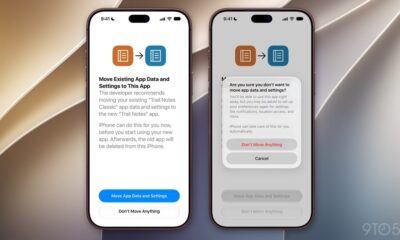
Streamlining Data Transfer: iOS 27.2 Facilitates Seamless App Upgrades

EU Takes Action Against Instagram and Facebook for Violating Illegal Content Rules

Warning: Facebook Creators Face Monetization Loss for Stealing and Reposting Videos

Facebook Compliance: ICE-tracking Page Removed After US Government Intervention

Facebook’s New Look: A Blend of Instagram’s Style

Facebook and Instagram to Reduce Personalized Ads for European Users

InstaDub: Meta’s AI Translation Tool for Instagram Videos

Reclaim Your Account: Facebook and Instagram Launch New Hub for Account Recovery

Meta discontinues Messenger apps for Windows and macOS

Breaking Updates: Meta Connect 2025 Unveils Latest Developments

10 Android Mods that Change Everything

I used the first Android Phone in the World.

DOOGEE MIX 4 UNBOXING (PROTOTYPE)!

MYSTERY UNBOXING FROM SAMSUNG!

The Truth about Huawei P20 Pro – REAL Review

How to Love your Android Phone again.

The LG G7 has a Big Problem.

The most Beautiful Android Games you’ve never played.

Charge your Smartphone in 5 Minutes – How Batteries are about to Change!
-
 Facebook11 months ago
EU Takes Action Against Instagram and Facebook for Violating Illegal Content Rules
-
 Facebook11 months ago
Warning: Facebook Creators Face Monetization Loss for Stealing and Reposting Videos
-
 Facebook11 months ago
Facebook Compliance: ICE-tracking Page Removed After US Government Intervention
-
 Facebook9 months ago
Facebook’s New Look: A Blend of Instagram’s Style
-
 Facebook9 months ago
Facebook and Instagram to Reduce Personalized Ads for European Users
-
 Facebook11 months ago
InstaDub: Meta’s AI Translation Tool for Instagram Videos
-
 Facebook10 months ago
Reclaim Your Account: Facebook and Instagram Launch New Hub for Account Recovery
-
 Apple11 months ago
Meta discontinues Messenger apps for Windows and macOS
