
Startups
Breaking Barriers: A Conversation with Nina Bazela, Founder of Antyszpak, on Empowering Women in Agrifood

Editor’s Note: This post was created in collaboration with and with financial support from EIT Food.
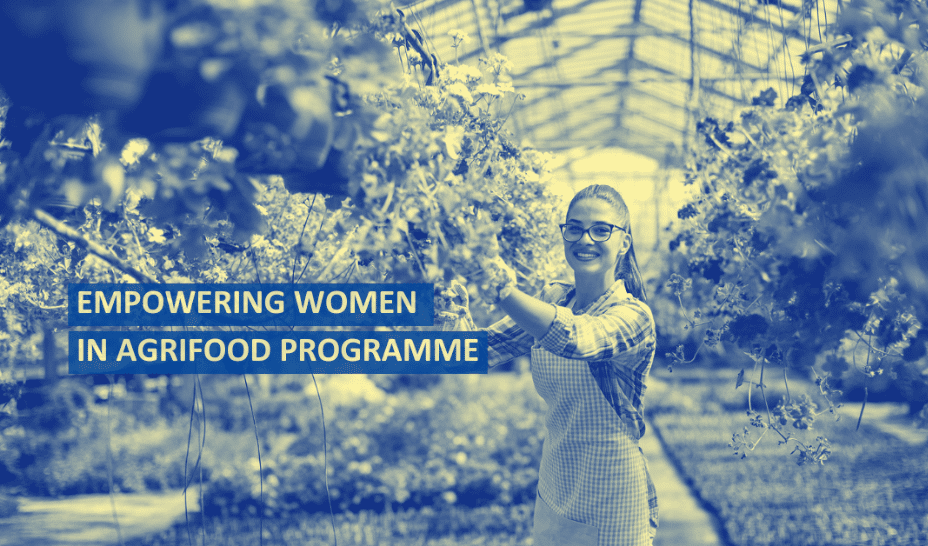
On 25 November, the Demo Day of the Empowering Women in Agrifood (EWA) programme took place in the PKO Rotunda in Warsaw, an initiative that supports women entrepreneurs working to create a more sustainable and innovative food system.
Now in its sixth edition, EWA 2025 is a six-month entrepreneurial programme designed to support aspiring and early-stage female entrepreneurs across 13 countries: Albania, Estonia, Greece, Italy, North Macedonia, Poland, Portugal, Romania, Serbia, Slovenia, Spain, Türkiye, and Ukraine.
Backed by EIT Food and the European Institute of Innovation and Technology (EIT), a body of the European Union, EWA helps participants build the skills, confidence, and networks needed to develop and scale their ideas. Although women play a vital role in agriculture and rural innovation, their work often goes under-recognized. The programme aims to address this by offering practical support, tailored training, and access to a long-lasting community.
Following our previous interviews with Anabel Millán Leiva, Co-founder of Cucare Diagnostics, and Nadica Desanova, Co-founder of Mimic Tech, we conclude this three-part interview series with a woman entrepreneur whose AI-powered crop-protection solution demonstrates how technology can improve farm efficiency while supporting biodiversity.
Interview with Nina Bazela, co-founder of Antyszpak
Can you start by sharing the inspiration behind Antyszpak and how your journey into creating an intelligent, AI-driven crop-protection system began?
The inspiration for Antyszpak came from the real, practical needs of orchard owners. While my team and I were working on a different technological project for agriculture, we had the chance to speak with these farmers who admitted they had no efficient methods for protecting their crops from birds. They specifically complained about the traditional devices commonly used today – like cannons that emit loud 120 dB bangs every few minutes -which aren’t very effective and end up disturbing the entire neighborhood.
They challenged us, asking, “Couldn’t you come up with something different, more efficient and less disruptive?” We started brainstorming and realized we could use lasers, which cause a natural fear response in birds. From there, we developed our solution: a robotic turret that detects birds in camera images using visual detection algorithms and tracks them with a laser beam until they leave the field.
What motivated you to focus on AI-powered bird deterrence, and how do you believe this technology contributes to a more sustainable and biodiverse agricultural system?
What really motivated us was the desire to create a solution that is both smart and efficient. By using AI, Antyszpak only activates the laser when a bird is actually detected in the camera images. This approach significantly increases effectiveness while lowering energy consumption and prolonging the life of the laser.
Looking ahead, we plan to develop a bird classification algorithm so that we can eventually scare away only the pest birds while leaving protected and beneficial species completely undisturbed.
I believe this technology is a major step forward for sustainability because it allows those beneficial birds to stay in the orchard and eat insects, which naturally reduces the need for harmful pesticides and leads to healthier soil. It’s also a much more humane and non-invasive alternative to methods like protective nets, which can accidentally harm or kill birds.
Beyond the environment, there’s a real social and economic benefit too; our system is silent, so it eliminates the noise pollution that often causes conflicts between farmers and their neighbors.
Antyszpak uses a robotic turret that can safely deter birds. Can you walk us through how this system works and what makes your approach unique compared to traditional crop-protection methods?
Our solution detects birds in camera images using visual detection algorithms and then tracks them with a laser beam until they leave the field. Birds are naturally scared of laser light and fly away when they see it nearby.
There are already solutions on the market that use laser light for bird deterrence but they move the laser ‘blindly’ through the field, according to a pre-programmed path. But birds are clever; they learn these patterns and simply feed in the parts of the field that aren’t being swept at that moment.
Our AI-based, targeted solution not only increases effectiveness but also lowers the energy consumption and prolongs laser lifetime thanks to turning the laser on only when a bird is detected. In the future, thanks to the development of a bird classification algorithm, we will be able to scare away only pest birds, leaving the protected birds undisturbed.
Currently, many farmers still rely on traditional methods like visual or sound deterrents, protective nets, or hiring a falconer. However, those methods are either ineffective (because birds quickly get used to visual and sound deterrents), or they are too costly and inaccessible for smaller orchards.
What were some of the biggest challenges you faced in developing Antyszpak, both on the technical and market sides, and how did you overcome them?
Like any startup founded by young entrepreneurs, our biggest initial challenge was definitely the lack of funding. We had to develop both the business and the technology part-time while keeping our ‘normal’ day jobs.
On the technical side, we were surprised by the amount of time and dedication we had to put in performing initial field tests. As engineers, we were a bit perplexed at first because some days we’d travel to a test location only to find no birds there, even if there had been hundreds the day before. We had to consult with ornithologists to learn how to maximize our chances for successful tests and, importantly, how to avoid scaring the birds away ourselves just by being present in the field.
On the market side, however, we were actually surprised by the high level of interest from farmers.
They have a lack of efficient and affordable solutions for bird deterrence and are willing to try innovative ideas like ours, which provide effective protection at a reasonable price.
I first learned about the EWA programme while developing Antyszpak and seeking potential funding sources. Małgorzata Druciarek from EIT recommended the initiative to me, motivating me to participate based on my positive experiences with programs supporting women in technology.
The mentorship and training in the EWA program significantly influenced the development of Antyszpak. Working closely with my mentor, Monika Borowiecka, helped refine our market strategy and business model. The program also improved my pitching skills and market analysis, as well as connected me with valuable contacts in the EIT Food ecosystem.
Ensuring sustainability and safety are core principles of Antyszpak. We prioritize strict safety measures to prevent any hazards from the laser beam and design the system to deter harmful birds while protecting beneficial species. We also plan to implement a human-detection algorithm for added safety.
AI-powered precision tools like Antyszpak are shaping the future of agriculture by reducing losses, improving biodiversity, and supporting farmers economically and environmentally. These tools increase yields, reduce the need for pesticides, and contribute to healthier soil and biodiversity.
For other women entrepreneurs interested in agrifood technology, I recommend networking, seeking direct client feedback, and participating in programs like EWA to connect with other founders and gain support throughout the entrepreneurial journey.
With the support of the European Institute of Innovation and Technology, EIT Food operates throughout the food value chain to expedite innovation and entrepreneurship. It empowers change agents with the necessary skills, resources, and assistance to revolutionize the future of food.
EIT Food stands as one of the nine innovation communities sanctioned by the European Institute of Innovation and Technology (EIT), an autonomous EU entity established in 2008 to stimulate innovation and entrepreneurship continent-wide.
For more information, visit the EIT Food website or stay updated with EIT Food on social media platforms like Twitter, LinkedIn, Facebook, YouTube, and Instagram.












Unveiling the New Adventure Model

Enhanced Precision: The New Surface Mouse with Haptic Feedback and Customizable Action Button

Purdue and University of Illinois Join Forces to Enhance Semiconductor Industry Talent Pool

Unveiling the Secrets of ARC Raiders: Exploring Frozen Trails, Pendola Pass, Weapon Amplification, and Beyond

Samsung Galaxy S25: Unveiling Android 17 in September – Tech Advisor

Top Phones to Run Qualcomm Snapdragon 8 Elite Gen 6 – Tech Advisor’s Picks

Navigating Expansion: Essential Tips for European Founders Entering the US Market (Sponsored)

Unveiling iOS 27.2: Enhanced features, official release date, and much more

THE BEST PHONE HTC EVER MADE?

EU Takes Action Against Instagram and Facebook for Violating Illegal Content Rules

Warning: Facebook Creators Face Monetization Loss for Stealing and Reposting Videos

Facebook’s New Look: A Blend of Instagram’s Style

Facebook Compliance: ICE-tracking Page Removed After US Government Intervention

Facebook and Instagram to Reduce Personalized Ads for European Users

InstaDub: Meta’s AI Translation Tool for Instagram Videos

Reclaim Your Account: Facebook and Instagram Launch New Hub for Account Recovery

Meta discontinues Messenger apps for Windows and macOS

Breaking Updates: Meta Connect 2025 Unveils Latest Developments
THE BEST PHONE HTC EVER MADE?

The Truth about Google?

Samsung S9/ S9+ vs iPhone X vs Galaxy Note 8 Battery Life DRAIN TEST

Samsung S9 / S9+ vs Mate 10 Pro vs iPhone X Charging SPEED Test

The BEST APPS in 2018 – ft. MKBHD, UrAvgConsumer, iJustine + More

The ULTIMATE Smartphone Unboxing!!

HOW GOOD can a $250 Smartphone Camera be!?

10 Android Apps you NEED to try in 2018

They could not believe how cheap this Phone is
-
 Facebook11 months ago
EU Takes Action Against Instagram and Facebook for Violating Illegal Content Rules
-
 Facebook11 months ago
Warning: Facebook Creators Face Monetization Loss for Stealing and Reposting Videos
-
 Facebook10 months ago
Facebook’s New Look: A Blend of Instagram’s Style
-
 Facebook11 months ago
Facebook Compliance: ICE-tracking Page Removed After US Government Intervention
-
 Facebook10 months ago
Facebook and Instagram to Reduce Personalized Ads for European Users
-
 Facebook11 months ago
InstaDub: Meta’s AI Translation Tool for Instagram Videos
-
 Facebook10 months ago
Reclaim Your Account: Facebook and Instagram Launch New Hub for Account Recovery
-
 Apple11 months ago
Meta discontinues Messenger apps for Windows and macOS
